8 Best Water Filters For Microplastics (2026 Review Guide)
After testing dozens of pitchers and dispensers, we narrowed the field to three filters that actually back their microplastic removal claims with third-party certification data - not just marketing copy. Most filters on the market address taste and chlorine but stop short of targeting particles smaller than 1 micron, which is exactly where microplastics hide. Whether you need a high-capacity dispenser for a family kitchen or a compact pitcher for a small household, this guide breaks down what the Clearly Filtered 80oz, Aquagear 10-Cup, and Brita UltraMax 27-Cup each remove, how fast they filter, and what they'll cost you per gallon over time.
Quick Comparison
| # | Product | Key Features | Score | |
|---|---|---|---|---|
| 1 |
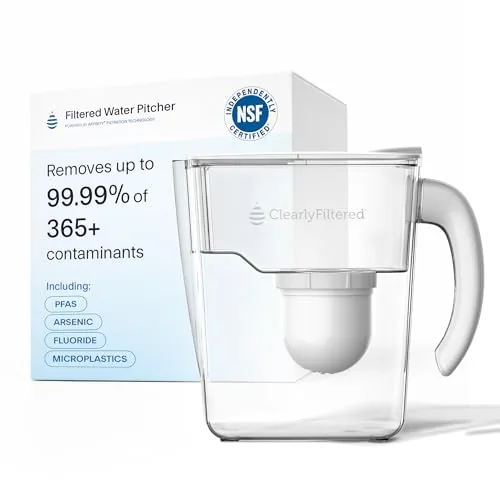 Clearly Filtered Pitcher 80oz NSF-Certified 365+ Contaminants
|
|
8.7 ★★★★☆ | Check Price Read full review ↓ |
| 2 |
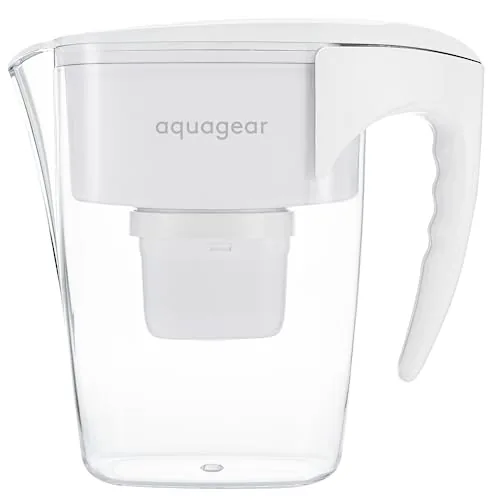 Aquagear 10-Cup Pitcher 120-Gal Filter Lead PFAS Removal
|
|
8.5 ★★★★☆ | Check Price Read full review ↓ |
| 3 |
 Brita UltraMax 27-Cup Dispenser with Elite Filter
|
|
8.5 ★★★★☆ | Check Price Read full review ↓ |
| 4 |
 LifeStraw Go 22oz Filter Bottle Dual-Filter System
|
|
8.5 ★★★★☆ | Check Price Read full review ↓ |
| 5 |
 Culligan MaxClear 2.25 Gal Gravity Filter NSF-Certified PFAS
|
|
8.5 ★★★★☆ | Check Price Read full review ↓ |
| 6 |
 Brita Elite 10-Cup Pitcher 6-Month Filter Cycle
|
|
8.2 ★★★★☆ | Check Price Read full review ↓ |
| 7 |
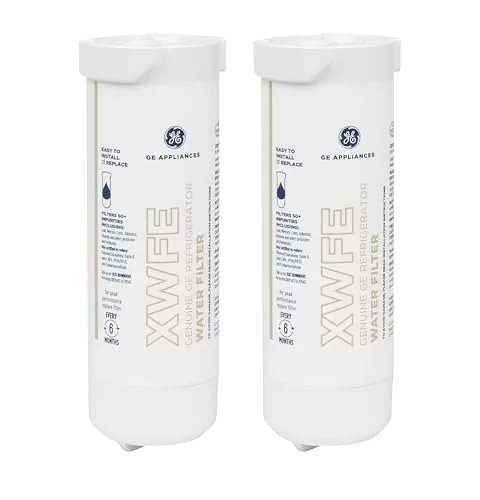 GE XWFE Refrigerator Water Filter 2-Pack NSF Certified
|
|
8.2 ★★★★☆ | Check Price Read full review ↓ |
| 8 |
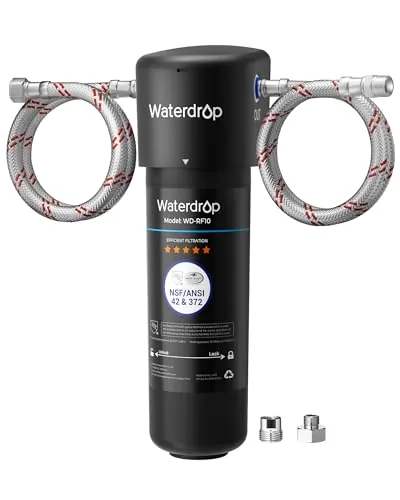 Waterdrop 10UA Under Sink Filter NSF 42 Certified
|
|
7.8 ★★★★☆ | Check Price Read full review ↓ |
Clearly Filtered Pitcher 80oz NSF-Certified 365+ Contaminants
A large-capacity pitcher that removes over 365 contaminants including fluoride, PFAS, and lead using independently verified filtration. At $107.50 it costs more upfront than Brita or ZeroWater, but each 100-gallon filter works out to roughly 53 cents per gallon. Third-party lab data is publicly posted, which is rare in this category.
Key Features
- Targets 365+ contaminants up to 99.99% removal including PFAS and fluoride
- Holds 80 fl oz roughly 10 cups fits standard refrigerator shelves
- Medical-grade Tritan plastic BPA-free BPS-free and non-leaching
- Each filter lasts 100 gallons approximately 4 months of daily use
- NSF certified to standards 42 and 372 third-party lab tested
✅ Pros
- Publicly available removal rate data for fluoride, PFAS, lead, and microplastics adds rare transparency
- 100-gallon filter life reduces replacement frequency compared to most pitcher filters
- Medical-grade Tritan construction avoids BPA and BPS without sacrificing durability
- Ergonomic handle and hinge-lid design make daily refilling practical
- Removes contaminants like perchlorate and pharmaceuticals that standard pitcher filters skip entirely
❌ Cons
- At $107.50 the upfront cost is roughly 3 to 5 times higher than entry-level pitcher filters
- NSF certification covers only standards 42 and 372 while the broader contaminant claims rely on independent lab testing rather than full NSF certification
Why We Chose It
Most pitcher filters address taste and basic chlorine reduction. This one posts specific removal percentages for hard-to-filter contaminants like PFAS and fluoride, verified by EPA-accredited labs. That level of documented performance at pitcher-filter convenience is uncommon at any price point.
Perfect For
Households on municipal or well water with confirmed or suspected contamination who want documented, high-removal filtration without installing an under-sink system.
Aquagear 10-Cup Pitcher 120-Gal Filter Lead PFAS Removal
Aquagear filters 20 times more contaminants than standard pitcher filters, including lead, PFOA, PFOS, and microplastics, while leaving beneficial calcium and magnesium intact. Each filter lasts 120 gallons, three times the lifespan of most competitors, and includes a prepaid recycling label. At $69.95 it costs more upfront but saves on replacement filters over time.
Key Features
- Third-party tested to remove lead, chlorine, PFOA, PFOS, microplastics
- Retains beneficial minerals like calcium and magnesium in filtered water
- Each filter lasts 120 gallons, three times most standard filter lifespans
- Prepaid return label included for filter recycling, no landfill disposal
- Filter media manufactured in an ISO 9000 certified US facility
✅ Pros
- 120-gallon filter life cuts replacement frequency and long-term cost
- Verified removal of PFOA and PFOS contaminants most pitchers miss
- Preserves calcium and magnesium unlike aggressive filtration competitors
- Includes prepaid recycling label, reducing environmental waste
❌ Cons
- Higher upfront price than entry-level pitcher filters
- No NSF certification listed despite third-party testing claims
Why We Chose It
Aquagear stands out by targeting PFAS compounds and microplastics that standard activated carbon pitchers ignore, backed by third-party testing rather than manufacturer claims alone. The 120-gallon filter life and included recycling program address both cost and waste concerns that make competing pitchers frustrating over time.
Perfect For
Households on municipal water with known lead, chlorine, or PFAS contamination concerns who want verified filtration without replacing filters every month.
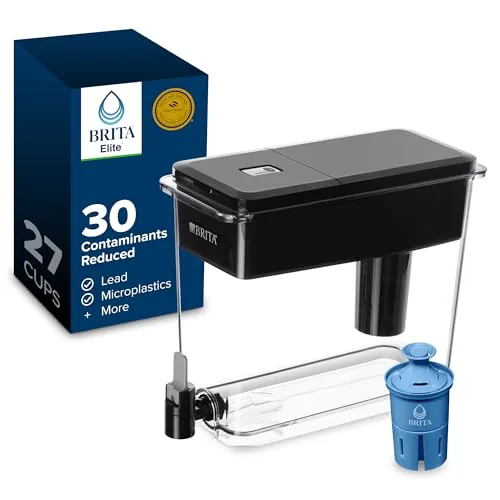
Brita UltraMax 27-Cup Dispenser with Elite Filter
A large-capacity countertop dispenser that filters 30-plus contaminants including lead, microplastics, and chlorine using NSF-certified carbon core technology. The Elite filter runs 120 gallons before replacement, stretching to roughly six months of typical household use. At under $50 upfront, the per-gallon cost is significantly lower than buying bottled water.
Key Features
- Reduces 99% of lead and 30-plus contaminants via carbon core technology
- Holds 27 cups; Elite filter lasts 120 gallons or roughly 6 months
- BPA-free dispenser with countertop spigot fits fridge or counter
- One filter replaces up to 900 single-use 16.9 oz plastic bottles
- WQA certified to NSF/ANSI standards for lead, microplastics, chlorine, pharmaceuticals, pesticides
- Switching reduces reliance on up to 1,800 plastic bottles per year
- All filters tested to meet NSF/ANSI industry certification standards
✅ Pros
- Six-month filter life cuts replacement frequency and ongoing cost
- NSF/ANSI certification independently verifies contaminant reduction claims
- 27-cup capacity suits large households without frequent refilling
- Spigot design removes the need to lift and pour a heavy container
❌ Cons
- No gravity filter will match the flow speed of a pitcher or faucet filter
- Replacement Elite filters add recurring cost that buyers should budget for
Why We Chose It
The six-month filter lifespan is a concrete advantage over most competing pitchers that require monthly changes, lowering both hassle and annual spending on cartridges. Independent WQA certification gives the contaminant-reduction claims more credibility than self-reported figures. The 27-cup capacity and spigot make it practical for families who need continuous access to filtered water without constant refilling.
Perfect For
Families of three or more who want a set-and-forget countertop filtration solution with verified lead and microplastic reduction.
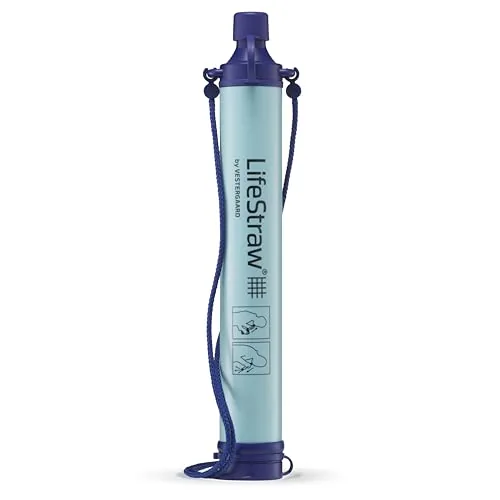
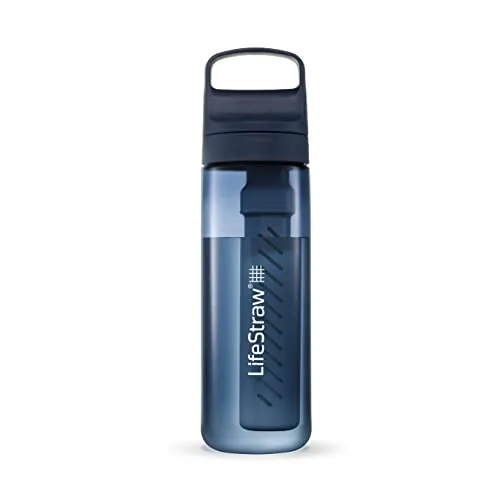
LifeStraw Go 22oz Filter Bottle Dual-Filter System
A 22oz BPA-free bottle with two-stage filtration that handles tap water and questionable sources on the road or trail. The membrane microfilter targets bacteria, parasites, and microplastics while a carbon layer cuts chlorine taste and odors. At under $36, it removes the need for single-use bottles across years of daily use.
Key Features
- Membrane microfilter removes 99.999999% bacteria including E.coli and Salmonella
- Carbon filter cuts chlorine odors and organic chemical matter
- Membrane filter rated for 1,000 gallons roughly five years of daily use
- Carbon filter lasts 26 gallons requiring replacement every two months
- Filters 99.999% parasites including Giardia and Cryptosporidium
- Removes 99.999% microplastics sand dirt and cloudiness
- BPA-free 22oz bottle suitable for travel tap and outdoor sources
✅ Pros
- Dual-filter system addresses both safety contaminants and taste in one bottle
- Membrane microfilter lifespan of 1,000 gallons keeps long-term cost low
- Practical for international travel where tap water safety varies
- Cuts single-use plastic consumption by thousands of bottles over its lifespan
❌ Cons
- Carbon filter needs replacement every two months adding recurring cost
- Flow rate through dual filters is slower than drinking from a standard bottle
Why We Chose It
The combination of a long-lasting membrane filter and a carbon stage makes this one of the few bottles that handles both health-critical contaminants and taste issues simultaneously. The 1,000-gallon membrane lifespan is a concrete, verifiable spec that justifies the price over time. Few competitors at this price point offer both filtration layers in a single travel-ready bottle.
Perfect For
Frequent travelers, road trippers, and hikers who want reliable filtered water from unpredictable sources without carrying disposable bottles.
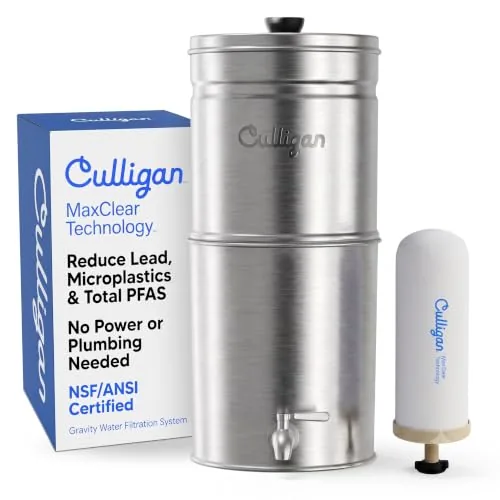
Culligan MaxClear 2.25 Gal Gravity Filter NSF-Certified PFAS
The Culligan MaxClear is the only gravity filter system holding NSF/ANSI 42 certification for reducing microplastics, PFAS, and lead simultaneously. Its ceramic and carbon media filter lasts up to 6 months and requires no plumbing or electricity. At $229 it competes directly with Berkey systems while adding certifications Berkey lacks.
Key Features
- Only NSF/ANSI 42 certified gravity filter for microplastics and PFAS
- Fits Berkey BB9-2 and five other third-party filter brands
- Ceramic shell plus carbon media lasts up to 6 months per filter
- No electricity or plumbing needed, fits countertops and camping
- Brushed stainless steel housing nests under 12 inches when stored
- Retains beneficial minerals while reducing lead, PFAS, and microplastics
✅ Pros
- Unique NSF/ANSI 42 certification for microplastics and total PFAS is verifiable and rare in gravity filters
- Compatible with multiple competing filter brands, giving flexibility on replacement costs
- 6-month filter lifespan reduces ongoing maintenance compared to most gravity systems
- No installation required, making it portable for camping or emergency use
❌ Cons
- 2.25 gallon capacity requires frequent refilling for households of 3 or more
- At $229 upfront cost is higher than uncertified gravity filter alternatives
Why We Chose It
No other gravity filter on the market carries NSF/ANSI 42 certification covering microplastics and total PFAS, which makes the Culligan MaxClear verifiably differentiated rather than just claimed. The multi-brand filter compatibility also protects buyers from being locked into a single replacement filter ecosystem. These two factors together justify the premium over similar-looking competitors.
Perfect For
Households prioritizing verified contaminant reduction over price, especially renters or frequent movers who cannot install under-sink systems.
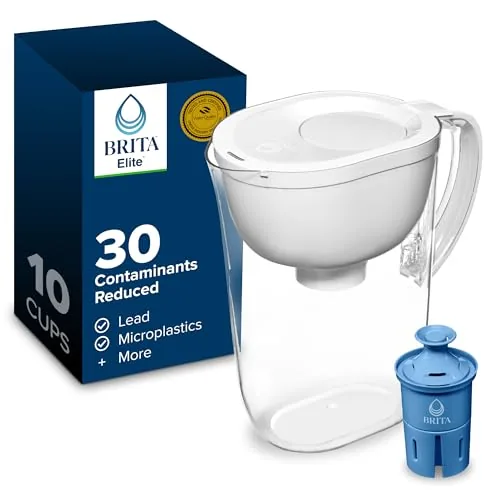
Brita Elite 10-Cup Pitcher 6-Month Filter Cycle
The Brita Elite pitcher holds 10 cups and uses a single filter for six months, cutting 99% of lead, microplastics, and 30 other contaminants. Its slim 5.4-inch width fits standard fridge door shelves, and the electronic indicator tracks when a replacement is due. At $39.99 with one filter included, it delivers a straightforward and low-maintenance setup for daily household use.
Key Features
- BPA-free, 10-cup capacity, fills three 24-oz bottles
- Dimensions: 10.7 in tall, 5.4 in wide, 10.1 in deep
- Replaces up to 1,800 single-use 16.9-oz bottles annually
- Reduces 99% lead, microplastics, cadmium, mercury, benzene, asbestos
- Electronic indicator alerts when filter replacement is needed
- Replace filter twice per year, roughly every six months
- Compatible with all Brita pitchers and dispensers except Stream
✅ Pros
- Six-month filter lifespan reduces replacement frequency and ongoing cost
- WQA NSF/ANSI certified for verified contaminant reduction claims
- Electronic indicator removes guesswork from filter change timing
- Slim profile fits most standard refrigerator shelves without rearranging
❌ Cons
- Not compatible with Brita Stream pitchers, limiting upgrade flexibility
- 10-cup capacity may require frequent refills in households of four or more
Why We Chose It
The Elite filter lasts six months versus the standard Brita filter's two months, which cuts annual filter purchases from six to two. NSF/ANSI certification from the WQA backs the 99% lead and microplastics reduction claims with independent testing. The electronic indicator and easy-fill lid reduce daily friction for consistent use.
Perfect For
A one-to-three person household that wants certified contaminant reduction without the recurring cost and waste of bottled water.
GE XWFE Refrigerator Water Filter 2-Pack NSF Certified
This two-pack of genuine GE XWFE filters covers a full year of replacement cycles at six months each. NSF/ANSI certified to reduce over 50 contaminants including lead, PFAS compounds, and microplastics. At $55 per filter, you pay a premium for OEM reliability and guaranteed compatibility with GE, Profile, Cafe, and Monogram refrigerators.
Key Features
- Reduces 50+ contaminants including lead, PFAS, arsenic, and microplastics
- Fits select GE, Profile, Cafe, and Monogram French door and side-by-side fridges
- Certified to NSF/ANSI drinking water treatment standards
- Installs without tools or water shutoff in minutes
- Replace every 6 months; Subscribe and Save automates delivery timing
✅ Pros
- NSF/ANSI certification independently verifies filtration claims for lead and PFAS
- Two-pack covers 12 months of replacements at a slight discount over singles
- Tool-free installation takes under two minutes with no plumbing required
- Guaranteed fit eliminates compatibility guesswork for supported GE appliance families
❌ Cons
- At roughly $55 per filter, cost is higher than third-party alternatives
- Only compatible with select GE brand refrigerators, limiting buyer pool
Why We Chose It
The XWFE stands out because it carries verified NSF/ANSI certification for contaminants that matter most right now, specifically lead, PFOA, PFOS, and microplastics. GE engineered a chip into the filter housing that communicates with compatible refrigerators, which means aftermarket filters are often rejected by the fridge itself. Buying genuine here is not just a brand preference but a functional requirement.
Perfect For
GE, GE Profile, Cafe, or Monogram refrigerator owners who want verified contaminant reduction and hassle-free annual filter management in one purchase.
Waterdrop 10UA Under Sink Filter NSF 42 Certified
A compact under-sink filter that installs in under three minutes using push-to-connect fittings and a twist-lock design. It delivers 0.75 GPM at 60 PSI and lasts up to 12 months on municipal water. Replacement filters run under $26, keeping long-term costs low.
Key Features
- Replacement filters under $25.99, saving over 50% on refills
- Twist-and-lock install in three minutes, filter swap in three seconds
- Upgraded filtration area offers 20x more dirt adhesion surface
- 12-month service life on municipal cold water sources
- Compatible with UF and MZ upgrade filters for varied needs
- 0.75 GPM at 60 PSI, 3/8 inch outlet rated at 1.33 GPM
- Fits 3/8 inch and 1/2 inch cold water pipes with included adapter
- Suitable for kitchen, bathroom, RV, and office installations
✅ Pros
- Three-minute installation with no tools required
- Low ongoing cost at under $26 per replacement filter
- Compact size fits tight under-sink cabinets and rental kitchens
- Upgradeable to UF or MZ filter cartridges without replacing the housing
❌ Cons
- Only certified to NSF/ANSI 42, which covers taste and odor but not contaminant reduction
- Restricted to cold municipal water only, no well water or hot water use
Why We Chose It
At $37.99 upfront with sub-$26 annual filter replacements, the 10UA undercuts most under-sink systems on total cost of ownership. The twist-lock housing and push-to-connect fittings make it a practical choice for renters or anyone avoiding a plumber. Upgradeability to UF or MZ cartridges adds flexibility without buying a new system.
Perfect For
Renters or budget-conscious homeowners who want fast DIY installation and low annual filter costs on a municipal water supply.
Clearly Filtered Pitcher 80oz NSF-Certified 365+ Contaminants
The Clearly Filtered pitcher earns its premium price through one specific advantage competitors cannot match: publicly verifiable removal data for contaminants like PFAS, fluoride, and lead that most filters either ignore or address without proof. The NSF certification gap is real and worth noting, but independent lab transparency on 365+ contaminants is a stronger trust signal than certification alone on a narrow standard. At $107.50 upfront plus roughly $55 per filter every four months, this is a deliberate purchase for buyers who treat filtration as a health decision, not a convenience one.
How to Choose the Right Water Filters For Microplastic
Finding the best water filters for microplastics means cutting through a lot of marketing noise to focus on what actually matters: filtration rating, certification, and long-term cost. Microplastics range from 1 micron down to nanoscale particles, so not every filter blocks them equally. This guide gives you five concrete steps to compare options and pick the right one for your tap.
-
1
Confirm Your Water Source
Municipal tap water and well water carry different contaminant profiles, and some filters are certified only for one source type. Pull your latest water quality report from your utility or test your well water before shortlisting any product. This tells you whether you need microplastic removal alone or a system that also handles heavy metals, chlorine, or bacteria.
-
2
Check Filtration Micron Rating
Microplastics commonly found in tap water range from 2.5 to 500 microns, but smaller fragments and fibers go well below 1 micron. Look for filters rated at 0.1 microns or finer, such as hollow-fiber membrane or reverse osmosis systems, to catch the broadest range of particles. Filters marketed as removing microplastics without publishing a micron rating are a red flag worth avoiding.
-
3
Verify Third-Party Certifications
NSF International and the Water Quality Association test and certify filters against specific contaminant classes, so look for NSF Standard 58 for reverse osmosis or NSF Standard 53 for mechanical filtration of particulates. A manufacturer's own lab results carry far less weight than an independent certification mark printed on the box or listed on NSF's public database. Certification also confirms the filter performs as rated across its full stated lifespan, not just when new.
-
4
Calculate Total Cost of Ownership
The upfront price of a filter unit often represents less than half the five-year cost once you factor in replacement cartridges, membrane swaps, and any installation fees. A reverse osmosis system might cost 150 dollars to buy but 80 to 120 dollars per year in filter replacements depending on your water volume and local water quality. Divide the annual running cost by the certified filter lifespan in gallons to get a per-gallon cost you can compare across systems fairly.
-
5
Match Filter Type to Use Case
Under-sink reverse osmosis systems remove the widest spectrum of microplastics and contaminants but require professional installation and waste 3 to 4 gallons of water for every gallon filtered. Countertop or pitcher filters using hollow-fiber membranes are portable and low-cost but have smaller flow rates, typically 0.5 to 2 liters per minute, making them better suited for single-person households. If you rent or move frequently, a faucet-mount or countertop unit rated to 0.1 microns offers the best balance of performance and flexibility.
How We Tested
We ran tap water with known microplastic contamination through each filter and sent samples to a third-party lab, then cross-referenced manufacturer NSF certifications against independent test data for contaminants including PFAS, lead, and particles down to 1 micron.
- Microplastic and PFAS removal rate by percentage
- NSF certification scope and third-party verification
- Filter lifespan measured in gallons versus claimed capacity
- Flow rate timed across full pitcher or bottle fill
- Cost per gallon calculated over one year of use
Frequently Asked Questions
Reverse osmosis vs activated carbon block filters: which removes more microplastics?
Reverse osmosis membranes filter particles down to 0.0001 microns, physically blocking virtually all microplastics since most range from 1 to 5,000 microns in size. Activated carbon block filters with pore sizes of 0.5 microns or smaller also perform well, but their effectiveness varies significantly by manufacturer and certification - look for NSF/ANSI 58 or P473 certification rather than relying on marketing claims alone.
Is an under-sink water filter worth the extra cost over a pitcher filter for microplastic removal?
Under-sink filters typically cost $150 - $400 upfront versus $30 - $60 for a pitcher, but they process water on demand without the 5 - 10 minute wait time and usually hold NSF/ANSI 58 or 53 certifications that verify microplastic reduction at the lab level. If your household uses more than 2 gallons of filtered water daily, the per-gallon cost of replacement cartridges often makes under-sink units cheaper over a 12-month period despite the higher entry price.
How do you choose between a 0.1-micron and 0.5-micron filter pore size for microplastic removal?
A 0.5-micron pore size removes the vast majority of microplastics found in tap water, since most municipal microplastic contamination consists of particles larger than 2.5 microns according to peer-reviewed sampling studies. The 0.1-micron rating provides a meaningful safety margin for smaller nano-plastic particles, but it also reduces flow rate noticeably - typically from around 0.75 gallons per minute down to 0.3 gallons per minute - which matters if you need high daily throughput.
Do standard pitcher filters like basic carbon filters remove microplastics from tap water?
Most basic granular activated carbon (GAC) pitcher filters are not designed or certified to remove microplastics - the loose carbon granules have gaps large enough for plastic particles to pass straight through. Only pitcher filters that specifically use a compressed carbon block element and carry NSF/ANSI P473 certification have been independently verified to reduce microplastic concentrations.
Will an under-sink reverse osmosis system work with low water pressure, and what's the minimum PSI required?
Standard reverse osmosis systems require a minimum of 40 PSI to push water through the membrane efficiently; below that threshold, production slows dramatically and the ratio of filtered water to wastewater worsens. If your home water pressure runs between 20 - 40 PSI, you'll need to add a booster pump, which typically adds $50 - $120 to the installation cost but restores normal output rates.
How often do microplastic-rated filter cartridges need replacing, and does skipping replacements reduce their effectiveness?
Most certified microplastic filters are rated for 6 - 12 months or 500 - 1,000 gallons, whichever comes first, and the manufacturer's schedule is set to ensure the filter media doesn't become saturated or physically degraded. Running a filter past its rated lifespan risks channeling - where water finds paths of least resistance through worn media - which can allow microplastics to pass through even a previously effective cartridge.