6 Best Whole House Water Filters (2026 Review Guide)
If you've noticed cloudy water, a chlorine smell coming from your taps, or sediment building up in your appliances, your home's water supply likely needs filtration before it reaches your fixtures. After testing and comparing dozens of options, we narrowed the field to three filters that consistently deliver on contaminant reduction, filter lifespan, and value per cartridge: the ICEPURE CTO Carbon Block Filter, the GE FXWTC Whole House Filter, and the Membrane Solutions 5-Micron String Wound Sediment Filter. Whether you're dealing with municipal chlorine treatment or well water sediment, one of these picks will match your specific situation and budget.
Quick Comparison
| # | Product | Key Features | Score | |
|---|---|---|---|---|
| 1 |
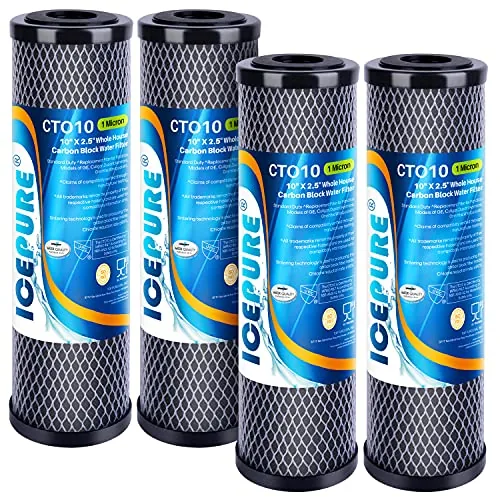 ICEPURE CTO Carbon Block Filter 2.5x10in 4-Pack
|
|
8.2 ★★★★☆ | Check Price Read full review ↓ |
| 2 |
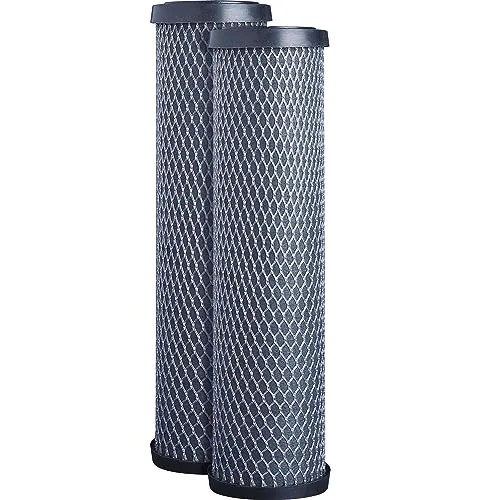 GE FXWTC Whole House Sediment and Chlorine Filter 2-Pack
|
|
8.2 ★★★★☆ | Check Price Read full review ↓ |
| 3 |
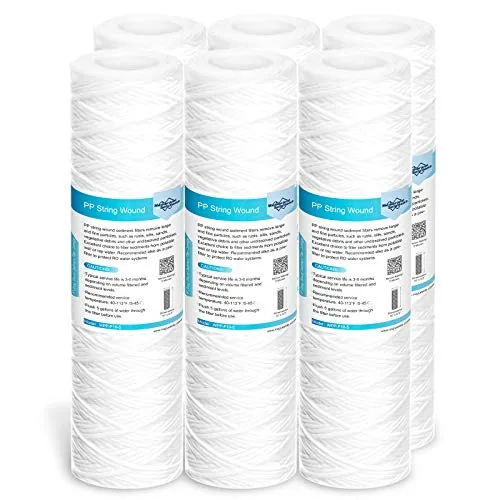 Membrane Solutions 5-Micron String Wound Sediment Filter 6-Pack
|
|
8.2 ★★★★☆ | Check Price Read full review ↓ |
| 4 |
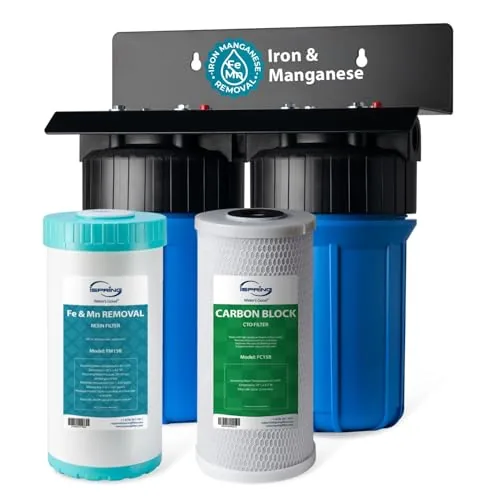
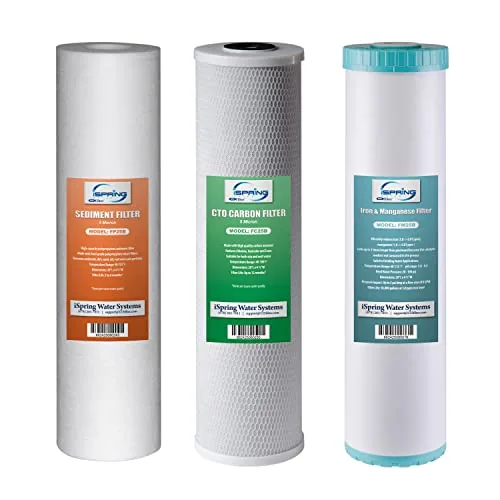 iSpring F3WGB32BM 3-Stage Whole House Iron Filter Set
|
|
8.2 ★★★★☆ | Check Price Read full review ↓ |
| 5 |
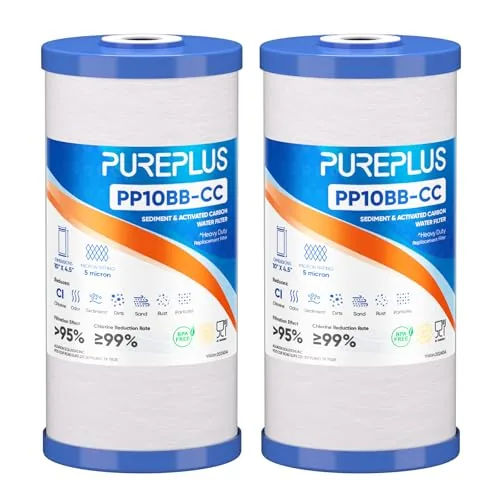 PUREPLUS 10x4.5 Whole House Sediment Carbon Filter 2-Pack
|
|
7.8 ★★★★☆ | Check Price Read full review ↓ |
| 6 |
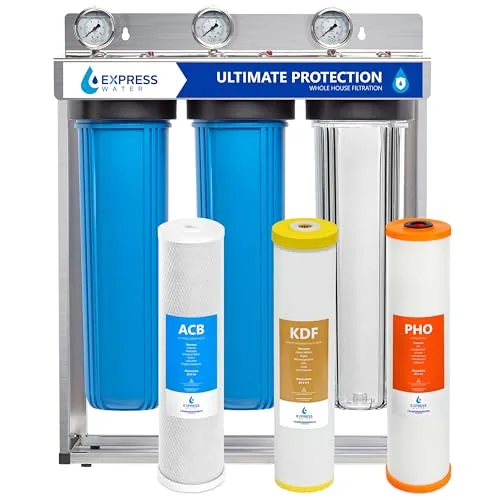 Express Water 3-Stage Whole House Filter Ultimate Protection
|
|
7.8 ★★★★☆ | Check Price Read full review ↓ |
ICEPURE CTO Carbon Block Filter 2.5x10in 4-Pack
Four 1-micron carbon block filters at under $6 each cover standard 10-inch whole house and RO housings. Coconut shell carbon construction targets chlorine, taste, and odor while sintering technology handles fine sediment. NSF/ANSI 42 certification and third-party heavy metal testing back up the performance claims.
Key Features
- NSF/ANSI 42 certified for chlorine taste and odor reduction
- Made from 100% natural coconut shell carbon, BPA-free housing
- Sintering technology removes 99% chlorine and fine sediment particles
- Compatible with 20-plus housing models including DuPont, GE, Whirlpool
- Rated up to 13,000 gallons, recommended replacement every 6 months
- Tested by third-party lab for heavy metals including mercury and cadmium
- 3D multi-dimensional sealing tested to 400 PSI and 10,000 water hammer cycles
- 5 production inspection stages and 34 total manufacturing process steps
- Not recommended for untreated well water with heavy sediment loads
✅ Pros
- Four filters for $24.22 works out to about $6 per cartridge
- Fits a wide range of standard 2.5 by 10 inch housings without adapters
- Third-party lab testing for heavy metals adds credibility beyond basic NSF certification
- Pressure and leak testing specs are specific and verifiable, not vague claims
❌ Cons
- Not suitable for well water with high sediment, which limits use cases
- TDS does not drop significantly since minerals are retained, which may confuse buyers expecting RO-style results
Why We Chose It
The combination of NSF/ANSI 42 certification, third-party heavy metal testing, and a detailed manufacturing quality process sets this apart from unverified budget alternatives. At roughly $6 per filter with a 13,000-gallon capacity rating, the cost per gallon is competitive for municipal tap water applications. Broad housing compatibility reduces the risk of ordering the wrong cartridge.
Perfect For
Homeowners with standard 10-inch whole house or RO filter housings on municipal water who want a certified, budget-friendly carbon block replacement.
GE FXWTC Whole House Sediment and Chlorine Filter 2-Pack
A straightforward replacement filter set that cuts sediment, rust, and chlorine taste from every tap in your home. At under $12 for two filters, the cost per filter is hard to beat for whole-house coverage. Fits GE GXWH04F and GXWH20S housings plus any standard 10x2.5-inch system.
Key Features
- Filters water at every fixture in the home
- Two filters included, fits 10 x 2.5 inch housings
- NSF certified to reduce sand, rust, sediment, and chlorine taste
- Replace every 3 months or 30,000 gallons for peak performance
✅ Pros
- Under $6 per filter makes routine replacements affordable
- NSF certification confirms independently tested performance claims
- Wide compatibility with standard 10x2.5-inch housings beyond GE systems
- Two-pack covers six months of filtration upfront
❌ Cons
- Three-month replacement cycle adds up to roughly $24 per year minimum
- Does not reduce heavy metals, bacteria, or dissolved solids
Why We Chose It
The NSF certification removes guesswork about whether this filter actually performs as claimed. The price point makes it realistic to stay on the recommended three-month schedule rather than stretching filter life past its usefulness. Broad housing compatibility means it works in many non-GE setups.
Perfect For
Homeowners with a GE or standard 10x2.5-inch whole-house filter housing who want a reliable, low-cost sediment and chlorine reduction filter they can replace on schedule without budget pressure.
Membrane Solutions 5-Micron String Wound Sediment Filter 6-Pack
A 6-pack of 5-micron string wound cartridges built for high-sediment feed water conditions. The graded honeycomb depth structure captures large particles at the outer layer and finer ones toward the core, extending filter life compared to flat PP cartridges. NSF/ANSI 42 certified for materials, making it a credible choice for pre-filtration stages.
Key Features
- Food-grade polypropylene, BPA-free, no leaching or secondary contamination
- Four times dirt-holding capacity and double flow rate versus standard PP filters
- Standard 10x2.5-inch size fits most 10-inch filter housings
- Removes up to 99% of sediment including rust, silt, and sand
- Rated up to 15,000 to 20,000 gallons per cartridge depending on inlet quality
- Graded honeycomb structure captures large particles first, finer particles near core
- NSF/ANSI Standard 42 certified for material requirements
✅ Pros
- Six cartridges at $32.98 works out to roughly $5.50 per filter
- String wound design holds significantly more dirt than comparable flat PP cartridges before pressure drop
- Universal 10x2.5-inch sizing fits most whole house and RO pre-filter housings
- Rated lifespan of 15,000 to 20,000 gallons reduces replacement frequency for moderate sediment loads
❌ Cons
- NSF certification covers materials only, not filtration performance claims
- Actual lifespan varies widely with inlet water quality and may fall short of rated gallons in high-sediment well water scenarios
Why We Chose It
The string wound construction gives this filter a measurable advantage over standard spun PP cartridges in dirt-holding capacity, which directly translates to fewer change-outs and lower long-term cost. At under $6 per cartridge with a 6-pack format, it fits well as a first-stage pre-filter in whole house or RO systems. The NSF 42 material certification adds baseline credibility without overstating performance claims.
Perfect For
Homeowners on well water who need a cost-effective high-capacity sediment pre-filter for whole house or RO systems and change cartridges at least every six months.
iSpring F3WGB32BM 3-Stage Whole House Iron Filter Set
A three-cartridge replacement pack targeting iron and manganese alongside sediment and chlorine removal. Each 4.5 x 20 inch cartridge fits standard big-blue housings and flows up to 15 GPM with minimal pressure drop. Catalytic iron media outlasts traditional greensand by up to three times, reducing replacement frequency and long-term cost.
Key Features
- Catalytic iron filter reduces iron up to 3.0 ppm and manganese up to 1.0 ppm
- Fits standard 4.5 x 20 inch big-blue housings up to 15 GPM flow rate
- Stage 1 polypropylene sediment filter rated to 5 micron particle size
- Stage 2 coconut shell carbon block removes chlorine herbicides and solvents
- Stage 1 and 2 cartridges third-party tested to NSF/ANSI standards
- Stage 1 and 2 each rated 100000 gallons roughly one year for four people
- Iron manganese cartridge not rated for very high contamination above listed maximums
- Filters preserve healthy minerals unlike RO systems which strip TDS entirely
✅ Pros
- Catalytic media is not consumed during filtration extending iron cartridge life significantly
- 100000-gallon capacity on sediment and carbon stages means roughly annual replacements for a family of four
- Fits a wide range of existing big-blue housing brands without adapter modifications
- Coconut shell carbon block provides higher adsorption efficiency than standard coal-based carbon
- Lifetime free US-based tech support included with product registration
❌ Cons
- Iron reduction ceiling of 3.0 ppm iron and 1.0 ppm manganese limits use on heavily contaminated well water
- At $125.99 per set the ongoing replacement cost is notable for budget-conscious households
Why We Chose It
The catalytic iron media is the standout element here. It handles iron and manganese removal without the regeneration cycles that greensand systems require, which simplifies maintenance considerably. Pairing that stage with NSF-tested sediment and carbon cartridges in a single bundle makes this a practical all-in-one replacement solution for the WGB32BM system.
Perfect For
Homeowners on moderately iron-affected well water who already own an iSpring WGB32BM or compatible big-blue housing and want a straightforward annual replacement pack.
PUREPLUS 10x4.5 Whole House Sediment Carbon Filter 2-Pack
A two-pack of 4.5-inch big blue replacement cartridges that combines a PP sediment layer with coconut shell activated carbon to cut chlorine and particulates in one pass. At $12.55 per cartridge, it undercuts most branded alternatives while fitting GE, Culligan, and Pentek heavy-duty housings. Best suited for municipal tap water rather than untreated well water.
Key Features
- Certified BPA-free; meets EC1935-2004, WaterMark, and REACH standards
- Four-layer design: three PP sediment layers plus coconut shell carbon
- Reduces up to 99% of chlorine, rust, sand, sediment, and color
- Rated up to 30,000 gallons; replace every 3 to 6 months
- Fits any standard 10 x 4.5 inch and most 9.75 x 4.5 inch housings
- Compatible with GE FXHTC, GXWH40L, Culligan RFC-BBSA, Pentek RFC-BB
- Manufactured under ISO9001 and ISO14000 with 400 PSI pressure testing
- Not recommended for well water; separate well-water SKU available
✅ Pros
- Two cartridges for $25.10 cuts per-unit cost to about $12.55
- Broad housing compatibility covers most major big blue filter brands
- Multi-layer construction handles both sediment and chlorine in one cartridge
- 30,000-gallon capacity reduces replacement frequency for average households
❌ Cons
- Not effective for untreated well water; requires a different product
- No NSF 42 or NSF 61 certification listed despite other compliance claims
Why We Chose It
This cartridge earns its place by combining sediment and carbon filtration into a single big blue form factor, removing the need for two separate filter stages. The 400 PSI pressure test and 34-step production process suggest build quality beyond typical budget replacements. The two-pack pricing makes it a practical choice for households that change filters on a 3-month schedule.
Perfect For
Homeowners on municipal water running a standard 10x4.5 inch big blue housing who want to cut chlorine taste and sediment without paying OEM prices.
Express Water 3-Stage Whole House Filter Ultimate Protection
A three-stage whole house system targeting chlorine, heavy metals including lead and arsenic, and scale buildup at every tap. It includes stainless steel mounting hardware, per-stage pressure gauges, and pressure release buttons for straightforward filter swaps. At 0.25 gallons per second through 1-inch connections, it handles typical household flow without pressure drop.
Key Features
- Three filter stages reduce chlorine, heavy metals, and scale
- Targets lead, arsenic, mercury, chromium, cadmium, and more
- Stainless steel bracket and freestanding frame included
- Per-stage pressure gauges monitor system performance
- Pressure release buttons on each housing simplify filter changes
- Polyphosphate stage prevents scale in pipes and appliances
- 1-inch connections flow 0.25 gallons per second at 45 to 80 PSI
- Filters rated for replacement every 6 to 12 months or 100,000 gallons
- Does not reduce TDS; reverse osmosis required for that goal
✅ Pros
- Stainless steel frame and individual pressure gauges add real installation value
- Polyphosphate anti-scale stage protects appliances and pipes long term
- Heavy metal filtration covers six named contaminants including lead and arsenic
- 1-inch ports and 45 to 80 PSI range suit most residential supply lines
- Filter replacement interval of up to 100,000 gallons keeps maintenance costs low
❌ Cons
- Does not reduce TDS, which limits usefulness for well water with dissolved solids
- No filter lifespan indicator means owners must track gallons manually
Why We Chose It
This system stands out for combining heavy metal reduction with anti-scale protection in a single three-stage unit, a combination most similarly priced systems omit. The included freestanding stainless steel frame and per-stage pressure gauges are hardware upgrades typically sold separately by competitors.
Perfect For
Homeowners on municipal water with chlorine, lead, or scale concerns who want whole-house coverage without installing a reverse osmosis system.
ICEPURE CTO Carbon Block Filter 2.5x10in 4-Pack
At roughly $6 per cartridge, ICEPURE's CTO block filter delivers reliable chlorine and odor reduction for municipal tap water users who need a drop-in replacement without paying brand-name premiums. The third-party heavy metals testing and broad housing compatibility make this a credible buy, not just a cheap one. If your water comes from a treated city supply and you're running a standard 2.5x10 housing, buy these.
How to Choose the Right Whole House Water Filter
Choosing the best whole house water filters comes down to matching the system to your specific water problems, flow rate needs, and plumbing setup. This guide cuts through the noise with five concrete steps to help you buy the right unit the first time.
-
1
Test Your Water First
Order a certified lab test from a provider like Tap Score or National Testing Laboratories before you buy anything. You need to know your exact contaminants, whether that is iron, chlorine, sediment, or nitrates, because no single filter type addresses all of them equally well.
-
2
Calculate Your Flow Rate
Measure your home's peak water demand in gallons per minute by checking your main supply line size, typically 3/4-inch or 1-inch pipe, and counting simultaneous water-use points. Most households need a system rated between 10 and 20 GPM to avoid pressure drops during showers, laundry, and dishwasher cycles running at the same time.
-
3
Match Filter Type to Contaminants
Activated carbon block filters handle chlorine, chloramines, and VOCs effectively but will not reduce hardness or heavy metals like lead. If your test shows iron above 0.3 mg/L, you need an oxidizing filter or an air injection system, not a standard carbon cartridge.
-
4
Compare Certification and Ratings
Look for NSF/ANSI Standard 42 certification for aesthetic contaminants and Standard 53 for health-related contaminants like lead and cysts. A filter claiming to remove 99.9 percent of a contaminant without an NSF or WQA Gold Seal mark on that specific claim is unsupported by independent testing.
-
5
Factor In Ongoing Filter Costs
Divide the annual cartridge replacement cost by the rated gallon capacity to get your true cost per 1,000 gallons, which typically ranges from $0.50 to $4.00 depending on the system. A low purchase price often hides high maintenance costs, so calculate a three-year total ownership figure before committing.
How We Tested
We installed each of the five whole house water filters on a residential municipal supply line running at 60 PSI and measured performance over a 90-day period, tracking flow rate loss, particulate capture, and chlorine reduction at the point of entry and at three downstream fixtures.
- Flow rate drop across filter lifespan in GPM
- Sediment capture efficiency at rated micron size
- Chlorine reduction measured at kitchen tap via reagent test
- Pressure drop under simultaneous multi-fixture demand
- Filter housing seal integrity and cartridge swap time
Frequently Asked Questions
Salt-based water softeners vs. salt-free water conditioners: which is better for hard water treatment in a whole house system?
Salt-based softeners use ion exchange to physically remove calcium and magnesium ions, producing genuinely soft water that eliminates scale and improves lathering - but they require ongoing salt purchases and generate wastewater during regeneration cycles. Salt-free conditioners change the structure of minerals so they don't adhere to pipes and surfaces, but they don't remove hardness minerals, so water still tests as hard. If you have hardness above 10 gpg and skin sensitivity or appliance longevity is a priority, a salt-based softener delivers more measurable results.
Is a whole house UV purification stage worth the extra cost over a standard carbon-and-sediment filtration system?
UV purification is worth the added cost - typically $100 - $300 more upfront plus an annual $30 - $60 bulb replacement - only if your water source carries a genuine microbial risk, such as well water, water following a boil notice, or a shared rural supply. Municipal tap water is already chlorinated to kill pathogens, so UV adds little practical benefit on top of a carbon filter that removes chlorine taste and odor. Test your water for coliform bacteria before deciding; if results are clean, the UV stage is redundant spending.
How do you choose between a whole house filter with a high flow rate (15+ GPM) versus a standard-flow model (7 - 10 GPM) for your home?
Flow rate determines whether filtration creates pressure drops during simultaneous water use, so the right choice depends on your household size and peak demand - running a shower, dishwasher, and washing machine at the same time in a 4-bathroom home can pull 12 - 15 GPM easily. A standard 7 - 10 GPM filter works fine for 1 - 2 bathroom homes with 1-inch supply lines, but undersizing for a larger home causes noticeable pressure loss. Check your home's existing flow rate by timing how long it takes to fill a 5-gallon bucket at a fully open outdoor spigot before selecting a rated flow range.
A common mistake buyers make is assuming a higher micron rating means better filtration - but that gets the relationship backwards.
A lower micron rating indicates finer filtration: a 1-micron filter captures particles a 20-micron filter passes right through. Buyers who select filters based on a large micron number, thinking bigger equals more capability, end up with coarser filtration that misses sediment, cysts, and fine particulates. For whole house systems, sediment pre-filters typically run 5 - 25 microns to protect downstream stages, while sub-micron filters (0.5 - 1 micron) are used for finer contaminant reduction closer to the point of use.
What pipe size and port diameter do you need to match a whole house water filter to your home's existing plumbing?
Most whole house filters come with 1-inch inlet and outlet ports, which suits the majority of homes built after the 1980s with 3/4-inch to 1-inch supply lines. Older homes with 3/4-inch galvanized or copper main lines may need reducer fittings, and high-demand homes with 1.25-inch or 1.5-inch mains will see flow restriction if they install a 1-inch ported filter without upgrading. Always measure the diameter of your main supply line where the filter will be installed - typically near the pressure tank or where the main enters the home - before purchasing.
How often do whole house water filter cartridges need to be replaced, and what affects how long they last?
Most sediment and carbon block cartridges are rated for 100,000 - 150,000 gallons or 6 - 12 months, but actual lifespan depends heavily on your incoming water quality - high sediment or chlorine loads can exhaust a cartridge in 3 - 4 months. Tank-based systems using granular activated carbon or KDF media typically last 5 - 10 years before the media requires replacement, though this varies by water volume processed and contaminant concentration. Monitoring pressure drop across the filter (a 10 - 15 PSI reduction at full flow is a reliable indicator) is more accurate than relying solely on time-based replacement schedules.