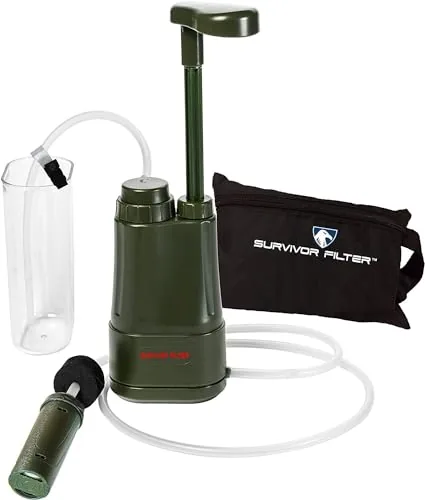
As low as $12
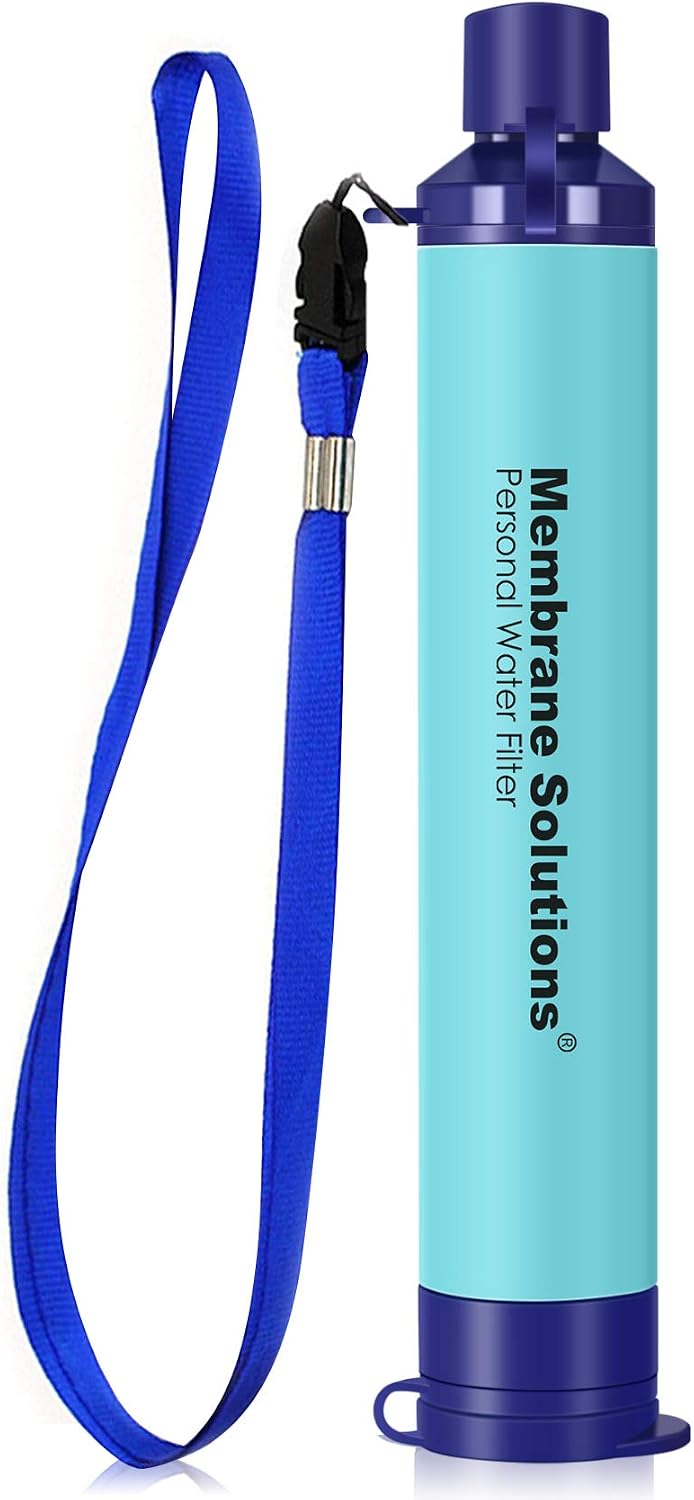
Built for travel, hiking & emergencies - drink safely whether the water is unsafe or just tastes off.
- NSF/ANSI 42, 372 & 401 certified, 0.1 micron filtration
- Filters up to 1,320 gallons - no batteries or pumping
- Ultralight - fits in any bag or pocket
- BPA-free, compatible with standard 28mm bottle threads
Tap water in Brazil is generally treated and meets national standards in major cities, but most travelers are advised to drink bottled or filtered water due to inconsistent quality across regions and aging infrastructure. While locals in cities like So Paulo and Curitiba often drink tap water, gastrointestinal issues from unfamiliar bacteria and contaminants remain a real risk for visitors. A filter bottle or bottled water is strongly recommended, especially outside major urban centers.
Quick Reference
| Concern | Our Advice | |
|---|---|---|
| Drink tap water? | ❌ | Use bottled or filtered water |
| Brush teeth? | ✅ | Yes, no concerns |
| Wash fruits / veg? | ❌ | Wash with filtered or bottled water |
| Use ice in drinks? | ❌ | Avoid unless confirmed purified |
| Shower safely? | ✅ | Yes |
| Filter bottle needed? | ❌ | Strongly recommend a Membrane Solutions Filter Straw for all travelers |
| Common risks | Bacterial contamination, Parasitic infections, Aging pipe infrastructure, Agricultural runoff, Chlorination byproducts, Heavy metals from old pipes |

Key Statistics


Affiliate links — we earn a small commission at no extra cost to you.
Water Infrastructure & Supply
Brazil's water supply system has expanded significantly over the past several decades, driven by urbanization and federal investment programs. The country's national water agency, ANA (Agncia Nacional de guas), oversees regulation while state-level companies like SABESP (So Paulo), CEDAE (Rio de Janeiro), and COPASA (Minas Gerais) manage local distribution. Despite widespread coverage, the system suffers from extreme regional inequality, with the Southeast and South enjoying far better infrastructure than the North and Northeast.
Water treatment in major Brazilian cities typically includes coagulation, flocculation, sedimentation, filtration, and chlorination. However, approximately 40% of treated water is lost through leaks and illegal connections in aging pipe networks, according to SNIS data. Many smaller municipalities rely on outdated treatment plants or untreated well water, and contamination from agricultural pesticides and untreated sewage remains a persistent problem in numerous waterways that feed municipal supplies.
The landmark 2020 Novo Marco Legal do Saneamento (New Legal Framework for Sanitation) set ambitious targets of 99% water coverage and 90% sewage treatment by 2033, opening the sector to greater private investment. Major projects include the privatization of CEDAE's operations in Rio de Janeiro and significant infrastructure upgrades in northeastern states. While progress is being made, experts acknowledge that meeting these targets will require sustained investment of over R$500 billion.
Contamination & Health Risks
The primary health risks from Brazilian tap water include exposure to waterborne pathogens such as Giardia, Cryptosporidium, and various coliform bacteria, particularly in areas where sewage treatment is inadequate. A 2021 study by Instituto Trata Brasil found that over 100 million Brazilians lack access to proper sewage collection, meaning untreated waste frequently contaminates water sources. Agricultural regions, particularly in the cerrado and along major river basins, face additional risks from pesticide runoff, Brazil is one of the world's largest consumers of agricultural chemicals.
For travelers, the most common risk is acute gastroenteritis caused by consuming water containing unfamiliar microbial flora, even in cities where water meets national treatment standards. Tap water in tourist areas of Rio de Janeiro, Salvador, and Recife has periodically tested positive for elevated levels of trihalomethanes (chlorination byproducts) and, in some cases, geosmina, an earthy-tasting compound from algal blooms. In early 2020, CEDAE faced a major crisis when Rio's tap water developed a foul taste and odor due to geosmin contamination from the Guandu River.
In rural and favela communities, the risk is substantially higher as water may come from untreated sources or pass through improvised, corroded piping. Dengue, Zika, and other mosquito-borne diseases are also linked to poor water management and standing water. Travelers with compromised immune systems should be especially cautious and rely exclusively on bottled or thoroughly boiled water throughout their stay.
Regional Water Quality Breakdown
So Paulo
cautionSo Paulo's SABESP is one of the most advanced water utilities in Latin America, and tap water generally meets potability standards. However, aging pipes in older neighborhoods can introduce contaminants, and the city experienced severe water crises in 2014-2015 due to reservoir depletion. Most locals use home filtration systems, and travelers should do the same.
Rio de Janeiro
cautionRio's tap water is treated by CEDAE but has faced recurring quality issues, including the 2020 geosmin crisis that rendered water visibly brown and foul-smelling. Water quality varies significantly by neighborhood, with hillside communities and the Zona Norte generally having poorer quality. Stick to filtered or bottled water, especially outside upscale Zona Sul neighborhoods.
Curitiba & Southern Brazil
safeCuritiba and the southern states of Paran, Santa Catarina, and Rio Grande do Sul generally have the best water infrastructure in Brazil. SANEPAR operates modern treatment facilities, and tap water quality is typically reliable. Many locals drink tap water directly, though a home filter is still common practice.
Salvador & Northeast Brazil
avoidThe Northeast region historically suffers from water scarcity and inferior infrastructure. In cities like Salvador, Recife, and Fortaleza, intermittent water supply is common, and storage tanks can harbor bacteria. Travelers should rely exclusively on bottled or filtered water and avoid ice at smaller establishments.
Manaus & Amazon Region
avoidWhile Manaus has municipal water treatment, coverage is limited and the system is overwhelmed by rapid urban growth. Many peripheral neighborhoods lack reliable treated water. In jungle lodges and river communities, water comes from rivers or wells and must be purified before drinking.
Braslia & Central-West
cautionBraslia benefits from relatively modern infrastructure managed by CAESB, with generally acceptable water quality. However, the cerrado region faces increasing contamination from large-scale agriculture, and periodic droughts have strained water supply. Using a filter or buying bottled water is advisable for travelers.
Practical Tips for Travelers
- Ask for 'gua mineral' (mineral water) or 'gua filtrada' (filtered water) in restaurants , most Brazilian restaurants provide free filtered water if you ask.
- Look for a traditional Brazilian clay water filter ('filtro de barro') at your accommodation , these ceramic filters are highly effective and widely used throughout the country.
- Avoid ice ('gelo') at street food vendors and small bars, as it may be made from unfiltered tap water. In upscale restaurants and hotel bars, ice is typically made with purified water and is generally safe.
- Carry a portable water filter bottle when visiting beaches, national parks, or rural areas where bottled water may not be readily available. Strongly recommend the Membrane Solutions Filter Straw.
- Wash fruits and vegetables with filtered or bottled water, or look for pre-washed options labeled 'higienizado' in supermarkets.
- At juice bars ('casas de suco'), ask if they use filtered water , most reputable ones do, as Brazilians themselves are very cautious about water quality.
- In the Amazon region and rural Northeast, only drink water that has been boiled for at least one minute or treated with a UV purifier, even if locals assure you the water is safe.
- Download the 'Painel Saneamento' app from Instituto Trata Brasil to check water quality data for the specific municipality you're visiting.
Bottled Water Availability & Cost
Bottled water is widely available throughout Brazil at convenience stores, supermarkets, restaurants, gas stations, and street vendors. Popular brands include Crystal, Minalba, Bonafont, Indai, and So Loureno. A 500ml bottle typically costs R$2, 5 (US$0.40, 1.00) at convenience stores, while a 1.5L bottle ranges from R$3, 7 (US$0.60, 1.40). In tourist-heavy areas such as Copacabana, Ipanema, or beach resorts in the Northeast, prices can be 50, 100% higher.
Buying larger 5L or 20L gallon jugs from supermarkets is far more economical for extended stays, with 20L jugs costing around R$8, 15 (US$1.60, 3.00). Many hotels, hostels, and Airbnbs provide filtered water dispensers, which is a common practice in Brazil, most Brazilian households use in-home water filters (filtros de barro or carbon filters). Travelers can reduce plastic waste by carrying a reusable bottle and refilling at filtered water stations, which are increasingly common in airports, shopping malls, and public spaces.
Frequently Asked Questions
Can I brush my teeth with tap water in Brazil?
In major cities like So Paulo, Rio de Janeiro, Curitiba, and Braslia, brushing your teeth with tap water is generally safe as the water is treated and chlorinated. However, in smaller towns, rural areas, or the Amazon region, it's best to use filtered or bottled water even for brushing.
Is it safe to shower in Brazilian tap water?
Yes, showering with tap water is safe throughout Brazil. The water is treated with chlorine which prevents skin infections. Just avoid swallowing water while showering, especially outside major cities. If you have sensitive skin, the chlorine levels may cause mild irritation.
Is ice safe in drinks in Brazil?
In upscale restaurants, hotels, and well-known bar chains, ice is typically made from filtered or purified water and is safe. However, at street vendors, beach kiosks, and small neighborhood bars, ice may be made from unfiltered tap water. When in doubt, order drinks 'sem gelo' (without ice).
Do restaurants in Brazil serve safe drinking water?
Most sit-down restaurants in Brazil use filtered water systems and will provide safe drinking water if you ask for 'gua filtrada.' Many also offer bottled mineral water ('gua mineral') for a fee. Street food stalls and very basic eateries may not have filtration, so bottled water is the safer choice.
How much does bottled water cost in Brazil?
A 500ml bottle costs around R$2, 5 (US$0.40, 1.00) at convenience stores and R$5, 10 at tourist spots and restaurants. A 1.5L bottle from a supermarket runs R$3, 7. For extended stays, 20L gallon jugs are the most economical option at R$8, 15.
Why do most Brazilians use home water filters?
Using a water filter is a deeply ingrained cultural practice in Brazil. Even where tap water meets treatment standards, Brazilians prefer the taste and added safety of filtration. The iconic 'filtro de barro' (clay filter) has been a household staple for over a century and is remarkably effective at removing bacteria, parasites, and chlorine.
Can I drink tap water in Brazilian airports?
Major international airports like GRU (Guarulhos, So Paulo), GIG (Galeo, Rio de Janeiro), and BSB (Braslia) have water fountains with built-in filtration systems that are safe to use. Look for fountains labeled 'gua filtrada' or 'gua potvel' and bring a reusable bottle to refill.
Is the tap water situation different during the rainy season?
Yes, water quality can deteriorate during heavy rains (typically November, March) as flooding overwhelms treatment systems and increases contamination from sewage overflow and agricultural runoff. This is especially true in Rio de Janeiro, the Northeast, and the Amazon region. Extra caution with water sources is warranted during the rainy season.
Traveling Nearby?
Check tap water safety in neighboring countries:
Argentina Bolivia Colombia Guyana Paraguay Peru Suriname Uruguay VenezuelaInteresting Product Reviews
7 Best Water Filters For Pets (2026 Review Guide)
Aug 4, 2026
9 Best Nugget Ice Makers (2026 Review Guide)
Aug 10, 2026
6 Best Gravity Water Filters For Camping (2026 Review Guide)
Jul 20, 2026
6 Best Remineralization Filters For Ro Systems (2026 Review Guide)
Jul 28, 2026
7 Best Uv Water Purifiers For Travel (2026 Review Guide)
Jul 19, 2026