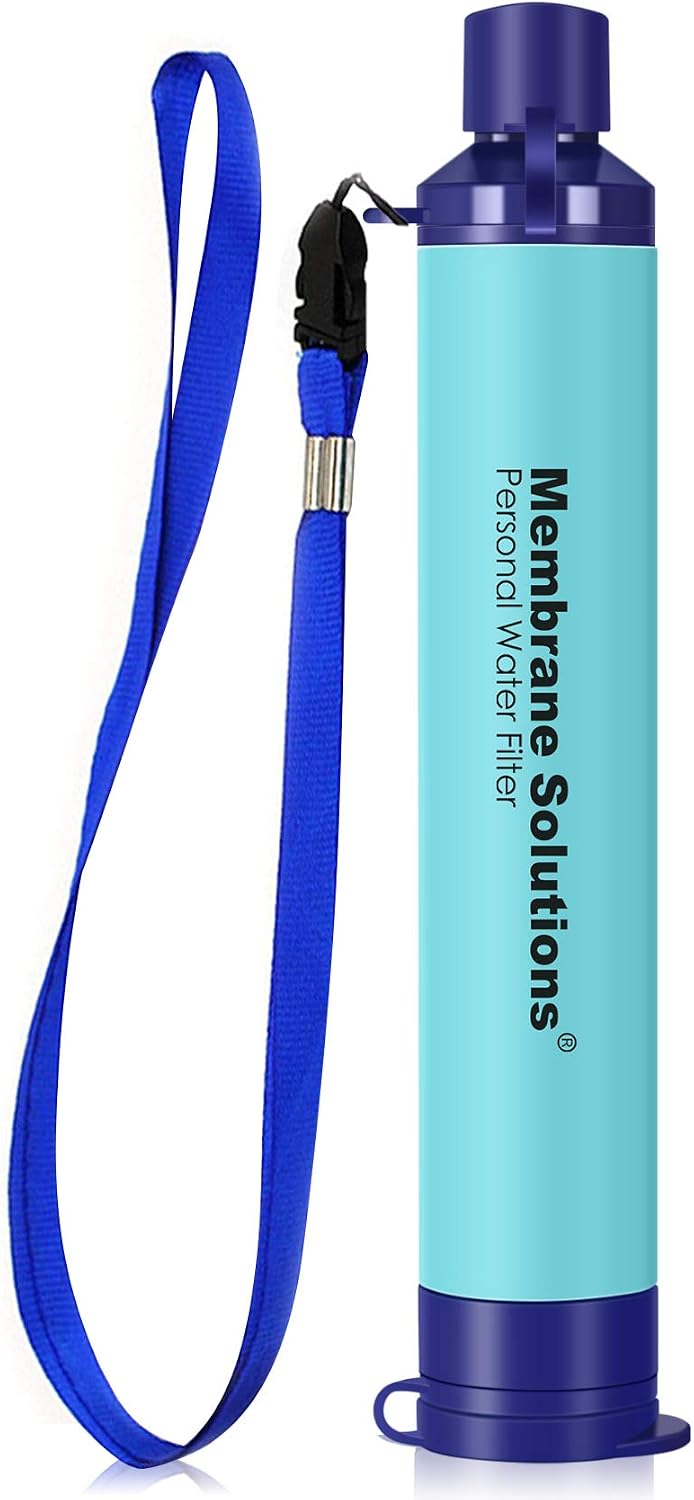
As low as $12
Built for travel, hiking & emergencies - drink safely whether the water is unsafe or just tastes off.
- NSF/ANSI 42, 372 & 401 certified, 0.1 micron filtration
- Filters up to 1,320 gallons - no batteries or pumping
- Ultralight - fits in any bag or pocket
- BPA-free, compatible with standard 28mm bottle threads
Tap water in Montenegro is generally safe to drink in major cities and coastal towns, though quality can vary in rural and mountainous areas. The country's water largely comes from pristine natural springs and rivers, but aging infrastructure in some regions can introduce contamination risks. Travelers should exercise caution in remote areas and consider bottled or filtered water when the source is uncertain.
Quick Reference
| Concern | Our Advice | |
|---|---|---|
| Drink tap water? | ✅ | Yes, safe in most areas |
| Brush teeth? | ✅ | Yes, no concerns |
| Wash fruits / veg? | ✅ | Yes, safe to use tap water |
| Use ice in drinks? | ✅ | Yes, safe in restaurants |
| Shower safely? | ✅ | Yes |
| Filter bottle needed? | ✅ | Not necessary, but a Membrane Solutions Filter Straw can improve taste |
| Common risks | Aging pipe infrastructure, Bacterial contamination in rural areas, Seasonal turbidity, Occasional chlorination byproducts, Untreated wastewater discharge near water sources |

Key Statistics


Affiliate links — we earn a small commission at no extra cost to you.
Water Infrastructure & Supply
Montenegro benefits from abundant freshwater resources, with water supply primarily sourced from natural springs, rivers, and Lake Skadar , one of Europe's largest freshwater lakes. The country's mountainous terrain provides high-quality karst spring water to many municipalities, and cities like Podgorica and Niki have historically enjoyed reliable water supplies. During the Yugoslav era, significant investments were made in water infrastructure that still forms the backbone of today's systems.
However, much of Montenegro's water distribution network dates from the 1970s and 1980s, with aging pipes leading to water losses estimated at 50-60% in some municipalities. The treatment process varies by location , larger cities like Podgorica and coastal towns such as Budva and Kotor chlorinate their water supply, while smaller municipalities may rely on spring water with minimal treatment. Water quality monitoring is conducted by the Institute of Public Health, which regularly tests for microbiological and chemical parameters at distribution points.
Montenegro has been undertaking significant water sector reforms as part of its EU accession process. Major investment projects funded by the European Bank for Reconstruction and Development (EBRD) and the European Investment Bank (EIB) have targeted wastewater treatment plants along the coast and improvements to water supply networks in Podgorica, Cetinje, and the coastal municipalities. A new wastewater treatment plant for the Montenegrin coast was completed in Tivat, and further projects are planned for the Bay of Kotor and Bar regions through 2027.
Contamination & Health Risks
The primary health risk associated with Montenegro's tap water is microbial contamination in areas served by older, poorly maintained infrastructure or unregulated local water sources. After heavy rains, turbidity can increase in mountain-fed water systems, potentially introducing sediment and bacteria. The Institute of Public Health occasionally issues advisories during such events, particularly for smaller municipalities in the north such as Pljevlja, Bijelo Polje, and abljak.
Wastewater management remains a significant challenge, with only about 29% of wastewater being safely treated nationwide. In some coastal areas during the peak summer tourist season, increased demand can strain systems and lead to temporary quality fluctuations. Agricultural runoff and illegal dumping near water sources have been documented in parts of the Zeta Plain and around Lake Skadar, though these issues primarily affect environmental water quality rather than treated drinking water.
For most travelers staying in Podgorica, Budva, Kotor, Tivat, or Herceg Novi, the tap water poses minimal health risk and is regularly monitored. The greatest practical risk comes from consuming water from unmarked springs, rural wells, or in very remote mountain areas where treatment may be inconsistent. Travelers with sensitive stomachs may experience mild gastrointestinal discomfort during adjustment, which is common when changing water sources in any country.
Regional Water Quality Breakdown
Podgorica
safeThe capital's water supply comes primarily from the Mareza springs and the Cijevna river, both producing high-quality water that is chlorinated before distribution. Podgorica's water utility (Vodovod) conducts regular testing and the water consistently meets national safety standards.
Kotor & Bay of Kotor
safeKotor and surrounding Bay towns (Tivat, Herceg Novi) receive water from mountain karst springs that are naturally filtered through limestone. Water quality is generally excellent, though summer tourist surges can occasionally strain supply. The old town of Kotor has public drinking fountains with clean spring water.
Budva Riviera
safeBudva, Beii, and Sveti Stefan have a reliable municipal water supply that is treated and chlorinated. During the peak summer season (July-August), water pressure may drop but quality remains monitored. Tap water is safe for drinking in hotels and restaurants.
Cetinje
safeThe old royal capital has a well-maintained water supply sourced from local springs. Cetinje is known for its clean mountain water, and public fountains throughout the historic center are safe to drink from. Water quality is consistently good year-round.
Northern Mountains (abljak, Durmitor, Kolain)
cautionWhile mountain spring water in the north is often exceptionally pure, some smaller settlements have aging or limited infrastructure. After heavy rain or snowmelt, turbidity can temporarily affect water quality. In established hotels and ski resorts, tap water is generally safe, but hikers should treat water from streams.
Pljevlja & Bijelo Polje
cautionThese northern industrial towns have experienced periodic water quality issues related to older infrastructure and occasional contamination alerts. Pljevlja in particular has faced environmental concerns due to coal mining and thermal power plant operations nearby. Travelers may prefer bottled water as an extra precaution.
Practical Tips for Travelers
- Carry a filter straw (e.g., Membrane Solutions) — it removes bacteria, parasites, and microplastics from any tap or stream. Strongly recommend the Membrane Solutions Filter Straw.
- Look for public drinking fountains (esme) in old towns , these are fed by natural springs and are a free, safe source of clean water in cities like Kotor, Cetinje, and Podgorica.
- To ask for tap water at a restaurant in Montenegrin, say 'Mogu li dobiti au vode iz slavine?' (Can I get a glass of tap water?) , many restaurants will provide it free of charge.
- If traveling to the Durmitor National Park or remote northern areas, carry a reusable water bottle with a basic filter as a precaution, especially during spring snowmelt season.
- During peak summer months (July, August) on the coast, water supply may be intermittent in some areas , keep a backup bottle of water in your accommodation.
- Avoid drinking from unmarked mountain streams or wells unless locals confirm the source is safe , some rural water sources are unregulated and untested.
- The local sparkling water brand 'Gorska' () is excellent and inexpensive , ask for 'gazirana voda' for sparkling or 'negazirana voda' for still water.
- Hotel tap water throughout Podgorica, Budva, Kotor, and Herceg Novi is safe for drinking, brushing teeth, and making coffee , you don't need to rely on bottled water in these areas.
- If you notice tap water running cloudy or with sediment (rare but possible after storms), let it run for 30 seconds before filling your glass or switch to bottled water temporarily.
Bottled Water Availability & Cost
Bottled water is widely available throughout Montenegro at supermarkets, kiosks, restaurants, and beach vendors. Popular local brands include Gorska (sourced from Montenegrin mountains), Lipovo, and Aqua Bianca, which typically cost 0.50, 1.00 for a 0.5L bottle at a shop and 1.50, 3.00 at restaurants. International brands like Evian and San Pellegrino are also available but cost more. A 1.5L bottle at a supermarket generally costs 0.60, 1.20.
For budget-conscious travelers, buying water in bulk at supermarkets like Voli, Idea, or Aroma is the most economical option, with 6-packs of 1.5L bottles costing around 3.00, 4.00. Many restaurants will serve tap water upon request, though it's not always automatically offered. While bottled water is convenient, Montenegro's generally safe tap water in cities means travelers can reduce plastic waste by using a reusable bottle , many towns also have public drinking fountains (esme) with clean spring water, particularly in the old towns of Kotor, Cetinje, and Podgorica.
Frequently Asked Questions
Can I brush my teeth with tap water in Montenegro?
Yes, tap water in Montenegro's cities and tourist areas is safe for brushing teeth. In major destinations like Podgorica, Budva, Kotor, and Herceg Novi, the water is treated and regularly tested. Only in very remote rural areas with unregulated water sources might you want to use bottled water.
Is it safe to shower in Montenegrin tap water?
Absolutely. Showering in tap water is safe throughout Montenegro, including for people with sensitive skin. The water is not excessively chlorinated, and many areas benefit from naturally soft spring water that is gentle on skin and hair.
Can I drink ice in drinks at bars and restaurants in Montenegro?
Yes, ice served in restaurants and bars in Montenegro is made from tap water, which is treated and safe in all urban and tourist areas. You don't need to request drinks without ice at established restaurants and hotels.
Do restaurants in Montenegro serve tap water for free?
Many restaurants will provide tap water if you ask, but it's not as common a practice as in some Western European countries. Some establishments may encourage you to order bottled water instead. It's perfectly acceptable to ask , just say 'au vode iz slavine, molim' (a glass of tap water, please).
How much does bottled water cost in Montenegro?
A 0.5L bottle costs 0.50, 1.00 at shops and 1.50, 3.00 at restaurants. A 1.5L bottle from a supermarket is typically 0.60, 1.20. Buying in bulk at supermarkets like Voli or Idea is the most affordable option, with 6-packs of 1.5L bottles around 3.00, 4.00.
Is the tap water in Kotor Old Town safe to drink?
Yes, Kotor's tap water is sourced from high-quality karst mountain springs and is safe to drink. The old town also has several historic public drinking fountains (esme) that provide fresh spring water. Kotor is known for having some of the cleanest water in Montenegro.
Should I bring a water filter bottle for traveling in Montenegro?
For most travelers sticking to popular tourist destinations, a filter bottle is not necessary as tap water is safe. However, if you plan to hike in Durmitor, Biogradska Gora, or other remote mountain areas, a filter bottle is a practical precaution for treating water from natural sources.
Does Montenegro's water quality change during the summer tourist season?
Water quality standards are maintained year-round in Montenegro's tourist areas, though water pressure can occasionally drop during peak summer months (July, August) when coastal populations multiply several times over. The water utilities increase monitoring during this period. Quality remains safe, but it's wise to keep some bottled water on hand during the busiest weeks.
Traveling Nearby?
Check tap water safety in neighboring countries:
Albania Bosnia and Herzegovina Croatia Kosovo SerbiaInteresting Product Reviews
8 Best Water Flossers (2026 Review Guide)
Aug 20, 2026
6 Best Hard Water Stain Removers (2026 Review Guide)
Aug 21, 2026
6 Best Water Filters For Coffee And Espresso Machines (2026 Review Guide)
Aug 4, 2026
9 Best Pump Water Filters For Backpacking (2026 Review Guide)
Jul 13, 2026
6 Best High Pressure Shower Heads (2026 Review Guide)
Aug 19, 2026