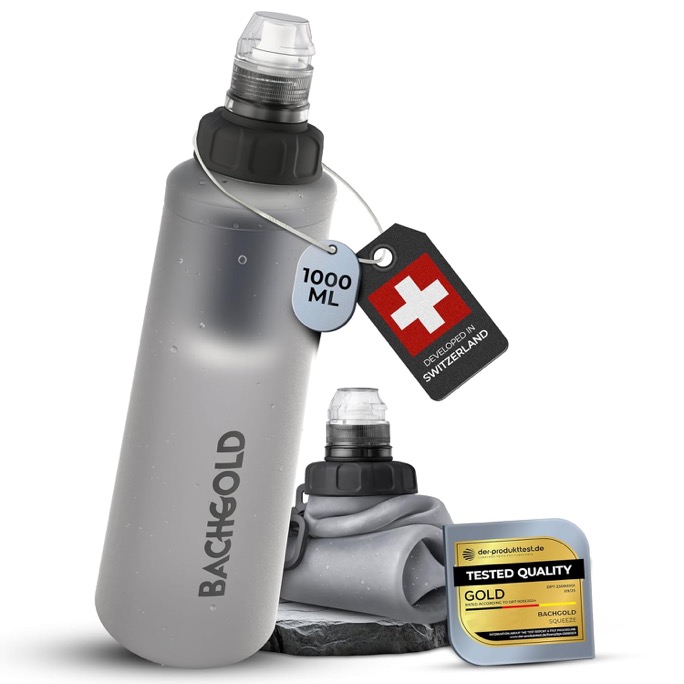
Around $20
Built for travel, hiking & emergencies - drink safely whether the water is unsafe or just tastes off.
- 2-stage filtration: nanofiber layer + 0.2 micron hollow fiber membrane
- Rinse to restore flow - no replacement cartridges needed
- Collapsible 1L bottle - folds flat to pocket size
- Leak-resistant, taste-neutral, designed in Switzerland
Tap water in Israel is generally safe to drink and meets stringent national and international quality standards. The country is a global leader in water technology, including desalination and wastewater recycling. Travelers can confidently drink tap water in major cities, though taste may vary regionally due to mineral content and desalination blending.
Quick Reference
| Concern | Our Advice | |
|---|---|---|
| Drink tap water? | ✅ | Yes, safe in most areas |
| Brush teeth? | ✅ | Yes, no concerns |
| Wash fruits / veg? | ✅ | Yes, safe to use tap water |
| Use ice in drinks? | ✅ | Yes, safe in restaurants |
| Shower safely? | ✅ | Yes |
| Filter bottle needed? | ✅ | Not necessary, but a Bachgold Squeeze Filter Bottle can improve taste |
| Common risks | Hard water minerals, Occasional pipe corrosion in old buildings, Chlorine taste, Residual salinity in southern regions |

Key Statistics


Affiliate links — we earn a small commission at no extra cost to you.
Water Infrastructure & Supply
Israel has developed one of the world's most advanced water infrastructures, driven by decades of water scarcity in an arid climate. The national water carrier, operated by Mekorot (the national water company), was originally built in the 1960s to transport water from the Sea of Galilee to the south. Today, the country relies heavily on five major seawater desalination plants along the Mediterranean coast , Sorek, Sorek B, Ashkelon, Hadera, and Palmachim , which collectively supply approximately 80% of domestic drinking water.
The technical sophistication of Israel's water system is world-renowned. Reverse osmosis desalination plants produce high-purity water that is then re-mineralized and blended with natural sources. The national grid integrates desalinated water, groundwater from aquifers, and surface water from the Sea of Galilee. The Israel Water Authority oversees strict regulatory standards, and the Ministry of Health conducts thousands of water quality tests annually across the distribution network.
Ongoing improvement projects include the expansion of desalination capacity through the Sorek B plant (one of the world's largest), upgrades to aging urban pipe networks, and investments in smart water management technology. Israel also leads globally in wastewater recycling, treating approximately 90% of its wastewater and reusing it primarily for agricultural irrigation. These efforts ensure long-term water security despite climate challenges.
Contamination & Health Risks
Israel's tap water consistently meets WHO drinking water guidelines and Israeli national standards, which are among the strictest in the world. The Ministry of Health monitors for over 100 parameters including bacteria, heavy metals, pesticides, and chemical contaminants. Compliance rates exceed 98% across the national distribution network, making waterborne illness from municipal tap water extremely rare.
The main concerns are related to older buildings , particularly in historic neighborhoods of Jerusalem, Jaffa, or Acre , where internal plumbing may contain lead solder or corroded pipes that can leach trace metals into standing water. Desalinated water, while extremely pure, can sometimes be mildly aggressive to older pipe materials. In the Negev region, water may have slightly higher mineral content or salinity from local blending sources, though it still meets safety standards.
For travelers, the practical health risks from tap water in Israel are minimal. Gastrointestinal issues among visitors are far more commonly linked to heat, food handling, or dietary changes than to water quality. That said, some visitors notice a slightly different taste compared to their home water, especially in areas supplied predominantly by desalinated water. Travelers with sensitive stomachs may prefer filtered or bottled water for the first day or two as they adjust.
Regional Water Quality Breakdown
Tel Aviv & Gush Dan
safeTel Aviv's tap water is excellent, supplied primarily by the Sorek and Palmachim desalination plants with modern distribution infrastructure. Water is continuously monitored and safe to drink directly from the tap.
Jerusalem
safeJerusalem receives water from a mix of desalinated and natural sources through the national grid. Water quality is high, though some older buildings in the Old City may have aging internal plumbing , running the tap briefly before drinking is advisable in very old structures.
Haifa & Northern Coast
safeHaifa benefits from the Hadera desalination plant and supplementary supply from the Sea of Galilee. Tap water meets all safety standards and tastes relatively good due to balanced mineral content.
Eilat & the Negev
cautionEilat relies on its own small desalination plant and local water sources. While safe to drink, the water can have a slightly different taste and higher mineral content. Some travelers prefer bottled water here due to taste preferences.
Galilee & Tiberias
safeThe Galilee region benefits from proximity to the Sea of Galilee, Israel's primary natural freshwater source. Tap water quality is well-maintained and safe for drinking throughout the area.
Dead Sea Region
cautionHotels and resorts in the Dead Sea area receive treated water through the national grid, which is safe. However, the extreme heat and dry climate mean travelers should drink significantly more water than usual. Some smaller facilities may use local brackish water sources for non-drinking purposes.
Practical Tips for Travelers
- Carry a filter bottle (e.g., Bachgold Squeeze) — it removes bacteria, parasites, and microplastics from any tap or stream. Strongly recommend the Bachgold Squeeze Filter Bottle.
- Carry a reusable water bottle , Israeli tap water is safe citywide, and public water fountains are common in parks, promenades, and transit areas.
- In Hebrew, ask for tap water at a restaurant by saying "Mayim mi-haberez, bevakasha" ( , ), meaning "Tap water, please." Most restaurants will provide it free of charge.
- In very old buildings (especially in Jerusalem's Old City or Jaffa), let the tap run for 15, 30 seconds before drinking to flush any standing water from old pipes.
- Stay extra hydrated in the Negev and Dead Sea regions , the Ministry of Health recommends drinking at least 3 liters per day in extreme heat, and dehydration is a more serious risk than water quality.
- If you prefer filtered water, many Israeli homes and offices use countertop filters (like Tami4 bar) , Airbnb accommodations often have these installed.
- Ice in Israeli restaurants, cafes, and bars is made from tap water and is safe to consume without concern.
- Download the Israel Water Authority app or check their website for real-time water quality data if you're traveling to remote areas.
- When hiking in nature reserves like Ein Gedi or Masada, bring sufficient water from the tap rather than relying on natural springs, which may not be tested for potability.
Bottled Water Availability & Cost
Bottled water is widely available throughout Israel at supermarkets, convenience stores, kiosks, and gas stations. Major local brands include Neviot, Ein Gedi, Mei Eden, and Mey Barak. A 1.5-liter bottle typically costs between 5, 9 NIS (approximately $1.40, $2.50 USD) at a store, while smaller 0.5-liter bottles at tourist sites or restaurants may cost 7, 12 NIS ($2, $3.30 USD). Prices in airports and tourist hotspots tend to be significantly higher.
For budget-conscious travelers, purchasing multi-packs at supermarkets like Shufersal, Rami Levy, or AM:PM is the most economical option , a six-pack of 1.5-liter bottles can cost around 20, 25 NIS ($5.50, $7 USD). However, since Israeli tap water is safe and well-regulated, carrying a reusable water bottle is both practical and environmentally responsible. Many public spaces, parks, and even some transit stations have drinking water fountains, and refilling at restaurants is perfectly acceptable.
Frequently Asked Questions
Can I brush my teeth with tap water in Israel?
Yes, absolutely. Israeli tap water is safe for brushing teeth throughout the country. The water is treated to meet strict health standards and there is no risk of waterborne illness from normal use.
Is it safe to shower in Israeli tap water?
Yes, showering in Israeli tap water is completely safe. The water may feel slightly different depending on local hardness levels , some areas have harder water that may leave mineral residue , but it poses no health risk.
Is ice safe in Israeli restaurants and bars?
Yes, ice served in restaurants, bars, and hotels throughout Israel is made from safe municipal tap water. You can order iced drinks without concern.
Do restaurants in Israel serve tap water or only bottled?
Most Israeli restaurants will serve tap water for free if you ask for it. However, some higher-end restaurants may automatically bring bottled water. Simply request 'mayim mi-haberez' (tap water) to avoid unnecessary charges.
How much does bottled water cost in Israel?
A 1.5-liter bottle typically costs 5, 9 NIS ($1.40, $2.50 USD) in stores. Smaller bottles at tourist sites may cost 7, 12 NIS. Buying multi-packs at supermarkets is the most economical option if you prefer bottled water.
Why does Israeli tap water sometimes taste different from back home?
About 80% of Israel's domestic water comes from seawater desalination. While the water is re-mineralized after treatment, its mineral profile differs from naturally sourced groundwater. This can make it taste 'flat' or slightly different to visitors, but it is perfectly safe and meets all quality standards.
Is the tap water in Eilat safe to drink?
Yes, Eilat's tap water meets national safety standards and is safe to drink. However, it may have a slightly different taste due to local desalination and mineral content. Some visitors prefer bottled water here for taste reasons, but it is not a health concern.
Can I drink water from natural springs while hiking in Israel?
Natural springs in nature reserves are not routinely tested for drinking water safety and may contain bacteria or parasites. It is best to carry treated tap water from your accommodation or use a portable filter if you plan to drink from natural sources during hikes.
Traveling Nearby?
Check tap water safety in neighboring countries:
Jordan Lebanon Palestine Syria EgyptInteresting Product Reviews
6 Best Kettles (2026 Review Guide)
Aug 11, 2026
8 Best Smart Water Shutoff Valves (2026 Review Guide)
Aug 17, 2026
8 Best Dehumidifiers (2026 Review Guide)
Aug 20, 2026
6 Best Hydration Bladders (2026 Review Guide)
Aug 8, 2026
6 Best Water Softeners (2026 Review Guide)
Aug 13, 2026