As low as $12
Built for travel, hiking & emergencies - drink safely whether the water is unsafe or just tastes off.
- NSF/ANSI 42, 372 & 401 certified, 0.1 micron filtration
- Filters up to 1,320 gallons - no batteries or pumping
- Ultralight - fits in any bag or pocket
- BPA-free, compatible with standard 28mm bottle threads
Tap water in Poland is generally safe to drink and meets EU drinking water standards. Major cities like Warsaw, Krakw, and Gdask have modern water treatment infrastructure, though some older buildings may still have aging pipes that can affect water quality. Travelers can confidently drink tap water in most urban areas, though a filter bottle can be useful in rural regions or older accommodations.
Quick Reference
| Concern | Our Advice | |
|---|---|---|
| Drink tap water? | ✅ | Yes, safe in most areas |
| Brush teeth? | ✅ | Yes, no concerns |
| Wash fruits / veg? | ✅ | Yes, safe to use tap water |
| Use ice in drinks? | ✅ | Yes, safe in restaurants |
| Shower safely? | ✅ | Yes |
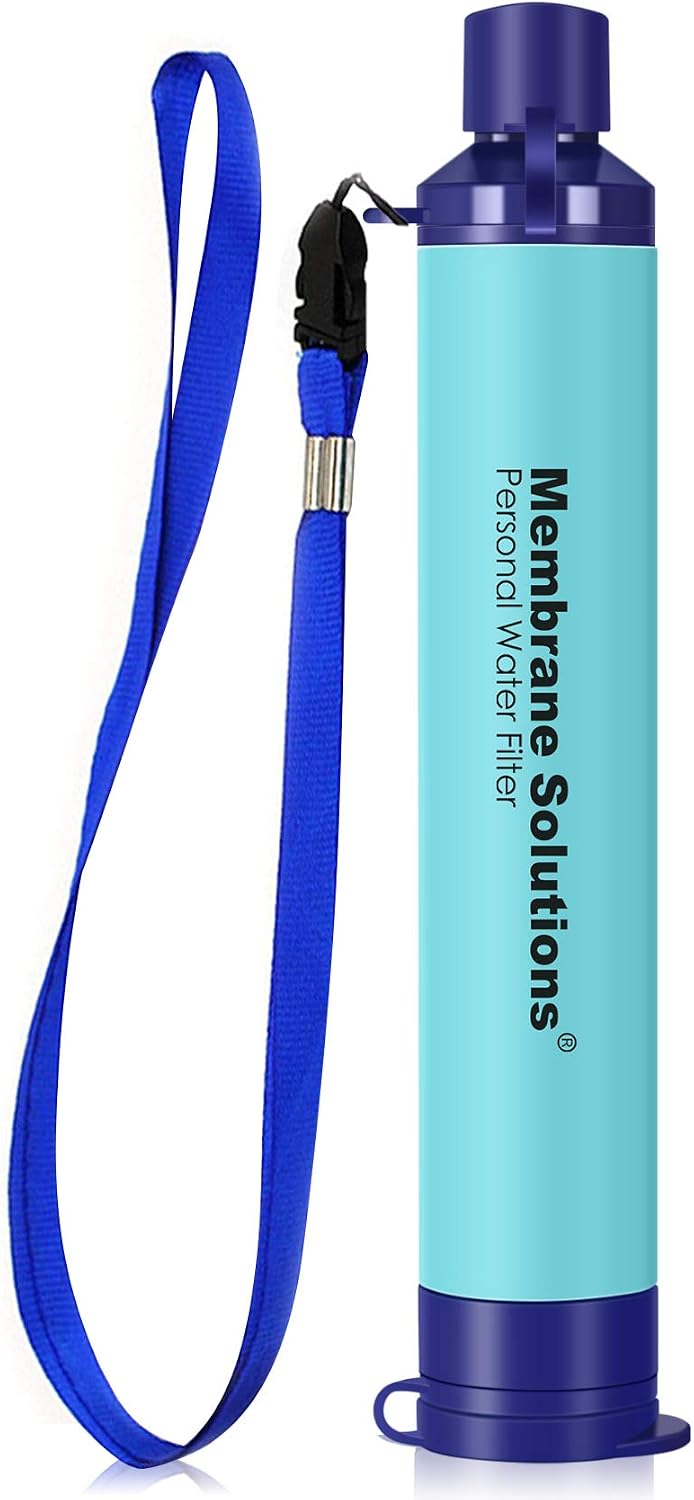
| Filter bottle needed? | ✅ | Not necessary, but a Membrane Solutions Filter Straw can improve taste |
| Common risks | Aging lead pipes in older buildings, Chlorination byproducts, Agricultural runoff in rural areas, Elevated nitrates in some well water |

Key Statistics


Affiliate links — we earn a small commission at no extra cost to you.
Water Infrastructure & Supply
Poland's water infrastructure has undergone a massive transformation since joining the European Union in 2004. Billions of euros in EU cohesion funds have been invested in upgrading water treatment plants, replacing aging pipelines, and building new wastewater treatment facilities across the country. Before EU accession, many smaller towns and rural areas relied on outdated systems, but today the vast majority of the population has access to modern, EU-compliant water treatment.
Major cities operate state-of-the-art water treatment facilities. Warsaw's MPWiK (Municipal Water and Sewerage Company) draws water from the Vistula River and underground sources, processing it through multi-stage filtration, ozonation, and UV disinfection. Krakw sources its water primarily from the Rudawa and Raba rivers with advanced treatment systems. Gdask relies on deep underground aquifers that produce naturally high-quality water requiring minimal treatment.
Ongoing infrastructure projects continue to improve Poland's water systems. The National Programme for Municipal Wastewater Treatment has been a key driver, expanding sewer networks and upgrading treatment plants to meet the EU Urban Wastewater Treatment Directive. Many municipalities are also systematically replacing old lead and asbestos-cement pipes with modern polyethylene ones. Smart water metering and leak detection systems are increasingly being deployed in larger cities to reduce water loss, which has dropped from over 20% to around 13% in the last two decades.
Contamination & Health Risks
Polish tap water is regularly tested and monitored by the Chief Sanitary Inspectorate (Gwny Inspektorat Sanitarny, GIS), and compliance with EU Drinking Water Directive standards is very high at over 99%. Contaminants occasionally detected include trace levels of chlorination byproducts (trihalomethanes), though these remain well within EU limits. Microbiological contamination is extremely rare in municipal water systems.
The primary concern for travelers is the internal plumbing of older buildings. Some pre-1970s buildings, particularly in historic city centers, may still have lead service lines or older copper pipes with lead solder joints. While municipalities have largely replaced main distribution pipes, building owners are responsible for internal plumbing. In such cases, running the tap for 30-60 seconds before drinking can reduce exposure to any metals that may have leached into standing water.
In rural areas, some households rely on private wells rather than municipal water systems. These are not subject to the same rigorous monitoring, and elevated nitrate levels from agricultural fertilizer runoff have been documented in some regions, particularly in intensively farmed areas of central and western Poland. Travelers staying in rural guesthouses or agritourism properties should ask about the water source and consider using bottled water if the supply comes from a private well.
Regional Water Quality Breakdown
Warsaw
safeWarsaw's water is treated by the modern Filtry and Praga water treatment plants using ozonation and activated carbon filtration. The city's MPWiK has invested heavily in infrastructure, and tap water quality consistently meets all EU standards. The municipality encourages residents and visitors to drink tap water through its 'Warszawska kranwka' campaign.
Krakw
safeKrakw's water comes from surface reservoirs on the Raba and Rudawa rivers and is treated at the Raba and Bielany water plants. Water quality is excellent and regularly monitored. Some older buildings in the historic Stare Miasto (Old Town) may have aging internal pipes, so letting the tap run briefly before drinking is advisable.
Gdask / Tri-City (Trjmiasto)
safeThe Tri-City area (Gdask, Gdynia, Sopot) benefits from deep Quaternary aquifer water sources that are naturally very clean. The water is among the best quality in Poland and requires relatively little treatment. Tourists visiting the Baltic coast can drink tap water with confidence.
Wrocaw
safeWrocaw draws its water from the Oawa and Nysa Kodzka rivers, treated at the Na Grobli and Mokry Dwr water plants. The city completed major upgrades to its water treatment and distribution infrastructure with EU funding. Tap water is safe and meets all regulatory standards.
Zakopane & Tatra Mountains
safeThe Zakopane area benefits from mountain spring water sources of excellent natural quality. Municipal water is well-treated and safe to drink. However, travelers hiking in the Tatras should avoid drinking directly from streams without treatment, as livestock grazing can introduce pathogens.
Rural areas & small villages
cautionSome rural households rely on private wells that may not be regularly tested. Agricultural runoff can elevate nitrate levels, and older village water systems may not meet the same standards as city infrastructure. Travelers in agritourism settings should inquire about the water source and may want to use bottled water as a precaution.
Practical Tips for Travelers
- Carry a filter straw (e.g., Membrane Solutions) — it removes bacteria, parasites, and microplastics from any tap or stream. Strongly recommend the Membrane Solutions Filter Straw.
- In restaurants, ask for tap water by saying 'Poprosz wod z kranu' (po-PRO-sheh VO-deh z KRA-noo) , many restaurants will serve it for free, though some may charge a small fee.
- If staying in a pre-1970s building with potentially old plumbing, run the cold tap for 30-60 seconds each morning before drinking to flush any metals that may have leached from pipes overnight.
- When ordering water at a restaurant, specify 'niegazowana' (still) or 'gazowana' (sparkling), as Poles often default to sparkling water , if you want still water, be explicit.
- Take advantage of Warsaw's free public drinking water fountains ('zdrojki uliczne'), which operate during warmer months from May to September throughout the city center.
- If hiking in the Tatra Mountains or Bieszczady, always carry your own treated water rather than drinking from mountain streams, which may be contaminated by animal grazing upstream.
- Buy water in bulk from discount supermarkets like Biedronka or Lidl , a 6-pack of 1.5L bottles can cost as little as 10-15 PLN (about 2-3), saving significantly over tourist-area purchases.
- Carry a reusable water bottle , Poland's tap water is safe in all major cities, and refill stations and fountains are increasingly common in urban areas, reducing plastic waste.
- If you're in a rural guesthouse and unsure about the water source, politely ask 'Czy woda z kranu jest pitna?' (chih VO-da z KRA-noo yest PIT-na?) meaning 'Is the tap water drinkable?'
Bottled Water Availability & Cost
Bottled water is widely available throughout Poland in convenience stores (sklepy), supermarkets, gas stations, and kiosks. Popular domestic brands include ywiec Zdrj, Naczowianka, Muszynianka, and Cisowianka. A 0.5L bottle typically costs 2, 4 PLN (0.45, 0.90) in shops and 5, 10 PLN (1.10, 2.25) in restaurants and tourist areas. Sparkling water (woda gazowana) is extremely popular in Poland and is often the default when ordering water.
For budget-conscious travelers, buying larger 1.5L bottles in supermarkets like Biedronka, Lidl, or abka convenience stores brings the price down to 2, 5 PLN (0.45, 1.10). However, since Polish tap water is safe and high quality, carrying a reusable bottle is both economical and environmentally friendly. Many Polish cities now have public drinking water fountains , Warsaw alone has installed over 100 free-to-use water fountains during summer months. Krakw and Wrocaw have similar programs, making refilling easy for tourists.
Frequently Asked Questions
Can I brush my teeth with tap water in Poland?
Yes, tap water in Poland is perfectly safe for brushing teeth throughout the country. Municipal water is treated to EU drinking water standards and poses no risk for oral hygiene use.
Is it safe to drink ice in drinks in Poland?
Yes, ice in Polish restaurants, bars, and cafs is made from tap water that meets EU quality standards. You can safely enjoy ice in your drinks without concern.
Is it safe to shower in Polish tap water?
Absolutely. Showering in Polish tap water is completely safe. The water is well-treated and poses no skin or health risks. Some areas have harder water that may leave mineral deposits, but this is harmless.
Do restaurants in Poland serve tap water?
Some restaurants will serve tap water if requested, though it's not as culturally common as in some Western European countries. Many restaurants prefer to sell bottled water. In more modern and tourist-oriented establishments, asking for 'woda z kranu' (tap water) is becoming more accepted.
How much does bottled water cost in Poland?
A 0.5L bottle costs about 2-4 PLN (0.45-0.90) in shops and 5-10 PLN (1.10-2.25) in restaurants. Large 1.5L bottles from supermarkets cost 2-5 PLN (0.45-1.10). Poland remains affordable compared to Western Europe.
Is Polish tap water safe for making baby formula?
Polish municipal tap water is safe for preparing baby formula in major cities. However, if you're staying in an older building, consider using bottled low-mineral water (labeled 'niskosodowa' or 'dla niemowlt') to be extra cautious about potential pipe contamination.
Why does Polish tap water sometimes taste of chlorine?
Polish water utilities use chlorination as a final disinfection step, which can sometimes leave a mild chlorine taste, especially in areas farther from the treatment plant. This is harmless and indicates the water is being properly disinfected. Letting the water sit in an open container for a few minutes or using a carbon filter will remove the taste.
Is well water safe to drink in the Polish countryside?
Private wells in rural Poland are not always regularly tested and may have elevated nitrate levels from agricultural runoff. If staying at a rural guesthouse or agritourism farm, ask whether the water comes from the municipal supply or a private well. When in doubt, opt for bottled water.
Traveling Nearby?
Check tap water safety in neighboring countries:
Belarus Czech Republic Germany Lithuania Russia Slovakia UkraineInteresting Product Reviews
6 Best Remineralization Filters For Ro Systems (2026 Review Guide)
Jul 28, 2026
9 Best Well Water Pumps (2026 Review Guide)
Aug 14, 2026
9 Best Self-Cleaning Water Bottles (2026 Review Guide)
Aug 7, 2026
9 Best Electric Kettles (2026 Review Guide)
Aug 12, 2026
9 Best Bath Filters For Babies (2026 Review Guide)
Jul 27, 2026