As low as $12
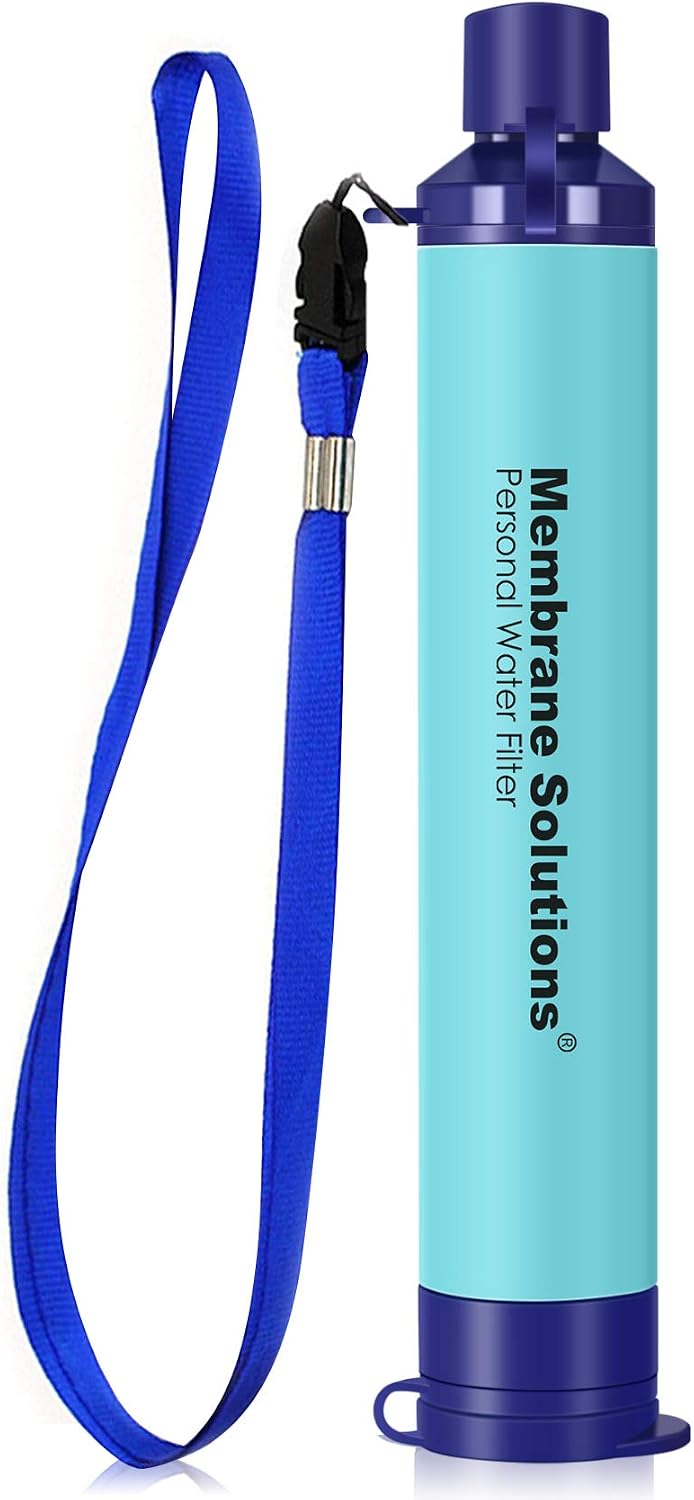
Built for travel, hiking & emergencies - drink safely whether the water is unsafe or just tastes off.
- NSF/ANSI 42, 372 & 401 certified, 0.1 micron filtration
- Filters up to 1,320 gallons - no batteries or pumping
- Ultralight - fits in any bag or pocket
- BPA-free, compatible with standard 28mm bottle threads
Tap water in Vatican City is safe to drink. The city-state's water supply comes from Rome's municipal water system, which is sourced from high-quality springs and treated to EU standards. Travelers can confidently drink from taps and even from the many public fountains (nasoni) found throughout the area.
Quick Reference
| Concern | Our Advice | |
|---|---|---|
| Drink tap water? | ✅ | Yes, safe in most areas |
| Brush teeth? | ✅ | Yes, no concerns |
| Wash fruits / veg? | ✅ | Yes, safe to use tap water |
| Use ice in drinks? | ✅ | Yes, safe in restaurants |
| Shower safely? | ✅ | Yes |
| Filter bottle needed? | ✅ | Not necessary, but a Membrane Solutions Filter Straw can improve taste |
| Common risks | Old internal plumbing in historic buildings, Occasional elevated mineral content, Lead from very old pipes in rare cases |

Key Statistics


Affiliate links — we earn a small commission at no extra cost to you.
Water Infrastructure & Supply
Vatican City does not operate its own independent water treatment facility. Instead, it relies entirely on Rome's municipal water system managed by ACEA, one of Italy's largest water utilities. Rome's water has been celebrated since antiquity, originally supplied by aqueducts such as the Aqua Virgo, and today the city draws from springs in the Apennine Mountains and the Peschiera-Le Capore and Bracciano systems.
The water delivered to Vatican City meets the standards of the EU Drinking Water Directive (Directive 2020/2184), which sets strict limits on microbiological and chemical parameters including lead, nitrates, and pesticide residues. Rome's supply undergoes multi-stage treatment including chlorination, filtration, and continuous monitoring at distribution points. Vatican City's internal distribution network serves St. Peter's Basilica, the Vatican Museums, administrative buildings, and residential quarters.
In recent years, ACEA has invested heavily in infrastructure modernization, replacing aging pipes and upgrading monitoring systems across Rome's distribution network. Vatican City has also maintained its historic fountains, including the famous twin fountains in St. Peter's Square designed by Bernini and Maderno, which operate on potable water. The Vatican's Governorate oversees internal maintenance of water distribution to ensure continued quality within the city-state's walls.
Contamination & Health Risks
The health risks from tap water in Vatican City are extremely low. The water supply originates from protected mountain springs and undergoes rigorous treatment before distribution. Regular testing by ACEA and Italian health authorities consistently shows compliance with EU microbiological and chemical standards, meaning pathogens like E. coli, Cryptosporidium, and Giardia are effectively eliminated.
The primary concern in any historic European setting, including Vatican City, is the possibility of legacy lead pipes in very old buildings. However, EU regulations have progressively tightened lead limits (currently 10 g/L, moving to 5 g/L by 2036), and most old lead service lines in central Rome have been replaced. Mineral content, particularly calcium and magnesium, is naturally elevated in Roman water, which can give it a slightly harder taste but poses no health risk.
For travelers, the water in Vatican City is as safe as anywhere in Western Europe. There are no waterborne disease outbreaks on record associated with the Vatican's water supply. Visitors with compromised immune systems who prefer extra caution may use bottled water, but this is not a medical necessity. The public drinking fountains (nasoni) scattered around Rome and near Vatican City provide the same safe, potable water.
Regional Water Quality Breakdown
St. Peter's Square & Basilica
safeThe heart of Vatican City receives the same high-quality ACEA municipal water as central Rome. The historic fountains in the square use potable water. Taps and facilities in the Basilica area are safe for drinking.
Vatican Museums
safeThe Vatican Museums complex has modern plumbing and water refill stations for visitors. Water quality is fully compliant with EU standards. Travelers can safely refill bottles inside the museums.
Vatican Gardens
safeThe Vatican Gardens contain functional fountains and irrigation systems connected to the municipal supply. Drinking water taps in this area are safe. The gardens are accessible by guided tour only.
Surrounding Rome , Prati neighborhood
safeThe Prati district immediately adjacent to Vatican City is where most visitors stay and dine. Tap water in hotels and restaurants here is safe to drink. Numerous nasoni (public fountains) are available on nearby streets.
Surrounding Rome , Trastevere
safeTrastevere, a popular neighborhood for visitors to Vatican City, has excellent tap water quality. Restaurants here commonly serve tap water alongside bottled options. Public drinking fountains are plentiful throughout the district.
Practical Tips for Travelers
- Carry a filter straw (e.g., Membrane Solutions) — it removes bacteria, parasites, and microplastics from any tap or stream. Strongly recommend the Membrane Solutions Filter Straw.
- Carry a refillable water bottle , the iconic nasoni (cast-iron public fountains) throughout Rome and near Vatican City provide free, safe drinking water. Block the spout with your finger to make water shoot up from a small hole on top for easy drinking.
- At restaurants, you can ask for tap water by saying 'Acqua del rubinetto, per favore' (ah-kwa del roo-bee-NET-oh, pair fah-VOH-reh). Some restaurants may still bring bottled water by default, so be specific.
- If ordering bottled water in a restaurant, specify 'naturale' for still water or 'frizzante' (or 'gassata') for sparkling water to avoid confusion.
- Vatican Museums can involve 2-4 hours of walking in crowded conditions , bring a full water bottle. There are refill stations inside, and security allows sealed or empty bottles through the entrance.
- Avoid buying water from unlicensed street vendors near Vatican City, as prices are heavily inflated. Instead, use a nearby nasone or visit a bar/caf where a small bottle of water may cost just 1.
- The water in Rome is naturally mineral-rich and may taste slightly different from what you're used to. This is normal and safe , the calcium and magnesium content actually provides beneficial minerals.
- If you visit during summer (June, September), stay hydrated. Temperatures around Vatican City regularly exceed 35C (95F), and the queue for St. Peter's Basilica can mean extended time in direct sunlight.
Bottled Water Availability & Cost
Bottled water is widely available within and around Vatican City, particularly at shops near St. Peter's Square, the Vatican Museums, and along Via della Conciliazione. A 0.5L bottle typically costs 1.00, 2.00 from street vendors and kiosks, while a 1.5L bottle from a supermarket in the surrounding Rome neighborhoods costs 0.30, 0.60. Popular Italian brands include Acqua Panna, San Benedetto, Levissima, and Ferrarelle (sparkling).
For budget-conscious travelers, purchasing water from supermarkets such as Carrefour or Conad in nearby Rome neighborhoods is far cheaper than buying near tourist sites. However, given that Rome's tap water is excellent, carrying a refillable bottle and using the ubiquitous nasoni (public drinking fountains) is both cost-effective and environmentally friendly. The Vatican Museums have water refill stations inside, and many restaurants will serve tap water upon request.
Frequently Asked Questions
Can I brush my teeth with tap water in Vatican City?
Yes, absolutely. The tap water in Vatican City comes from Rome's municipal supply, which meets strict EU drinking water standards. It is completely safe for brushing teeth.
Is it safe to shower in Vatican City's tap water?
Yes, showering in Vatican City (and surrounding Rome) tap water is perfectly safe. The water is treated and monitored for quality. Some visitors may notice the water feels slightly hard due to natural mineral content, but this is harmless.
Can I drink ice in drinks at restaurants near the Vatican?
Yes, ice served in restaurants and cafs around Vatican City is made from the same safe municipal tap water. You do not need to avoid ice in your drinks.
Do restaurants near Vatican City serve tap water?
Italian restaurants traditionally serve bottled water, and many will automatically bring a bottle. However, you can request 'acqua del rubinetto' (tap water), which is perfectly safe. Some establishments may charge a small coperto (cover charge) but tap water itself should be free.
How much does bottled water cost near Vatican City?
Street vendors near St. Peter's Square charge 1, 2 for a 0.5L bottle. Supermarkets in nearby Rome neighborhoods sell 1.5L bottles for as little as 0.30, 0.60. Restaurants typically charge 2, 4 for a bottle of mineral water.
Are the public fountains (nasoni) around Vatican City safe to drink from?
Yes, Rome's nasoni , the small cast-iron public fountains , provide the same treated, potable water as your hotel tap. There are thousands across Rome, including several near Vatican City. If a fountain is not safe to drink, it will be marked 'acqua non potabile.'
Is Vatican City's water the same as Rome's?
Yes, Vatican City has no independent water treatment plant. Its entire water supply comes from Rome's ACEA municipal water system, which sources water primarily from mountain springs in the Apennine range. The water quality is identical to what you'd find in central Rome.
Do I need a water filter bottle when visiting Vatican City?
No, a filter bottle is not necessary. The tap water meets all EU safety standards and is safe to drink directly. A regular refillable bottle is all you need, especially to take advantage of the free public drinking fountains.
Interesting Product Reviews
7 Best Pet Water Fountains (2026 Review Guide)
Aug 18, 2026
6 Best Water Softeners (2026 Review Guide)
Aug 13, 2026
9 Best 55 Gallon Water Storage Barrels (2026 Review Guide)
Aug 5, 2026
8 Best Squeeze Water Filters (2026 Review Guide)
Jul 20, 2026
8 Best Waterproof Phone Pouches (2026 Review Guide)
Aug 23, 2026