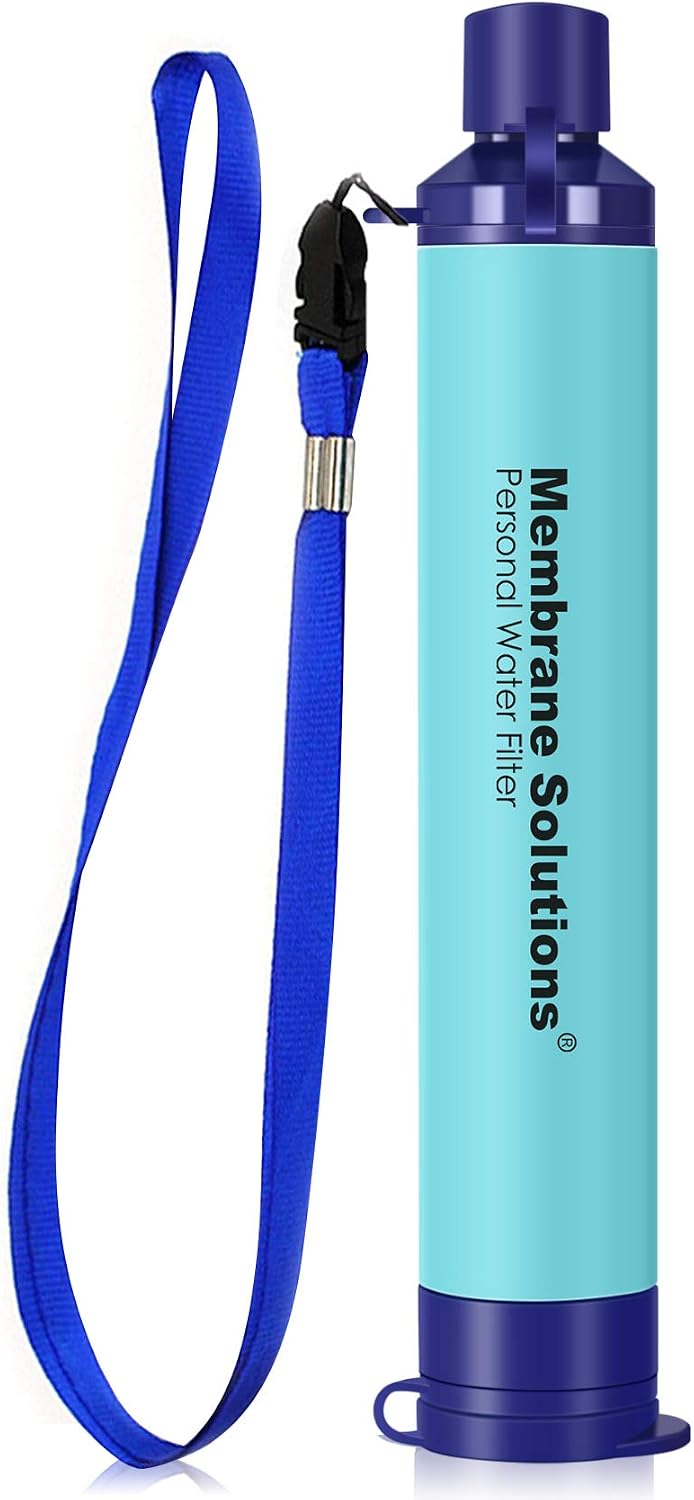
As low as $12
Built for travel, hiking & emergencies - drink safely whether the water is unsafe or just tastes off.
- NSF/ANSI 42, 372 & 401 certified, 0.1 micron filtration
- Filters up to 1,320 gallons - no batteries or pumping
- Ultralight - fits in any bag or pocket
- BPA-free, compatible with standard 28mm bottle threads
Tap water in Cambodia is not safe to drink for travelers. While Phnom Penh's water treatment has improved significantly in recent years, distribution infrastructure remains unreliable across much of the country, and rural areas often lack treated water entirely. Travelers should rely on bottled or filtered water throughout their visit.
Quick Reference
| Concern | Our Advice | |
|---|---|---|
| Drink tap water? | ❌ | Use bottled or filtered water |
| Brush teeth? | ❌ | Use bottled or filtered water |
| Wash fruits / veg? | ❌ | Wash with filtered or bottled water |
| Use ice in drinks? | ❌ | Avoid unless confirmed purified |
| Shower safely? | ✅ | Yes |
| Filter bottle needed? | ❌ | Strongly recommend a Membrane Solutions Filter Straw for all travelers |
| Common risks | Bacterial contamination, Parasitic infections, E. coli, Heavy metals, Pesticide runoff, Arsenic in groundwater, Turbidity |

Key Statistics


Affiliate links — we earn a small commission at no extra cost to you.
Water Infrastructure & Supply
Cambodia's water infrastructure has undergone significant transformation since the devastation of the Khmer Rouge era. The Phnom Penh Water Supply Authority (PPWSA) is often cited as a remarkable success story, having turned a war-ravaged system into an award-winning utility that now provides 24-hour pressurized water to the capital. However, outside of Phnom Penh, water infrastructure remains underdeveloped, with many provincial towns relying on small private operators and rural areas depending on wells, rainwater harvesting, and untreated surface water.
The PPWSA treats water drawn from the Mekong and Tonle Sap rivers using conventional methods including coagulation, sedimentation, filtration, and chlorination. Despite the high quality at the treatment plant, aging pipes and secondary contamination in building plumbing systems mean that water at the tap may not meet drinking standards. In provincial capitals, water treatment capacity is limited and supply is often intermittent, with lower pressure increasing the risk of infiltration of contaminants into the pipe network.
Major investment projects funded by the Asian Development Bank, World Bank, and JICA are expanding piped water networks to secondary cities and improving rural water supply. The Cambodian government's National Strategy for Rural Water Supply, Sanitation, and Hygiene aims to achieve universal access to safe water by 2030. Projects in Siem Reap, Battambang, and Kampong Cham are upgrading treatment plants and extending distribution networks, though progress remains gradual.
Contamination & Health Risks
The primary health risks from Cambodian tap water include bacterial contamination (E. coli, Salmonella, Vibrio cholerae), parasites (Giardia, Cryptosporidium), and in certain regions, elevated levels of arsenic in groundwater. Studies have found that even in Phnom Penh, water samples taken at household taps can show bacterial contamination due to deteriorated pipes and improper storage. Rural wells in the Mekong River floodplain provinces of Kandal, Prey Veng, and Kampong Cham have documented arsenic levels exceeding WHO guidelines.
Pollution from industrial discharge, agricultural pesticides, and untreated sewage further compromises surface and groundwater quality. The garment industry, brick kilns, and unregulated factories contribute heavy metals and chemical pollutants. During the rainy season (May, October), flooding dramatically increases turbidity and microbial contamination in both surface water and shallow wells, making water quality particularly unreliable.
For travelers, the most common waterborne illnesses are traveler's diarrhea, gastroenteritis, and hepatitis A. Ice in tourist-oriented restaurants is generally produced commercially from purified water, but street vendors and local eateries may use ice from untreated sources. Washing fruits and vegetables with untreated tap water can also pose a risk. Travelers should be vigilant about water safety even in upscale establishments outside major tourist hubs.
Regional Water Quality Breakdown
Phnom Penh
cautionPhnom Penh has the best water treatment infrastructure in Cambodia, with PPWSA delivering high-quality treated water. However, contamination can occur in building plumbing and storage tanks, so tap water is still not recommended for drinking without boiling or filtering.
Siem Reap
avoidSiem Reap's water infrastructure is improving but remains inconsistent. Groundwater sources may contain elevated iron and manganese levels. Travelers visiting Angkor Wat and surrounding temples should carry bottled or filtered water at all times.
Sihanoukville & Coastal Areas
avoidRapid development has outpaced water infrastructure in Sihanoukville. Water supply is unreliable and often sourced from untreated wells. The islands like Koh Rong have extremely limited water infrastructure and rely on rainwater and imported bottled water.
Battambang
avoidBattambang's piped water reaches only a fraction of residents and treatment capacity is limited. Water quality varies significantly by season, with the rainy season bringing heightened contamination risks. Stick to bottled or purified water.
Kampong Cham & Mekong Provinces
avoidProvinces along the Mekong River floodplain face documented arsenic contamination in groundwater wells. Surface water is subject to agricultural and industrial pollution. Only bottled or thoroughly purified water should be consumed.
Rural & Remote Areas
avoidRural Cambodia relies primarily on untreated well water, rainwater collection, and surface water. Microbial contamination is widespread, and water treatment is essentially nonexistent. Travelers should bring their own purification methods and stock up on bottled water before venturing to remote areas.
Practical Tips for Travelers
- Carry a filter straw (e.g., Membrane Solutions) — it removes bacteria, parasites, and microplastics from any tap or stream. Strongly recommend the Membrane Solutions Filter Straw.
- Always drink bottled or filtered water , look for an intact seal on bottles before purchasing, as refilled bottles are occasionally sold by unscrupulous vendors.
- Carry a portable water purification bottle (such as Grayl or LifeStraw) especially when traveling outside Phnom Penh and Siem Reap, as bottled water may not always be available.
- In Khmer, ask for purified water by saying '' (som tuk bor-ri-sot), meaning 'please give me purified water.' You can also simply say 'tuk sot' (clean water).
- Be cautious with ice at street stalls , commercially produced ice comes in cylindrical tubes with holes and is generally safe, while irregularly shaped crushed ice may be made from untreated water.
- Use bottled or filtered water to brush your teeth, especially outside of Phnom Penh, to avoid accidental ingestion of contaminated water.
- Peel fruits and vegetables rather than just washing them, or soak produce in water purified with a few drops of iodine or food-grade hydrogen peroxide for added safety.
- During the rainy season (May, October), be extra cautious about water quality everywhere , flooding increases contamination significantly, even in areas with treated water supply.
- Many hotels and guesthouses provide free refill stations or complimentary water bottles , take advantage of these to reduce costs and plastic waste.
Bottled Water Availability & Cost
Bottled water is widely available throughout Cambodia and is the primary drinking water source for most travelers. A 500ml bottle typically costs 500, 1,500 KHR (about $0.12, $0.37 USD) at convenience stores and local shops, while restaurants and hotels may charge $0.50, $1.50 USD. Popular local brands include Vital, Aquarius, and Khmer Water, while international brands like Evian are available at higher prices in tourist areas.
Buying large 1.5-liter bottles ($0.30, $0.75 USD) or 20-liter refillable jugs (around $1.00, $1.50 USD) is more economical for longer stays. Many guesthouses and hotels provide complimentary drinking water. Travelers concerned about plastic waste should consider bringing a portable water filter or UV purification bottle , brands like LifeStraw or Grayl work well in Cambodia and can significantly reduce single-use plastic consumption during a trip.
Frequently Asked Questions
Can I brush my teeth with tap water in Cambodia?
It is not recommended to brush your teeth with tap water in Cambodia, especially outside Phnom Penh. Even small amounts of contaminated water can cause gastrointestinal illness. Use bottled or filtered water for brushing teeth throughout your trip.
Is it safe to shower in Cambodian tap water?
Yes, showering with tap water is generally safe as long as you avoid swallowing any water. Keep your mouth closed during showers and be careful around open wounds. The risk is from ingestion, not skin contact.
Is the ice in Cambodian restaurants safe?
In tourist-oriented restaurants and hotels, ice is typically made from purified water and is safe. Look for cylindrical tube-shaped ice with a hole in the center, which indicates factory production. Avoid irregularly shaped crushed ice from street vendors or very local establishments, as it may be made from untreated water.
How much does bottled water cost in Cambodia?
A 500ml bottle typically costs $0.12, $0.37 USD at local shops. Restaurant prices range from $0.50, $1.50 USD. Large 1.5-liter bottles cost $0.30, $0.75 USD. Buying in bulk from supermarkets or markets is the most economical option for longer stays.
Is tap water in Phnom Penh safe to drink?
While Phnom Penh's water treatment plant produces high-quality water, contamination can occur in the distribution network and building plumbing. The PPWSA has made remarkable improvements, but travelers should still boil or filter tap water, or drink bottled water to be safe.
Do I need to worry about water quality at Angkor Wat in Siem Reap?
Yes, bring plenty of bottled water when visiting Angkor Wat and the surrounding temple complex. Siem Reap's tap water is not safe to drink, and you'll be walking in heat for hours. Buy water in bulk from shops in Siem Reap town rather than paying inflated prices from vendors near the temples.
Can I eat raw salads and fresh fruit in Cambodia?
Exercise caution with raw salads and unpeeled fruits, as they may have been washed with untreated tap water. In upscale tourist restaurants, these are usually safe. At local eateries and street stalls, it's safer to choose cooked foods or fruits you can peel yourself, such as bananas, mangoes, and dragon fruit.
Is it safe to drink coconut water from street vendors in Cambodia?
Fresh coconut water is generally safe because it comes sealed inside the coconut itself. Just make sure the coconut is opened in front of you and that no tap water or unclean ice has been added. It's also a great way to stay hydrated in Cambodia's tropical heat.
Interesting Product Reviews
7 Best Water Filters For Aquariums (2026 Review Guide)
Aug 4, 2026
7 Best Shower Filters For Hard Water (2026 Review Guide)
Jul 26, 2026
9 Best Well Water Test Kits (2026 Review Guide)
Aug 15, 2026
7 Best Water Filters For Heavy Metals (2026 Review Guide)
Jul 31, 2026
6 Best Whole House Water Filters For Well Water (2026 Review Guide)
Jul 25, 2026