Around $20
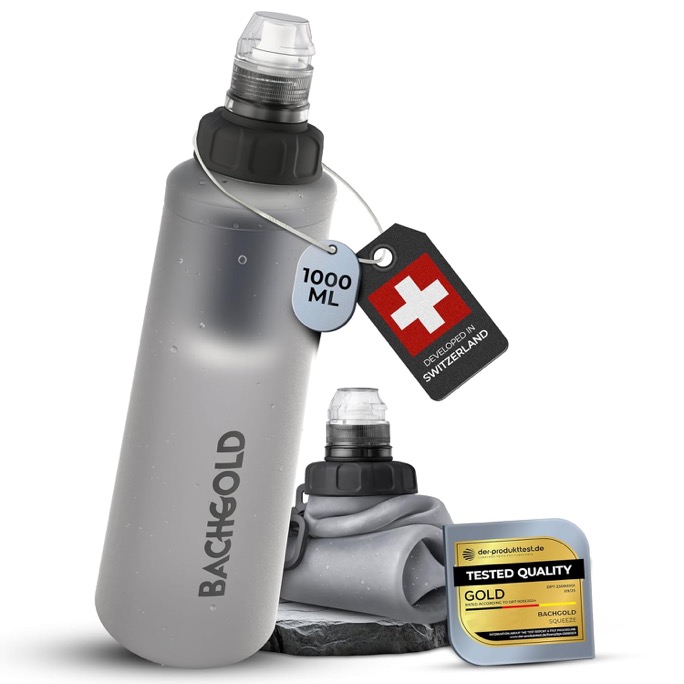
Built for travel, hiking & emergencies - drink safely whether the water is unsafe or just tastes off.
- 2-stage filtration: nanofiber layer + 0.2 micron hollow fiber membrane
- Rinse to restore flow - no replacement cartridges needed
- Collapsible 1L bottle - folds flat to pocket size
- Leak-resistant, taste-neutral, designed in Switzerland
Tap water in Bhutan is generally not considered safe for travelers to drink without treatment. While the country has made significant progress in expanding access to improved water sources, inconsistent treatment standards, aging rural infrastructure, and seasonal contamination risks mean that visitors should rely on boiled, filtered, or bottled water throughout their stay.
Quick Reference
| Concern | Our Advice | |
|---|---|---|
| Drink tap water? | ❌ | Use bottled or filtered water |
| Brush teeth? | ❌ | Use bottled or filtered water |
| Wash fruits / veg? | ❌ | Wash with filtered or bottled water |
| Use ice in drinks? | ❌ | Avoid unless confirmed purified |
| Shower safely? | ✅ | Yes |
| Filter bottle needed? | ❌ | Strongly recommend a Bachgold Squeeze Filter Bottle for all travelers |
| Common risks | Bacterial contamination, E. coli, Parasitic infections, Waterborne diseases, Sediment and turbidity, Seasonal contamination from monsoon runoff |

Key Statistics


Affiliate links — we earn a small commission at no extra cost to you.
Water Infrastructure & Supply
Bhutan's water supply system relies heavily on gravity-fed schemes that channel water from mountain springs and streams to communities. Historically, rural water supply was managed at the community level with minimal treatment, while urban areas like Thimphu and Phuentsholing developed piped water systems starting in the 1970s and 1980s. The Royal Government of Bhutan, through the Department of Engineering Services and the Thimphu City Corporation, has gradually expanded infrastructure, though the geography of steep Himalayan valleys makes construction and maintenance challenging.
Most urban water systems use basic chlorination and sedimentation, but consistent water treatment across the country remains limited. Rural gravity-fed systems often supply untreated water directly from natural springs, and aging pipes in some towns are vulnerable to leaks and cross-contamination. During the monsoon season (June, September), heavy rains increase turbidity and bacterial loads in source water, putting additional strain on treatment capacity.
Bhutan has prioritized water and sanitation improvements under its successive Five-Year Plans with support from organizations including UNICEF, the Asian Development Bank, and JICA. Recent projects focus on upgrading urban water treatment plants in Thimphu and Phuentsholing, expanding rural piped water coverage, and improving water quality monitoring capacity. The government's National WASH Strategy aims to achieve universal access to safely managed water by 2030, aligned with SDG 6 targets.
Contamination & Health Risks
The primary health risk from Bhutan's tap water for travelers is microbial contamination, including E. coli, Giardia, and other waterborne pathogens. Studies conducted by the National Environment Commission and Royal Centre for Disease Control have found that a significant proportion of water samples from rural and peri-urban systems fail to meet WHO guidelines for fecal coliform levels. Even in Thimphu, water quality can vary by neighborhood and season.
Contamination sources include agricultural runoff, inadequate sanitation facilities near water sources, and leaking or damaged distribution pipes that allow ingress of pollutants. The monsoon season poses the greatest risk as heavy rainfall washes contaminants into rivers and springs that feed the water supply. Travelers visiting during summer months should be especially cautious about water quality, even in hotels.
For travelers, the most common waterborne illness risk is acute gastroenteritis causing diarrhea, nausea, and stomach cramps. Hepatitis A is also a concern for unvaccinated visitors. The CDC and WHO both recommend that travelers to Bhutan avoid drinking untreated tap water and use bottled, boiled, or properly filtered water for drinking and brushing teeth. Showering with tap water is generally safe as long as water is not swallowed.
Regional Water Quality Breakdown
Thimphu
cautionAs the capital, Thimphu has the most developed water infrastructure with chlorinated municipal supply. However, water quality can vary between neighborhoods and deteriorates during monsoon season. Travelers should still use filtered or boiled water for drinking.
Paro
cautionParo, the gateway town for most tourists visiting the Tiger's Nest monastery, has a basic municipal water system. Water is generally cleaner than more remote areas, but inconsistent treatment means it is not reliably safe for travelers to drink directly.
Phuentsholing
avoidThis border town with India is hot, humid, and more prone to waterborne contamination. Higher population density and proximity to the Indian plains increase contamination risks. Travelers should strictly avoid tap water and use only bottled or purified water.
Punakha
cautionPunakha, a popular destination for visiting the dzong and rice terraces, relies on gravity-fed water systems from nearby rivers. Water quality is variable and largely untreated. Bottled or boiled water is strongly recommended.
Bumthang Valley
cautionThis central highland region is a spiritual heartland and popular tourist area. Water comes from mountain springs and is generally cleaner at the source, but distribution systems are basic. Travelers should treat water before consumption.
Rural and Trekking Areas
avoidRemote rural areas and high-altitude trekking routes typically have no water treatment infrastructure. Water is sourced directly from streams and springs. Travelers must carry their own purification methods such as filter bottles, UV purifiers, or purification tablets.
Practical Tips for Travelers
- Always drink boiled, filtered, or bottled water in Bhutan , even in upscale hotels in Thimphu and Paro, tap water is not reliably safe for foreign visitors.
- Carry a portable water filter bottle or UV purification device, especially if trekking. This reduces plastic waste in a country that treasures its pristine environment. Strongly recommend the Bachgold Squeeze Filter Bottle.
- In Dzongkha (the national language), you can ask for safe water by saying 'Chu tsapo' () meaning 'hot water' , boiled water is the safest readily available option.
- Avoid ice in drinks unless you are certain it was made with purified water. Most tourist-grade hotels use purified ice, but verify with staff at local restaurants.
- During the monsoon season (June, September), be extra cautious about water quality as heavy rains increase contamination levels significantly.
- Peel all fruits and avoid raw salads washed in tap water, especially in smaller towns and rural homestays.
- Request 'ara' (local rice wine) or 'suja' (butter tea) as safe alternatives , both are boiled during preparation, making them generally safe to consume.
- Pack oral rehydration salts (ORS) as a precaution. If you do experience traveler's diarrhea, staying hydrated with purified water and ORS is essential in Bhutan's high-altitude environment.
Bottled Water Availability & Cost
Bottled water is widely available in Bhutan's towns, tourist hotels, and shops along trekking routes. Common brands include Bhutan Natural Spring Water and Mountain Spring. A 1-liter bottle typically costs BTN 20, 40 (approximately USD 0.25, 0.50) in local shops, while prices in hotels and restaurants may be slightly higher at BTN 40, 80. In remote areas and along popular trekking routes like the Snowman Trek, prices can be significantly higher due to transport costs.
Travelers planning multi-day treks should consider carrying a high-quality filter bottle or UV purification device rather than relying solely on purchased bottled water, both to save money and to reduce plastic waste. Bhutan is deeply committed to environmental conservation , it is the world's only carbon-negative country , and travelers are encouraged to minimize single-use plastic. Many hotels and tour operators now provide boiled or filtered water for refilling reusable bottles.
Frequently Asked Questions
Can I brush my teeth with tap water in Bhutan?
It is not recommended. Use bottled or filtered water for brushing your teeth throughout Bhutan. Even small amounts of untreated tap water can contain bacteria that may cause stomach upset for travelers without local immunity.
Is it safe to shower in Bhutan's tap water?
Yes, showering with tap water is safe as long as you avoid swallowing any water. Keep your mouth closed and be careful when washing your face. If you have any open wounds, consider using clean water to rinse them afterward.
Is ice safe in Bhutan's restaurants and hotels?
In tourist-oriented hotels and higher-end restaurants, ice is usually made with purified water. However, in local eateries and rural areas, ice may be made from untreated tap water. When in doubt, ask your guide or request drinks without ice.
Do restaurants in Bhutan serve safe drinking water?
Most tourist restaurants and hotels provide boiled or bottled water, especially since tourism in Bhutan is managed through licensed tour operators. However, free water served at local eateries may be untreated. Always confirm with your tour guide or the restaurant staff.
How much does bottled water cost in Bhutan?
A 1-liter bottle costs approximately BTN 20, 40 (USD 0.25, 0.50) in local shops. Hotel and restaurant prices may be BTN 40, 80. In remote trekking areas, prices can be significantly higher. Many tour packages include bottled water as part of the daily provision.
Is the water safe to drink during Bhutan's trekking routes?
No. Water along trekking routes comes from untreated mountain streams and should always be purified before drinking. Carry a reliable filter bottle, UV purifier, or water purification tablets. Your trekking crew will typically boil water for camp use.
Has Bhutan's water quality improved in recent years?
Yes, Bhutan has made steady progress. Access to basic water has reached 97% of the population. However, 'safely managed' water , meaning consistently treated and free from contamination , is available to only about 36% of the population, so travelers should continue to take precautions.
Should I get vaccinated before traveling to Bhutan because of water quality?
The CDC recommends that travelers to Bhutan be vaccinated against Hepatitis A, which can be transmitted through contaminated water and food. A Typhoid vaccination is also recommended, especially if you plan to visit rural areas or eat street food.
Interesting Product Reviews
7 Best Manual Well Pumps (2026 Review Guide)
Aug 23, 2026
6 Best Home Water Test Kits (2026 Review Guide)
Aug 2, 2026
9 Best Water Filters For Sulfur Smell (Rotten Egg Water) (2026 Review Guide)
Aug 1, 2026
9 Best Well Water Test Kits (2026 Review Guide)
Aug 15, 2026
8 Best Insulated Water Bottles (2026 Review Guide)
Aug 6, 2026