Around $20
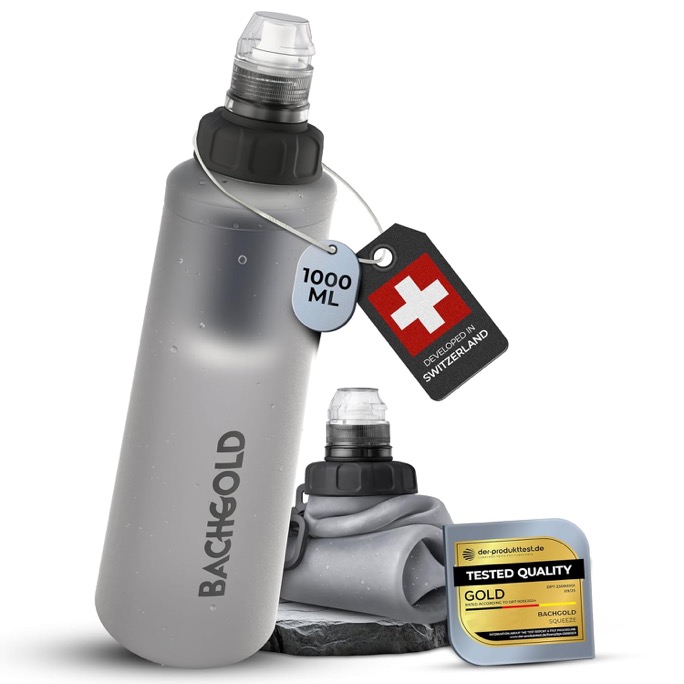
Built for travel, hiking & emergencies - drink safely whether the water is unsafe or just tastes off.
- 2-stage filtration: nanofiber layer + 0.2 micron hollow fiber membrane
- Rinse to restore flow - no replacement cartridges needed
- Collapsible 1L bottle - folds flat to pocket size
- Leak-resistant, taste-neutral, designed in Switzerland
Tap water in Ireland is generally safe to drink and meets EU drinking water standards. The public water supply, managed by Uisce ireann (formerly Irish Water), undergoes rigorous treatment and monitoring. However, some rural areas relying on private wells or group water schemes may have occasional quality issues, so travelers should exercise caution outside major urban centers.
Quick Reference
| Concern | Our Advice | |
|---|---|---|
| Drink tap water? | ✅ | Yes, safe in most areas |
| Brush teeth? | ✅ | Yes, no concerns |
| Wash fruits / veg? | ✅ | Yes, safe to use tap water |
| Use ice in drinks? | ✅ | Yes, safe in restaurants |
| Shower safely? | ✅ | Yes |
| Filter bottle needed? | ✅ | Not necessary, but a Bachgold Squeeze Filter Bottle can improve taste |
| Common risks | Trihalomethanes (THMs), Cryptosporidium, Lead from old plumbing, E. coli in private wells, Pesticide traces in agricultural areas |

Key Statistics


Affiliate links — we earn a small commission at no extra cost to you.
Water Infrastructure & Supply
Ireland's public water supply is managed by Uisce ireann (formerly Irish Water), a national utility established in 2014 to consolidate water services previously managed by 31 local authorities. The country sources its drinking water from a mix of surface water (rivers, lakes, and reservoirs) and groundwater, with surface water accounting for approximately 80% of public supplies. Major cities like Dublin draw from large reservoir systems, while smaller towns often rely on local sources.
The treatment process typically involves coagulation, filtration, and disinfection using chlorine or UV treatment. Ireland has invested heavily in upgrading treatment plants to meet the EU Drinking Water Directive standards. One of the most significant ongoing projects is the Vartry Water Treatment Plant upgrade serving parts of Dublin and Wicklow, and the planned Shannon to Dublin pipeline to secure the capital's long-term water supply.
Despite significant progress, challenges remain. The EPA's Remedial Action List identifies public water supplies at risk of failing to meet standards, often due to aging infrastructure or inadequate treatment for Cryptosporidium and trihalomethanes (THMs). Uisce ireann's capital investment programme, backed by billions of euros in funding through 2030, aims to replace lead service connections, reduce leakage rates (which historically exceeded 40%), and upgrade wastewater treatment facilities across the country.
Contamination & Health Risks
For travelers, Ireland's public tap water poses minimal health risks. The EPA's annual drinking water report consistently shows that over 99% of samples from public supplies comply with both microbiological and chemical standards. The main contaminants of concern are trihalomethanes (THMs), which are disinfection byproducts, and occasional Cryptosporidium detections, particularly in supplies drawing from agricultural catchments.
The most significant risks are associated with private wells and small group water schemes, which serve approximately 14% of the population and are not subject to the same level of regulatory oversight. The EPA has found that private wells can be contaminated with E. coli, nitrates, and pesticides, particularly in areas with intensive farming. Travelers staying in rural B&Bs or holiday homes served by private wells should inquire about water testing.
Lead contamination is another concern in older buildings constructed before the 1970s, when lead pipes were commonly used for internal plumbing and service connections. While Uisce ireann has been systematically replacing public-side lead pipes, the property owner is responsible for internal plumbing. In older accommodation, running the tap for 30 seconds to two minutes before drinking can help flush out any accumulated lead.
Regional Water Quality Breakdown
Dublin
safeDublin's water supply is sourced from the Vartry and Poulaphouca reservoirs and the River Liffey, treated at modern facilities. Water quality is consistently high and monitored extensively. The main concern is lead in older Victorian-era buildings, but this affects a shrinking number of properties.
Cork
safeCork city's water supply comes from the River Lee and is treated at the Lee Road Water Treatment Plant. Quality is generally excellent, meeting EU standards. Some older parts of the city may have legacy lead piping in buildings predating the 1970s.
Galway
safeGalway's water supply has improved significantly following the upgrade of the Terryland Water Treatment Plant and installation of UV treatment. The city previously experienced boil water notices due to Cryptosporidium concerns, but the modern treatment system now provides reliable, safe water.
Limerick & Shannon
safeLimerick city is served by the Clareville Water Treatment Plant on the River Shannon, one of the largest in the country. Water quality is consistently compliant with EU standards. Travelers to the Shannon region can drink tap water with confidence.
Rural West & Northwest (Mayo, Donegal, Roscommon)
cautionSome rural areas in the west and northwest have historically appeared on the EPA's Remedial Action List due to inadequate treatment or THM issues. While improvements are ongoing, travelers in remote areas served by small group water schemes or private wells should verify water quality with their accommodation provider.
Rural Midlands (Laois, Offaly, Westmeath)
cautionParts of the midlands rely on smaller treatment plants and groundwater sources that can be vulnerable to agricultural contamination. Public supplies are generally safe, but private wells in farming areas may have elevated nitrate or bacterial levels. Travelers in rural accommodation should ask whether the water comes from a public supply.
Practical Tips for Travelers
- Carry a filter bottle (e.g., Bachgold Squeeze) — it removes bacteria, parasites, and microplastics from any tap or stream. Strongly recommend the Bachgold Squeeze Filter Bottle.
- Irish tap water is chlorinated, which may give it a slight taste , letting a glass sit for a few minutes or using a simple carbon filter jug can improve the flavour.
- In older buildings (pre-1970s), run the cold tap for 30 seconds to 2 minutes before drinking to flush any lead that may have leached from old pipes.
- If staying in a rural B&B or holiday cottage, ask your host: 'Is the water from a public supply or a private well?' , Irish: 'An bhfuil an t-uisce n solthar poibl n thobar phrobhideach?'
- In restaurants, you can request free tap water by asking: 'Could I have a glass of tap water, please?' , there is no obligation for restaurants to charge for it, and most will happily provide it.
- Carry a reusable water bottle , Dublin, Cork, Galway, and other cities have an increasing number of public water refill points, and most cafs will fill your bottle for free.
- Check the EPA's Remedial Action List (available on epa.ie) before visiting rural areas if you have concerns about local water quality , it lists any public supplies currently at risk.
- If you encounter a boil water notice (rare but possible in some rural areas), boil water for at least one minute before drinking, brushing teeth, or preparing food.
- Ice in drinks at bars and restaurants in Irish cities is made from treated mains water and is safe to consume without concern.
Bottled Water Availability & Cost
Bottled water is widely available throughout Ireland in supermarkets, convenience stores, petrol stations, and restaurants. Popular Irish brands include Ballygowan and Kerry Spring, while international brands like Evian and Volvic are also common. A 500ml bottle typically costs 1.00, 2.00 in shops and 2.50, 4.00 in restaurants or tourist areas. A 1.5-litre bottle from a supermarket like Tesco, Dunnes, or Lidl usually costs 0.80, 1.50.
For budget-conscious travelers, buying water in bulk from supermarkets is the most economical option, with six-packs of 1.5-litre bottles available for around 3, 5. However, given that Irish tap water is safe to drink in most areas, carrying a reusable water bottle is both more sustainable and cost-effective. Many cafs and restaurants will happily fill your bottle for free, and public water refill stations are becoming increasingly common in cities like Dublin, Cork, and Galway.
Frequently Asked Questions
Can I brush my teeth with tap water in Ireland?
Yes, tap water from public supplies throughout Ireland is safe for brushing teeth. The water is treated and disinfected to meet EU drinking water standards. Even in areas with slightly elevated THM levels, the water is safe for this purpose.
Is it safe to shower in Irish tap water?
Absolutely. Irish tap water is safe for showering, bathing, and all personal hygiene purposes throughout the country. The chlorination levels are within safe limits and pose no risk through skin contact.
Is ice safe in drinks at Irish pubs and restaurants?
Yes, ice in Irish bars, pubs, and restaurants is made from treated mains water and is perfectly safe. There is no need to request drinks without ice when visiting Ireland.
Can I drink tap water in Dublin hotels?
Yes, Dublin's public water supply is of high quality and safe to drink directly from the tap. Most hotels serve mains water. If you're in a very old building with original plumbing, you can let the cold tap run briefly before filling your glass as a precaution against any residual lead.
How much does bottled water cost in Ireland?
A 500ml bottle of water costs approximately 1.00, 2.00 in shops and 2.50, 4.00 in restaurants or tourist areas. Supermarket multi-packs offer better value at around 3, 5 for six 1.5-litre bottles. However, since tap water is safe, a reusable bottle is the most economical choice.
Is well water safe to drink in rural Ireland?
Private wells in rural Ireland are not regulated to the same standard as public supplies and may be contaminated with E. coli, nitrates, or other pollutants. If your accommodation uses a private well, ask the owner when it was last tested. When in doubt, boil the water or use bottled water for drinking.
Why does Irish tap water sometimes taste of chlorine?
Chlorine is added to Ireland's water supply as a disinfectant to kill harmful bacteria and ensure water remains safe through the distribution network. The taste is harmless and can be reduced by filling a jug and leaving it in the fridge for 30 minutes, or by using a simple carbon filter.
Are there any boil water notices currently in effect in Ireland?
Boil water notices are issued occasionally, typically affecting small or rural supplies after extreme weather or treatment issues. You can check the Uisce ireann website (water.ie) for current notices affecting specific areas. Major cities like Dublin, Cork, and Galway very rarely have such notices.
Interesting Product Reviews
6 Best Water Filters For Sediment And Rust (2026 Review Guide)
Aug 1, 2026
7 Best Uv Water Purifiers For Travel (2026 Review Guide)
Jul 19, 2026
9 Best Water Filters For Chloramine (2026 Review Guide)
Jul 29, 2026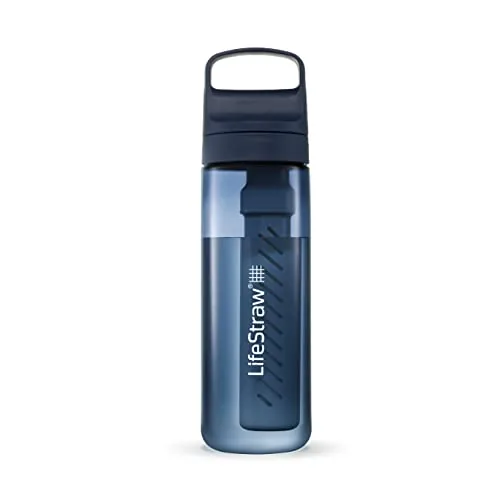
6 Best Travel Water Filter Bottles (2026 Review Guide)
Jul 16, 2026
9 Best Sump Pumps (2026 Review Guide)
Aug 14, 2026