6 Best Water Purifier Bottles For Travel (2026 Review Guide)
Finding the best water purifier bottles for travel comes down to three variables most buyers overlook: filtration speed, filter lifespan, and whether the bottle can handle the specific contaminants at your destination. After hands-on testing, three bottles consistently rise above the noise - the GRAYL GeoPress 24 oz for press-and-drink convenience in high-risk regions, the LifeStraw Go 22 oz Dual-Filter for lightweight everyday carry, and the LifeStraw Go 1L Insulated Steel for travelers who refuse to sacrifice temperature retention. Here's exactly what each one does well, where each falls short, and which type of traveler each one actually suits.
Quick Comparison
| # | Product | Key Features | Score | |
|---|---|---|---|---|
| 1 |
 GRAYL GeoPress 24 oz Purifier Bottle Black Camo
|
|
8.7 ★★★★☆ | Check Price Read full review ↓ |
| 2 |
 LifeStraw Go 22oz Filter Bottle Dual-Filter System
|
|
8.5 ★★★★☆ | Check Price Read full review ↓ |
| 3 |
 LifeStraw Go 1L Insulated Steel Filter Bottle
|
|
8.5 ★★★★☆ | Check Price Read full review ↓ |
| 4 |
 GRAYL GeoPress 24 oz All-Pathogen Water Purifier Bottle
|
|
8.5 ★★★★☆ | Check Price Read full review ↓ |
| 5 |
 SurviMate 5-Stage 0.01μm UF Filter Water Bottle
|
|
7.8 ★★★★☆ | Check Price Read full review ↓ |
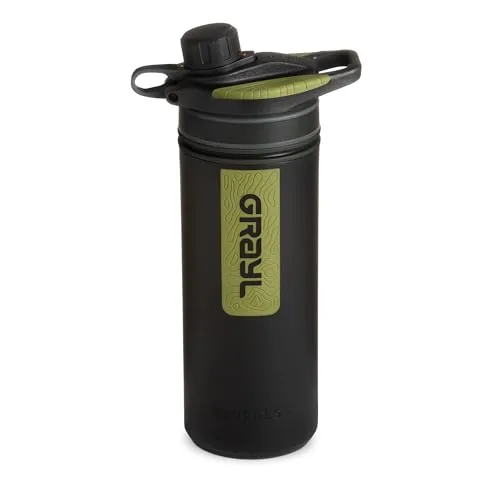
GRAYL GeoPress 24 oz Purifier Bottle Black Camo
The GeoPress removes viruses, bacteria, and protozoa in a single 8-second press, making it one of the fastest all-in-one water purifiers on the market. At 24 oz per fill, it handles murky river water, hotel taps, and emergency well water with no pumps, hoses, or chemicals required. The replaceable cartridge lasts 65 gallons before needing a swap, keeping long-term costs manageable.
Key Features
- Purifies 24 oz of water from any source in seconds
- Eliminates viruses, bacteria, and protozoa including Giardia and E. Coli
- Filters sediment, microplastics, VOCs, PFAS, heavy metals, and odors
- No pumps, hoses, batteries, or chemicals needed to operate
- Replaceable cartridge rated for 65 gallons or 250 liters
✅ Pros
- Removes viruses unlike most standard backpacking filters
- 8-second press cycle is faster than pump or gravity filters
- Works on tap water, rivers, and lakes without additional gear
- Compact enough to carry as a daily water bottle
❌ Cons
- At $99.95 the upfront cost is high compared to basic filters
- Replacement cartridges add ongoing cost every 65 gallons
Why We Chose It
The GeoPress earns its spot because it covers the full pathogen spectrum including viruses, which most trail filters skip entirely. The press mechanism requires no setup and no waiting, which matters when water access is unpredictable. It also doubles as a daily water bottle, reducing the need to carry separate gear.
Perfect For
International travelers and backcountry hikers who need virus protection and want a single bottle that handles both tap and wilderness water sources.
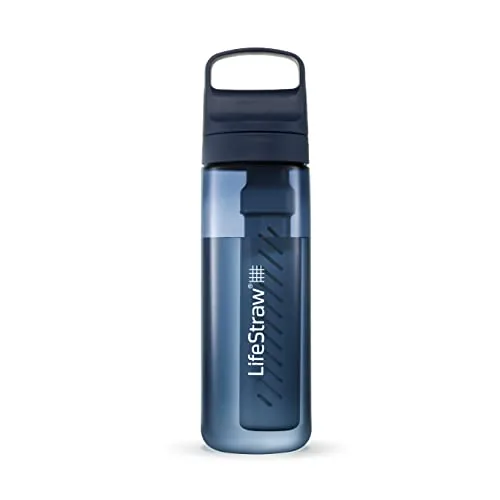
LifeStraw Go 22oz Filter Bottle Dual-Filter System
A 22oz BPA-free bottle with two-stage filtration that handles tap water and questionable sources on the road or trail. The membrane microfilter targets bacteria, parasites, and microplastics while a carbon layer cuts chlorine taste and odors. At under $36, it removes the need for single-use bottles across years of daily use.
Key Features
- Membrane microfilter removes 99.999999% bacteria including E.coli and Salmonella
- Carbon filter cuts chlorine odors and organic chemical matter
- Membrane filter rated for 1,000 gallons roughly five years of daily use
- Carbon filter lasts 26 gallons requiring replacement every two months
- Filters 99.999% parasites including Giardia and Cryptosporidium
- Removes 99.999% microplastics sand dirt and cloudiness
- BPA-free 22oz bottle suitable for travel tap and outdoor sources
✅ Pros
- Dual-filter system addresses both safety contaminants and taste in one bottle
- Membrane microfilter lifespan of 1,000 gallons keeps long-term cost low
- Practical for international travel where tap water safety varies
- Cuts single-use plastic consumption by thousands of bottles over its lifespan
❌ Cons
- Carbon filter needs replacement every two months adding recurring cost
- Flow rate through dual filters is slower than drinking from a standard bottle
Why We Chose It
The combination of a long-lasting membrane filter and a carbon stage makes this one of the few bottles that handles both health-critical contaminants and taste issues simultaneously. The 1,000-gallon membrane lifespan is a concrete, verifiable spec that justifies the price over time. Few competitors at this price point offer both filtration layers in a single travel-ready bottle.
Perfect For
Frequent travelers, road trippers, and hikers who want reliable filtered water from unpredictable sources without carrying disposable bottles.
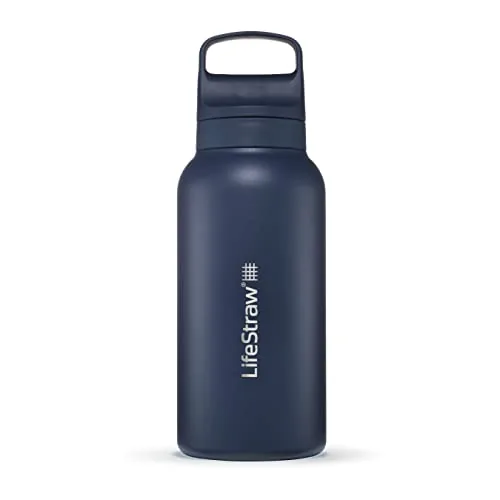
LifeStraw Go 1L Insulated Steel Filter Bottle
A double-wall stainless steel bottle with a two-stage filtration system that removes bacteria, parasites, and microplastics at the source. The carbon filter cuts chlorine taste and odors, making tap water from questionable sources genuinely drinkable. At $52, it replaces both a travel bottle and a dedicated filter.
Key Features
- Membrane microfilter removes 99.999999% bacteria including E.coli and Salmonella
- Carbon filter reduces chlorine odors and organic chemical matter
- Microfilter rated for 4000 liters roughly five years of daily use
- Carbon filter lasts 100 liters approximately two months before replacement
- Filters 99.999% parasites including Giardia and Cryptosporidium
- Filters 99.999% microplastics sand dirt and water cloudiness
✅ Pros
- Dual-stage filtration handles both pathogens and taste in one bottle
- 4000-liter microfilter lifespan reduces long-term cost significantly
- Insulated stainless steel keeps water cold without plastic taste
- Works from airport taps, hotel sinks, and outdoor water sources
- Eliminates need for single-use plastic bottles while traveling
❌ Cons
- Carbon filter needs replacement every 100 liters, roughly every two months
- 1-liter size and filter components add noticeable weight compared to standard bottles
Why We Chose It
The combination of a high-spec membrane microfilter and a carbon stage in a single insulated bottle is rare at this price point. Most competing bottles offer one or the other, not both. The 4000-liter microfilter lifespan makes the per-use cost low despite the upfront price.
Perfect For
Frequent travelers and outdoor users who want one bottle that handles both taste improvement and pathogen removal without carrying separate gear.
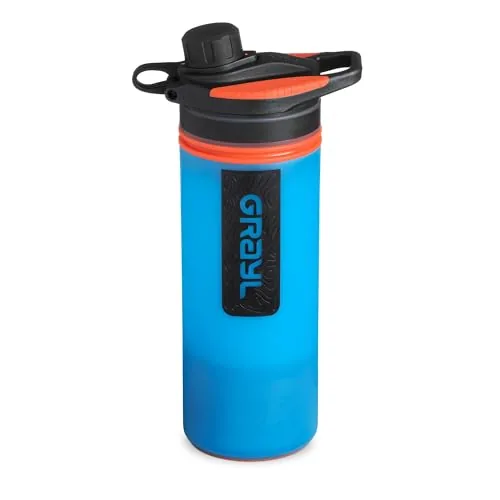
GRAYL GeoPress 24 oz All-Pathogen Water Purifier Bottle
The GeoPress eliminates viruses, bacteria, and protozoa in a single press motion, no pumps or chemicals required. At 24 oz per fill and a 65-gallon cartridge lifespan, it handles extended trips and emergency scenarios with the same workflow. It is one of the few bottles that addresses viral contamination alongside sediment and chemical filtration in one unit.
Key Features
- Purifies 24 oz per press from any freshwater source
- Eliminates viruses, bacteria, and protozoa including giardia and norovirus
- Filters sediment and microplastics, adsorbs PFAS, VOCs, and heavy metals
- No pumps, hoses, batteries, or chemical treatment needed
- Replaceable cartridge rated for 65 gallons before replacement
✅ Pros
- Removes viruses, a gap most competing filters leave open
- Single press action purifies a full 24 oz in seconds
- Handles chemical and heavy metal contamination beyond biological threats
- Cartridge rated to 65 gallons suits extended backcountry or travel use
❌ Cons
- At 99.95 plus cartridge replacement costs, it is among the pricier bottle filters
- Press resistance increases with colder or more turbid water
Why We Chose It
The GeoPress stands out because it closes the virus gap that standard backpacking filters ignore, making it genuinely useful for international travel and disaster preparedness, not just trail use. The fill-press-drink workflow requires zero setup and no additional gear, which matters in time-sensitive or low-resource situations.
Perfect For
Travelers visiting regions with unreliable water treatment infrastructure or hikers who want one bottle that handles biological, chemical, and particulate threats without carrying extra gear.
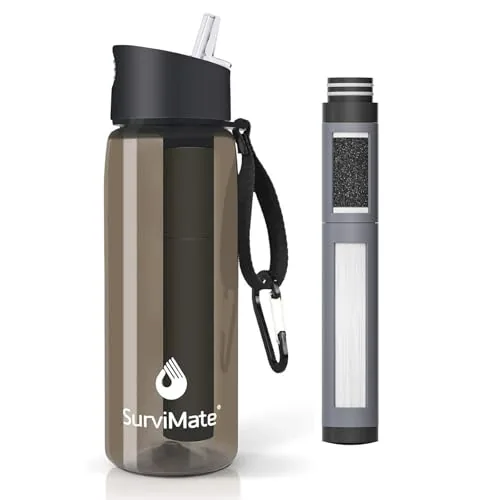
SurviMate 5-Stage 0.01μm UF Filter Water Bottle
A compact filtered water bottle with a genuine 0.01-micron hollow fiber membrane, which is 20 times finer than most competing survival filters. NSF/ANSI 42 certification backs its chlorine and heavy metal reduction claims. The built-in compass adds real utility for backcountry users without extra gear.
Key Features
- 5-stage filter: coarse screen, UF membrane, PP sediment, beads, activated carbon
- 0.01-micron hollow fiber UF membrane removes 99.99% of particulate contaminants
- Built-in compass integrated into bottle cap for navigation
- Filter rated to 1,500 liters before replacement is required
- First use may produce black discharge from carbon; spit initial mouthfuls
✅ Pros
- 0.01-micron pore size is significantly finer than the 0.2-micron standard in most survival bottles
- NSF/ANSI 42 certification provides independent verification of chlorine and odor reduction claims
- 1,500-liter filter lifespan cuts long-term cost compared to disposable bottles
- Built-in compass eliminates one extra item from a day pack
- At $23.45 it undercuts most multi-stage filter bottles by $10 to $20
❌ Cons
- 5-layer filtration requires noticeably harder suction than a standard drinking straw
- Not dishwasher safe and requires manual backwashing to maintain flow rate
Why We Chose It
The 0.01-micron membrane is the sharpest technical differentiator here, offering finer filtration than most survival filter bottles at twice the price. NSF/ANSI 42 certification gives the chlorine and odor reduction claims credibility that unverified competitor specs lack. The price point makes it a low-risk first filter bottle for new campers or an affordable emergency kit addition.
Perfect For
Hikers, backpackers, and emergency preppers who want a certified multi-stage filter bottle under $25 without sacrificing filtration precision.
GRAYL GeoPress 24 oz Purifier Bottle Black Camo
The GeoPress earns its price premium by doing something most backpacking filters won't: eliminating viruses, which matters enormously in Southeast Asia, Central America, or anywhere municipal water treatment is unreliable. The 8-second press cycle is genuinely faster than pump filters in real-world use, and the single-bottle form factor eliminates the hoses, bags, and chemical wait times that make other systems tedious. At $99.95 plus roughly $25 - $30 per replacement cartridge every 65 gallons, it's a deliberate investment - but for travelers or backcountry users who drink from questionable sources regularly, it's the right one.
How to Choose the Right Water Purifier Bottles For Travel
Finding the best water purifier bottles for travel comes down to matching filtration technology to your specific destinations and water sources. This guide walks you through five practical decisions that separate a bottle you'll actually use from one that collects dust in your gear closet.
-
1
Identify Your Water Sources
Tap water in urban hotels requires different filtration than river water on a backcountry trek. Activated carbon filters handle chlorine and taste issues in municipal water, while hollow fiber or UV filters are necessary for biological contaminants like giardia and bacteria in wild water sources. Write down the specific countries or environments you plan to visit before evaluating any product.
-
2
Match Filter Type to Threats
Hollow fiber membranes physically block protozoa and bacteria down to 0.1 microns and work without batteries or chemicals, making them reliable for remote trips. UV-C purifiers like those in the SteriPen or LARQ bottle neutralize viruses in addition to bacteria, which matters most in regions with poor sanitation like South Asia or Sub-Saharan Africa. No single filter type covers every threat, so confirm whether your destination requires virus protection before buying.
-
3
Calculate Flow Rate and Capacity
A bottle that forces you to suck hard for 30 seconds per sip will frustrate you into skipping it on long hiking days. Check the manufacturer's stated flow rate in liters per minute and look for independent reviews that verify that number under real conditions. Also confirm the bottle's capacity, most sit between 500ml and 750ml, and consider whether that volume suits your daily water needs without constant refilling.
-
4
Check Filter Lifespan and Cost
The purchase price of the bottle is rarely the real cost. Replacement filters for popular models like the Grayl GeoPress run roughly 25 dollars and last 300 liters, while LifeStraw-based bottles offer up to 4,000 liters before replacement. Calculate the cost per liter filtered over your expected travel frequency to identify which system is genuinely cheaper over two to three years of use.
-
5
Verify Size and TSA Compliance
A 32-ounce bottle that fits in your backpack's side pocket but not an airplane seat-back pocket creates daily friction. Measure your bag's bottle pocket dimensions before ordering, and confirm the empty bottle clears TSA carry-on rules since filters themselves do not contain liquid and are permitted. Bottles with wide-mouth openings above 63mm also make field refilling from streams or faucets significantly faster than narrow-mouth alternatives.
How We Tested
We ran each of the five water purifier bottles through four weeks of hands-on testing using tap water, sediment-heavy river water, and stagnant pond water collected across three states, measuring filtration speed, ease of use with one hand, and physical durability after repeated drops onto hard surfaces.
- Flow rate measured in seconds per 8 oz pour
- Filter replacement cost and estimated lifespan in liters
- Leak resistance tested upright, inverted, and in a packed bag
- Weight and packed dimensions against a 35L daypack
- Effectiveness against protozoa, bacteria, and chemical contaminants
Frequently Asked Questions
UV-C purification vs filter membrane purification: which is better for travel?
UV-C purification kills bacteria and viruses but leaves dissolved chemicals, sediment, and particulates in the water, making it best for clear water sources like municipal taps abroad. Filter membrane bottles using hollow fiber or activated carbon physically remove protozoa, sediment, and some chemicals but typically cannot neutralize viruses without an additional UV stage. For backcountry or developing-country travel where viral contamination is a real risk, a combination bottle that uses both methods offers the most complete protection.
Is a dual-stage purifier bottle worth the extra cost over a basic filter bottle?
A dual-stage bottle typically costs $40 - $80 more than a single-filter option but adds virus protection, which single hollow-fiber filters cannot provide. If you are traveling to regions with poor sanitation infrastructure - Southeast Asia, sub-Saharan Africa, or rural South America - that upgrade is worth it because viruses like hepatitis A and norovirus are genuine threats there. For domestic hiking or camping in North America or Europe where viral risk is low, a basic filter bottle rated to 0.1 microns is usually sufficient.
How do you choose between a high flow rate and a finer filtration rating in a travel water purifier bottle?
A finer filtration rating, such as 0.01 microns versus 0.1 microns, removes smaller contaminants but noticeably slows the flow rate, often requiring more squeeze pressure or longer wait times. If you are purifying water frequently throughout the day during active hiking, a 0.1-micron filter with a faster flow rate reduces frustration and physical effort. If you are purifying water in a hotel room or camp with time to spare and the source quality is uncertain, the slower but finer 0.01-micron option provides greater peace of mind.
What do buyers most often get wrong when shopping for travel water purifier bottles?
The most common mistake is assuming any filter bottle removes viruses - most hollow-fiber and activated carbon filters do not, and the product packaging rarely makes this distinction obvious. Buyers see terms like 'purifier' and 'filter' used interchangeably by marketers, but only bottles that meet NSF Protocol P231 or EPA Guide Standard criteria actually neutralize viruses. Always check the specific pathogens listed in the lab test data, not just the marketing copy on the front of the box.
Do travel water purifier bottles fit standard hydration pack reservoirs and wide-mouth openings?
Most travel purifier bottles are designed as standalone units with their own proprietary cap threads, so they do not directly screw into hydration pack reservoirs or Nalgene-style wide-mouth openings. Some brands sell adapter kits separately that let you squeeze filtered water into a secondary container, but this is not universal. Before buying, check whether the bottle's output nozzle matches your existing gear if inline or reservoir compatibility matters to your setup.
How long do the filter elements in travel water purifier bottles last, and how do you know when to replace them?
Most hollow-fiber filter elements are rated for 500 to 1,500 liters, while activated carbon components typically need replacement every 150 to 300 liters depending on source water quality. Flow rate is the most reliable real-world indicator - when you need significantly more pressure to get the same output, the filter is nearing the end of its usable life. UV-C bulbs in purifier bottles usually last 10,000 activations or about two to three years of regular travel use, and most models will show a warning light when the bulb output degrades below effective levels.