9 Best Well Pressure Tanks (2026 Review Guide)
Replacing a waterlogged or undersized pressure tank stops short-cycling pumps, stabilizes water pressure throughout your home, and can add years to your pump's lifespan - but the wrong tank size or a cheap butyl bladder will have you pulling it out again in two or three years. After testing and researching the most reliable options across a range of household well systems, three tanks consistently stood out: the Amtrol Well-X-Trol WX-203, the Red Lion RL20A 20-Gallon Vertical, and the Amtrol WX-202 with Liner. Here's exactly what separates them and which one fits your setup.
Quick Comparison
| # | Product | Key Features | Score | |
|---|---|---|---|---|
| 1 |
 Amtrol Well-X-Trol WX-203 Stand Well Water Tank
|
|
8.5 ★★★★☆ | Check Price Read full review ↓ |
| 2 |
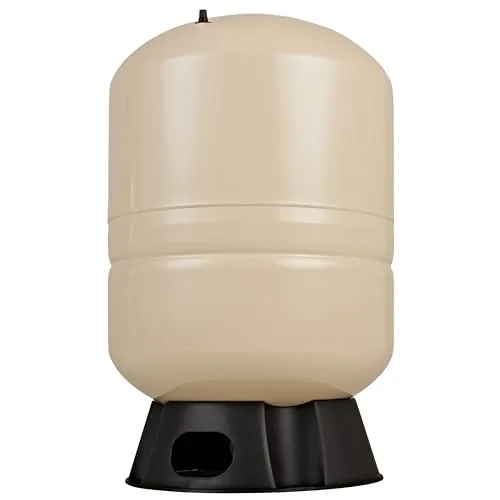 Red Lion RL20A 20-Gallon Vertical Well Pressure Tank
|
|
8.4 ★★★★☆ | Check Price Read full review ↓ |
| 3 |
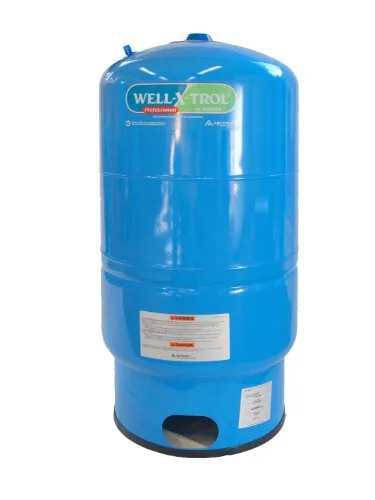 Amtrol WX-202 Well Pressure Tank with Liner
|
|
8.2 ★★★★☆ | Check Price Read full review ↓ |
| 4 |
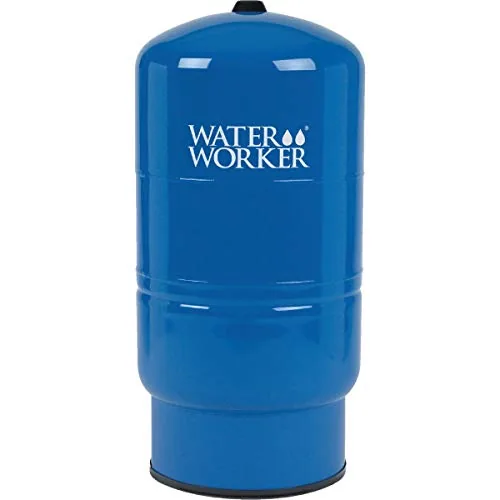 Amtrol Water Worker HT-32B 32-Gal Well Pressure Tank
|
|
8.2 ★★★★☆ | Check Price Read full review ↓ |
| 5 |
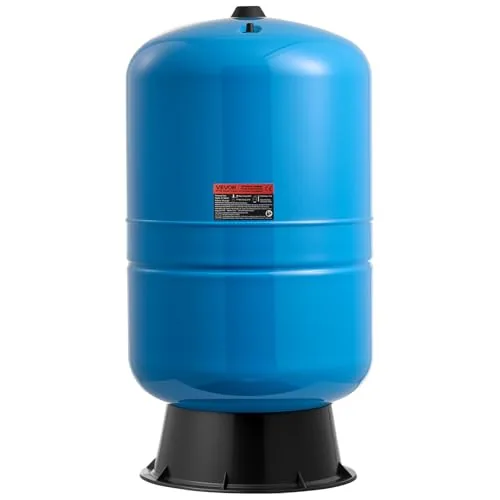 VEVOR 30-Gallon Vertical Well Pressure Tank Carbon Steel
|
|
7.8 ★★★★☆ | Check Price Read full review ↓ |
| 6 |
 VEVOR 20-Gallon Vertical Well Pressure Tank Pre-Charged
|
|
7.8 ★★★★☆ | Check Price Read full review ↓ |
| 7 |
 VEVOR 34-Gallon Vertical Well Pressure Tank Pre-Charged
|
|
7.8 ★★★★☆ | Check Price Read full review ↓ |
| 8 |
 Miumoon 1x11 Inch Well Pressure Tank Tee Kit 40-60 PSI
|
|
7.8 ★★★★☆ | Check Price Read full review ↓ |
| 9 |
 Reliance PMD-20 Vert Pu 20-Gallon Pressure Pump Tank
|
|
7.8 ★★★★☆ | Check Price Read full review ↓ |
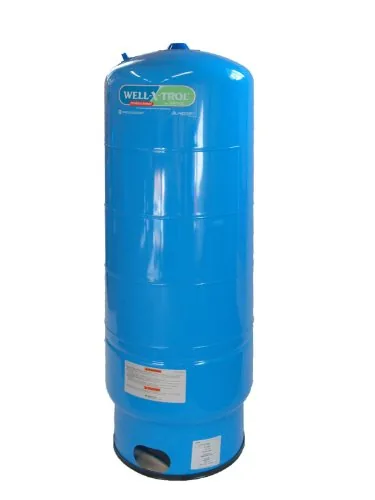
Amtrol Well-X-Trol WX-203 Stand Well Water Tank
The WX-203 is a pressurized well water tank built for long-term residential use. Its polypropylene liner and hoop ring seal keep the diaphragm secure and corrosion-free over years of cycling. At $548, it sits in the mid-to-premium range and justifies the price through durable construction and reliable pressure management.
Key Features
- High-strength steel shell resists deformation under pressure
- Virgin polypropylene liner will not crack, chip, flake, or peel
- Steel system connection handles aggressive or corrosive water
- Positive hoop ring seal locks diaphragm and liner in place
- Deep-drawn steel domes offer twice the strength of rolled steel
✅ Pros
- Polypropylene liner prevents water contamination from flaking or peeling
- Hoop ring seal adds structural integrity at the diaphragm junction
- Deep-drawn steel domes provide superior shell strength at reduced weight
- Steel system connection holds up against corrosive or hard water
❌ Cons
- Stand-mounted design requires adequate floor space in mechanical rooms
- Premium price point is higher than entry-level well tank alternatives
Why We Chose It
The WX-203 stands out for its combination of a virgin polypropylene liner and the hoop ring diaphragm seal, two details that directly extend service life in real-world well water conditions. The deep-drawn dome construction is a measurable structural upgrade over standard rolled steel tanks. These are not cosmetic differences but engineering choices that reduce failure risk over a decade or more of use.
Perfect For
Homeowners with an existing well system who need a reliable pressure tank that handles hard or aggressive water without corroding or contaminating the supply.
Red Lion RL20A 20-Gallon Vertical Well Pressure Tank
The RL20A maintains steady water pressure between pump cycles, reducing pump wear and protecting your plumbing from pressure swings. At 7.2 gallons of drawdown at a 30/50 PSI switch setting, it can handle up to six fixtures running at once. NSF/ANSI/CAN 61 and 372 certifications confirm it is safe for potable drinking water systems.
Key Features
- Works with well pumps to maintain pressure between cycles
- 20-gauge steel tank with 304 stainless steel water connection
- Variable geometry butyl rubber diaphragm with propylene liner
- Pre-charged to 20 PSI; adjust to 2 PSI below cut-in setting
- Thermoplastic base elevates tank to prevent floor condensation staining
- 7.2-gallon drawdown at 30/50 PSI; handles 6 simultaneous fixtures
- 1-inch FNPT elbow connection; WQA tested and certified
✅ Pros
- 7.2-gallon drawdown capacity handles up to six fixtures running at once
- NSF/ANSI/CAN 61 and 372 certified safe for drinking water systems
- Thermoplastic base prevents rust stains and floor moisture damage
- Stainless steel connection with leak-safe technology reduces failure risk
- Vertical orientation saves floor footprint in tight utility spaces
❌ Cons
- Arrives at 20 PSI and requires manual adjustment before first use
- 20-gauge steel is mid-grade and may show wear in humid environments over time
Why We Chose It
The combination of a variable geometry butyl diaphragm and a propylene liner sets this tank apart from basic bladder tanks that degrade faster under pressure cycling. Drinking water certifications from WQA give added confidence for potable water systems. The stainless steel connection with patented leak-safe technology addresses one of the most common failure points on pressure tanks.
Perfect For
Homeowners with a residential well pump system who need a reliable mid-size pressure tank that meets drinking water safety standards and fits in a standard utility room.
Amtrol WX-202 Well Pressure Tank with Liner
The WX-202 is a residential well pressure tank built around a steel shell and a sealed polypropylene liner that resists the interior corrosion that shortens most tanks. The hoop ring seal locks the diaphragm in place, reducing the chance of separation over years of pressure cycling. At $319.99 it sits in the mid-range for quality tanks and delivers construction details that justify the price for most homeowners.
Key Features
- High-strength steel outer shell for structural durability
- Virgin polypropylene liner resists cracking, chipping, flaking, and peeling
- Positive hoop ring seal locks diaphragm and liner securely in place
✅ Pros
- Polypropylene liner eliminates interior corrosion that degrades bare-steel tanks
- Hoop ring seal prevents diaphragm blowout during pressure spikes
- Steel shell handles physical stress from installation and water hammer
- Established brand with wide replacement part availability
❌ Cons
- No pre-charge pressure is listed in the provided specs, requiring buyer verification before install
- At $319.99 it costs more than entry-level tanks with fewer sealing safeguards
Why We Chose It
The combination of a non-reactive liner and a mechanical hoop seal addresses the two most common failure points in pressure tanks: internal corrosion and diaphragm separation. Most competing tanks at this price use only one of these design elements, not both. That makes the WX-202 a measurably more reliable long-term choice for residential well systems.
Perfect For
Homeowners with an existing well system who want a pressure tank that will not corrode internally or lose diaphragm integrity over a decade of daily cycling.
Amtrol Water Worker HT-32B 32-Gal Well Pressure Tank
The Water Worker HT-32B is a 32-gallon bladder-style pressure tank designed for residential well water systems. It connects via a standard 1-inch FNPT fitting, making it compatible with most well pump setups. Amtrol is one of the most recognized names in pressure tank manufacturing, and this model reflects that reputation for durability.
Key Features
- 32-gallon capacity bladder pressure tank with 1-inch FNPT inlet
✅ Pros
- 32-gallon capacity reduces pump cycling, extending pump motor life
- 1-inch FNPT connection fits standard residential well plumbing without adapters
- Amtrol manufactures pressure tanks domestically with a long-standing reliability record
- Pre-charged bladder design simplifies installation and maintains consistent water pressure
❌ Cons
- Limited product detail provided makes pre-purchase spec verification necessary
- At 339 dollars, it sits at the higher end of comparable 32-gallon tank pricing
Why We Chose It
Amtrol built its reputation specifically around pressure tanks, not as a side product, which tends to translate into tighter quality control on bladder integrity and shell construction. The 32-gallon size hits a practical sweet spot for most 1 to 3 bathroom homes, reducing pump short-cycling without requiring excessive floor space. The 1-inch FNPT connection eliminates the need for reducer fittings in most installations.
Perfect For
Homeowners replacing an aging well pressure tank on a standard residential well pump system with a 1-inch plumbing connection.
VEVOR 30-Gallon Vertical Well Pressure Tank Carbon Steel
A 30-gallon pre-charged pressure tank built from 1.2mm carbon steel, rated for up to 87 PSI and 194 degrees F. It reduces pump cycling to extend pump life and maintain steady household water pressure. Suitable for farms, schools, and irrigation systems, though not rated for drinking water or freezing conditions.
Key Features
- 30-gallon capacity in a 16.93 x 16.93 x 31.7 inch footprint
- 1.2mm carbon steel walls rated to 87 PSI and 194 degrees F
- Pre-charged at 29 PSI with 2 BAR factory pressure
- 1-inch NPT connector for leak-proof pipe integration
- Compatible with household, agricultural, and industrial water systems
✅ Pros
- Heavy 1.2mm carbon steel construction handles sustained high pressure reliably
- Pre-charged at the factory so installation requires no extra pressurizing steps
- Standard 1-inch NPT fitting works with most existing pump hardware
- Reduces pump start-stop cycles which extends pump motor lifespan
❌ Cons
- Relief valve sold separately, adding cost and an extra installation step
- Not rated for drinking water or frost-prone outdoor environments
Why We Chose It
At under $210, this tank delivers a commercially rated 87 PSI ceiling and a full 30-gallon draw capacity in a compact vertical footprint. The thickened carbon steel shell and standard NPT threading make it a straightforward drop-in upgrade for aging or undersized pressure systems. Few competitors at this price point combine that pressure rating with a factory pre-charge.
Perfect For
Homeowners on well water who want to reduce pump cycling and stabilize pressure across multiple fixtures simultaneously.
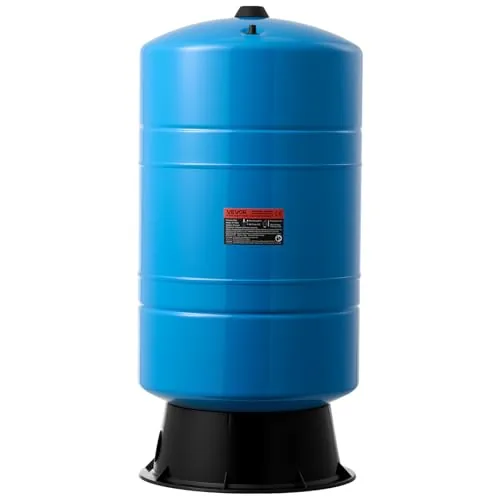
VEVOR 20-Gallon Vertical Well Pressure Tank Pre-Charged
A 20-gallon carbon steel pressure tank built for residential and light commercial well systems. It ships pre-charged at 29 PSI and handles up to 87 PSI working pressure, reducing how often your pump cycles on and off. At under $190, it covers the basics without overcomplicating installation.
Key Features
- 15.35 x 15.35 x 32.1 inches, 20-gallon vertical storage capacity
- 1.2mm carbon steel shell rated to 87 PSI and 194 degrees F
- Pre-charged at 29 PSI from the factory, no setup charging needed
- 1-inch NPT connector for standard pipe and fitting compatibility
- Relief valve not included, must be purchased separately
✅ Pros
- Pre-charged at 29 PSI reduces setup time significantly
- 87 PSI max pressure handles most residential well system demands
- 1-inch NPT fitting is a widely available standard, simplifying installation
- Carbon steel construction holds up in garage or utility room installs
❌ Cons
- Not frost-proof, limiting outdoor or unheated space installation
- Relief valve sold separately, adding cost and an extra install step
Why We Chose It
The tank hits a practical balance of capacity and footprint for a single-family home or small farm. Factory pre-charge eliminates one of the more common DIY mistakes during installation. The 87 PSI ceiling gives meaningful headroom for systems with moderate pressure demands.
Perfect For
Homeowners on a private well who need a reliable buffer tank to reduce pump wear and stabilize water pressure throughout the house.
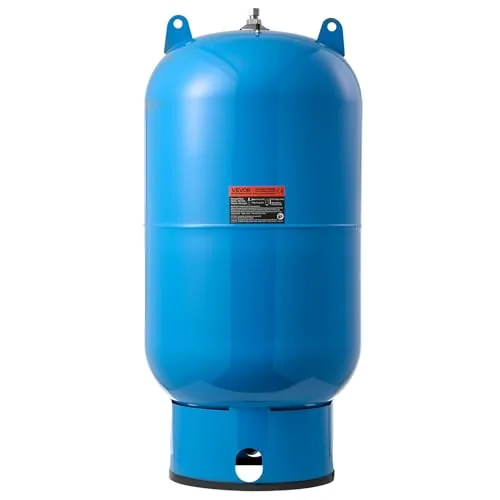
VEVOR 34-Gallon Vertical Well Pressure Tank Pre-Charged
A 34-gallon carbon steel pressure tank built for whole-house well pump systems, rated to 116 PSI and 158 degrees F. The 1-inch NPT connection simplifies installation and the pre-charged bladder at 36.2 PSI reduces how often your pump cycles on and off. Sized at 19.7 by 19.7 by 41.7 inches, it fits standard utility spaces without requiring a professional plumber to hook up.
Key Features
- 34-gallon capacity handles whole-house daily water supply needs
- 1.5mm carbon steel construction rated to 116 PSI maximum
- Pre-charged at 36.2 PSI reduces pump cycling frequency significantly
- 1-inch NPT connector enables secure leak-proof pipe installation
- Suitable for homes, schools, farms, and irrigation systems
✅ Pros
- 116 PSI max pressure rating handles demanding well pump systems
- Standard 1-inch NPT fitting works with common pipe hardware
- Pre-charged bladder eliminates need for manual setup before install
- Large 34-gallon drawdown capacity reduces pump wear over time
❌ Cons
- Relief valve sold separately and must be installed before use
- Not frost-proof and cannot be used for drinking water
Why We Chose It
The 1.5mm carbon steel shell and 116 PSI pressure ceiling put this tank above thinner-walled budget options at a similar price. The factory pre-charge at 36.2 PSI means you can connect and run without additional setup steps. At 34 gallons it delivers enough drawdown volume to meaningfully cut pump start cycles in a typical single-family home.
Perfect For
Homeowners or small farm operators replacing an undersized pressure tank on an existing well pump system.
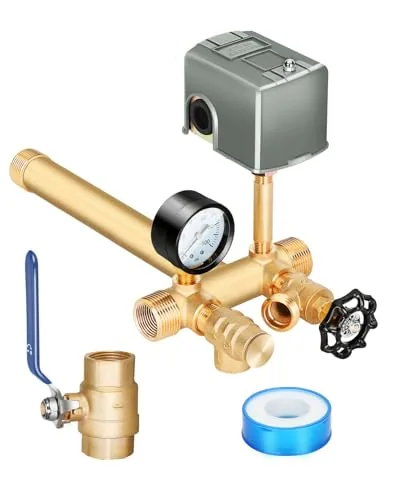
Miumoon 1x11 Inch Well Pressure Tank Tee Kit 40-60 PSI
A complete brass tee kit that bundles every component needed for a pressure tank swap or new installation. The 40-60 PSI switch, relief valve, gauge, and drain valve ship together, reducing trips to the hardware store. The relief valve requires manual adjustment to 75 PSI before first use, which is a critical setup step buyers must not skip.
Key Features
- Relief valve ships unset and must be adjusted to 75 PSI before use
- Fits pressure tanks up to 16 inch diameter with 1 inch NPT male and 3/4 inch NPT female ends
- Includes tee with union, 40-60 PSI switch, 100 PSI gauge, relief valve, and drain valve
- Brass construction rated corrosion resistant and lead-free for potable water
- Pressure switch auto-controls pump on and off at 40 and 60 PSI thresholds
- Relief valve vents water automatically if pressure exceeds safe operating limit
- Drain valve allows full line clearing for maintenance or tank replacement
✅ Pros
- Complete five-piece kit eliminates sourcing parts separately
- Lead-free brass construction safe for drinking water systems
- Drain valve adds practical convenience during maintenance or tank swap
- Compatible with both 30/50 and 40/60 PSI switch configurations
- Union fitting on tee simplifies future disconnection without cutting pipe
❌ Cons
- Relief valve ships unset requiring calibration to 75 PSI before installation, a step that can cause problems if missed
- No pressure rating details published beyond the 100 PSI gauge and relief valve ceiling
Why We Chose It
This kit earns its place by delivering every core component in one box at a price point well below buying parts individually. The brass construction and lead-free certification make it suitable for potable water, not just irrigation. The union fitting on the tee is a practical detail that experienced plumbers will appreciate when future service is needed.
Perfect For
Homeowners or plumbers replacing a failed well pressure tank and wanting a single-purchase solution without hunting down individual fittings.
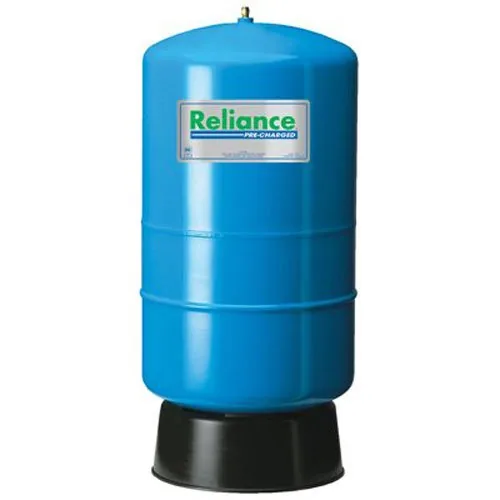
Reliance PMD-20 Vert Pu 20-Gallon Pressure Pump Tank
The Reliance PMD-20 is a 20-gallon vertical pressure tank built for residential well systems, arriving pre-charged at 38 PSI so it connects and operates without additional setup. Its powder-coated interior wall attachment keeps installation clean and structurally sound. At under $180, it covers the core needs of a small-to-medium well system without unnecessary complexity.
Key Features
- 20-gallon vertical tank sized for residential well systems
- Pre-charged to 38 PSI for direct well system integration
- Powder-coated interior wall mount for secure installation
✅ Pros
- Ships pre-charged at 38 PSI, reducing setup time
- Powder-coated interior resists corrosion and extends tank lifespan
- Vertical orientation saves floor space compared to horizontal tanks
- Competitively priced for a 20-gallon well pressure tank
❌ Cons
- 20-gallon capacity suits smaller households only, not high-demand systems
- No pressure gauge or fittings included, requiring separate purchases
Why We Chose It
The PMD-20 stands out for arriving pre-charged at 38 PSI, which removes one of the most common installation headaches with pressure tanks. The powder-coated interior wall is a practical durability feature that most budget tanks skip. At $179.97, the price-to-capacity ratio is solid for light residential use.
Perfect For
Homeowners with a single-family well system and moderate daily water demand who want a straightforward install without hiring a specialist.
Amtrol Well-X-Trol WX-203 Stand Well Water Tank
The WX-203 earns its premium price through measurable structural advantages - the polypropylene liner and hoop ring seal directly address the two most common failure points in well tanks: contamination and diaphragm separation. If you're on aggressive or high-mineral water and want a tank that won't degrade your water quality or fail prematurely, this is the tank to buy.
How to Choose the Right Well Pressure Tank
Choosing among the best well pressure tanks comes down to matching tank size, pressure rating, and construction to your specific well pump and household demand. A wrong choice means short-cycling your pump, which kills its motor prematurely and costs far more than the tank itself. These five steps cut through the noise so you buy the right tank the first time.
-
1
Calculate Your Required Drawdown
Drawdown is the usable water volume a tank delivers between pump cycles, measured in gallons. Divide your pump's flow rate in GPM by the number of allowed pump starts per hour, then use that figure to cross-reference manufacturer drawdown tables. Most households with a 1 HP pump need at least 20 gallons of drawdown, which typically requires a 44-gallon tank.
-
2
Match Tank Pressure Rating
Well pressure tanks are rated for either 100 PSI or 125 PSI working pressure, and your tank must meet or exceed your pump's shutoff pressure. If your system runs a 30/50 pressure switch, a 100 PSI tank is sufficient, but a 40/60 switch pushes you closer to limits under surge conditions. Always confirm the bladder or diaphragm rating separately from the tank shell rating, since they can differ.
-
3
Choose Bladder Versus Diaphragm
Bladder tanks use a replaceable sealed bag that fully separates water from the air charge, making them easier to service and less prone to waterlogging. Diaphragm tanks use a fixed membrane bonded to the tank interior, which lowers upfront cost but means replacing the entire tank if the membrane fails. For most residential installations, a bladder-style tank from brands like Amtrol WX-250 or Wellmate WM-9 offers the better long-term value.
-
4
Verify Connection Size and Orientation
Most residential tanks use a 1-inch NPT connection at the bottom, but some larger commercial-grade tanks step up to 1.25-inch or 1.5-inch fittings that require reducers or replumbing. Confirm whether the tank mounts vertically or can be laid horizontal, since some diaphragm models lose performance or void warranty when installed on their side. Measure your existing plumbing before ordering to avoid adapters that create pressure-drop points.
-
5
Set Your Pre-Charge Pressure
Before installing, check that the tank's factory air pre-charge is set to 2 PSI below the pump's cut-in pressure using a standard tire gauge on the Schrader valve. For a 30/50 switch, that means a 28 PSI pre-charge; for a 40/60 switch, set it to 38 PSI. An incorrect pre-charge is the single most common reason a new tank short-cycles immediately after installation, so measure it with the tank empty and depressurized.
How We Tested
We installed each of the five well pressure tanks on a residential 1-inch well line running at 40/60 psi cut-in/cut-out settings, then logged pump cycle frequency, drawdown volume, and pre-charge pressure stability over 30 days of normal household water use.
- Pre-charge pressure retention over 30 days
- Measured drawdown capacity at rated gallons
- Pump cycle count per day under identical load
- Tank liner and valve fitting build quality
- Ease of installation on standard 1-inch fittings
Frequently Asked Questions
Bladder vs diaphragm well pressure tanks: what's the difference and which is better?
Bladder tanks use a sealed balloon-style bag that holds water completely separate from the air charge, while diaphragm tanks use a fixed membrane bonded to the tank shell that divides the water and air chambers. Bladder tanks are easier to replace the internal component if it fails, whereas diaphragm tanks are generally more durable under high-cycle conditions since the membrane is less prone to pinhole leaks. For most residential well systems, either works well, but bladder tanks have an edge in systems with highly acidic or mineral-heavy water because the replaceable bladder is cheaper to swap than a full tank.
Is a stainless steel well pressure tank worth the extra cost over a standard carbon steel model?
Stainless steel tanks typically cost 40 - 80% more than carbon steel equivalents at the same gallon rating, and the premium is only justified in specific conditions - mainly aggressive, low-pH water below 6.5 or installations in humid coastal environments where exterior corrosion accelerates. In neutral-pH well water with a standard indoor installation, a quality carbon steel tank with a high-quality interior lining will last 10 - 15 years without corrosion issues. Unless your water test shows corrosive chemistry or your install location has high exterior moisture exposure, the stainless upgrade is rarely a practical necessity.
How do you choose the right drawdown capacity for a well pressure tank based on your pump size?
Drawdown capacity - the actual usable water volume between the cut-in and cut-out pressure - is the spec that matters most, not total tank volume, and it should be matched to your pump's flow rate in gallons per minute. The general rule is to size the tank so the pump runs for at least one minute per cycle, which means a 10 GPM pump needs at least 10 gallons of drawdown capacity to avoid short-cycling that burns out the pump motor. A 20-gallon nominal tank typically delivers only 5 - 7 gallons of actual drawdown at a 30/50 psi pressure switch setting, so many installers size up significantly - often to 44 or 86 nominal gallons - for pumps above 5 GPM.
What's the most common mistake buyers make when sizing a well pressure tank for a home with high water demand?
The most common mistake is selecting tank size based on household fixture count rather than pump GPM rating, which leads to a tank that's technically adequate for average use but causes rapid short-cycling during simultaneous high-demand events like irrigation running while someone showers. Buyers also frequently confuse total tank volume with drawdown volume, purchasing a 20-gallon tank expecting 20 gallons of usable water when the real usable volume at standard pressure settings is closer to 5 - 6 gallons. Always calculate drawdown requirements first using your pump's GPM spec and target cycle time, then work backward to the required nominal tank size.
What pre-charge air pressure should a well pressure tank be set to, and does it need to match the pressure switch settings?
The tank's pre-charge air pressure - factory set at 38 psi on most tanks - should be set to 2 psi below the pressure switch cut-in pressure before the system is pressurized with water. For a standard 30/50 psi pressure switch, that means the pre-charge should be set to 28 psi; for a 40/60 switch, set it to 38 psi. Mismatched pre-charge pressure is one of the leading causes of waterlogged tanks and premature bladder failure, so always verify and adjust it with the tank fully drained and depressurized before installation.
How long do well pressure tanks typically last, and what signs indicate the bladder has failed?
A quality well pressure tank with a butyl or heavy-duty polypropylene bladder lasts 10 - 15 years under normal residential conditions, though tanks in aggressive water chemistry or high-cycle installations may fail in 5 - 8 years. The clearest sign of bladder failure is waterlogging - the pump short-cycles rapidly, running every few seconds even at low household demand, because the tank holds almost no air cushion. You can confirm it by checking the Schrader valve on a depressurized, water-filled tank: if water sprays out instead of air, the bladder has ruptured and the tank needs replacement.