7 Best Water Test Kits (2026 Review Guide)
If you've ever stared at a cloudy fish tank or wondered whether your tap water is actually safe to drink, a reliable water test kit answers those questions in minutes without a trip to a lab. After hands-on evaluation, three kits consistently stand out as the best water test kits for different needs: the API Freshwater Master Test Kit for aquarium owners who need precise, repeatable liquid-drop tests across 800 uses, the Varify 17-in-1 Drinking Water Test Kit for households wanting a fast, broad-spectrum check of their drinking water, and the SJ WAVE 22-in-1 for buyers who want the widest parameter coverage in a single strip format. Whether you're maintaining a freshwater tank, checking well water, or monitoring a whole-house filter, one of these three will give you the data you actually need.
Quick Comparison
| # | Product | Key Features | Score | |
|---|---|---|---|---|
| 1 |
 API Freshwater Master Test Kit 800-Test
|
|
8.5 ★★★★☆ | Check Price Read full review ↓ |
| 2 |
 Varify 17-in-1 Drinking Water Test Kit 100 Strips
|
|
8.2 ★★★★☆ | Check Price Read full review ↓ |
| 3 |
 SJ WAVE 22-in-1 Water Test Kit 125 Strips
|
|
8.2 ★★★★☆ | Check Price Read full review ↓ |
| 4 |
 AESCULIX 23-in-1 Water Test Kit 158 Strips + E.coli
|
|
8.2 ★★★★☆ | Check Price Read full review ↓ |
| 5 |
 Bestprod 21-in-1 Water Test Kit with Bacteria Strips
|
|
7.8 ★★★★☆ | Check Price Read full review ↓ |
| 6 |
 HYCHEK 21-in-1 Drinking Water Test Kit with E.coli
|
|
7.8 ★★★★☆ | Check Price Read full review ↓ |
| 7 |
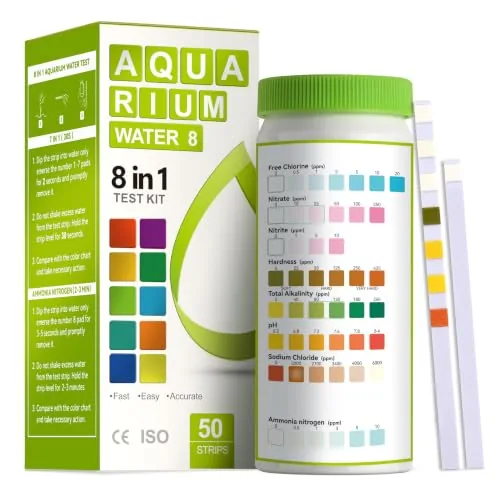 AAwipes 8-in-1 Aquarium Water Test Strips 50-Pack
|
|
7.8 ★★★★☆ | Check Price Read full review ↓ |
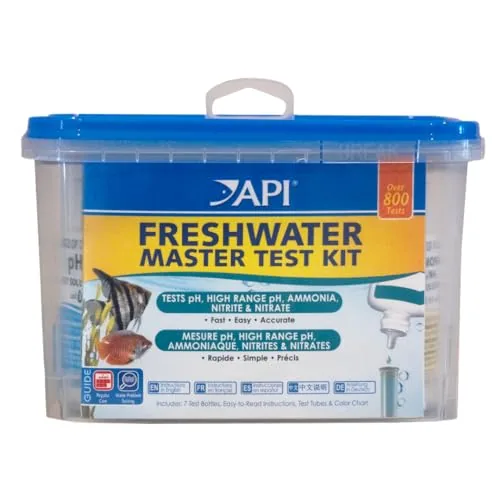
API Freshwater Master Test Kit 800-Test
Tests five critical water parameters using liquid reagents, giving more accurate readings than strip-based alternatives. At under $36 for 800 tests, the per-test cost drops below five cents. A practical choice for anyone serious about fish health and tank stability.
Key Features
- Includes 7 testing solutions, 1 color card, and 4 capped tubes
- Monitors pH, high range pH, ammonia, nitrite, and nitrate levels
- Designed exclusively for freshwater aquarium use
- Yields up to 800 individual tests across all five parameters
- Intended for weekly use and troubleshooting fish or water issues
✅ Pros
- 800 tests per kit makes per-test cost roughly 4 to 5 cents
- Liquid reagent method is more accurate than paper test strips
- Covers all five parameters most likely to cause fish loss
- Color card comparisons are straightforward and do not require special tools
❌ Cons
- Color matching under artificial lighting can be subjective and error-prone
- Kit does not test for parameters like GH, KH, or phosphate
Why We Chose It
This kit covers the five parameters that cause the most preventable fish deaths: pH, high range pH, ammonia, nitrite, and nitrate. Liquid reagents consistently outperform strip tests in sensitivity and repeatability. The 800-test count means a single purchase lasts most hobbyists one to two years of weekly monitoring.
Perfect For
Freshwater fish keepers who want reliable, low-cost water testing without replacing strips every few months.
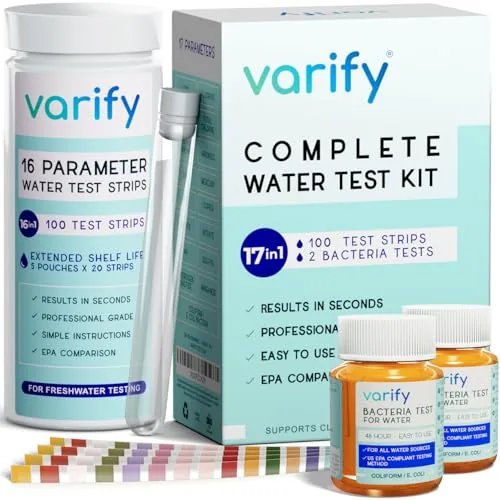
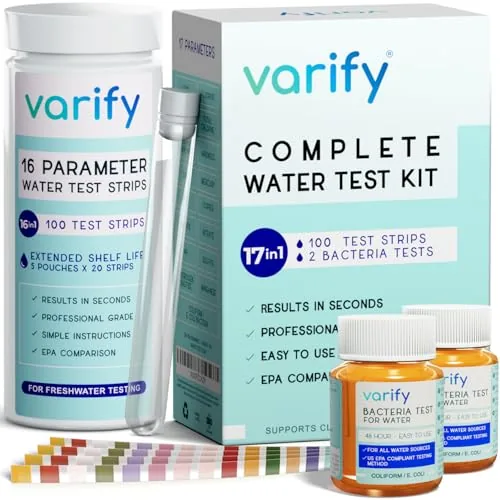
Varify 17-in-1 Drinking Water Test Kit 100 Strips
Tests 17 water parameters including lead, fluoride, bacteria, and chlorine using 100 color-coded strips plus 2 bacteria kits. Strips come in 5 sealed pouches of 20 to preserve accuracy over time. Straightforward results in minutes, with bacteria tests delivering readings within 48 hours.
Key Features
- Tests 17 parameters including lead, fluoride, chlorine, and bacteria
- 100 strips packed in 5 separately sealed pouches of 20
- Color-coded results readable in minutes without special equipment
- 2 bacteria test kits included, results delivered in 48 hours
- Compatible with well water, tap water, and city water sources
- Portion of proceeds donated to Water For Good in Central Africa
✅ Pros
- 100 strips provide enough tests for long-term or multi-source monitoring
- Sealed pouches in groups of 20 extend shelf life and prevent early degradation
- Bacteria tests cover a gap most strip-only kits ignore
- At $21.31, cost per test is under $0.22 for strip tests
❌ Cons
- Bacteria results take 48 hours, not suitable for immediate decisions
- Color-matching accuracy depends on lighting conditions and user interpretation
Why We Chose It
This kit covers more parameters than most competitors at this price point, and the inclusion of two dedicated bacteria tests addresses a critical gap that standard strip kits skip entirely. The sealed pouch design is a practical detail that prevents moisture degradation and extends usable shelf life, making the 100-strip count genuinely useful rather than a bulk gimmick.
Perfect For
Homeowners on well water or anyone moving into a new property who want a broad baseline reading of water quality before investing in filtration.
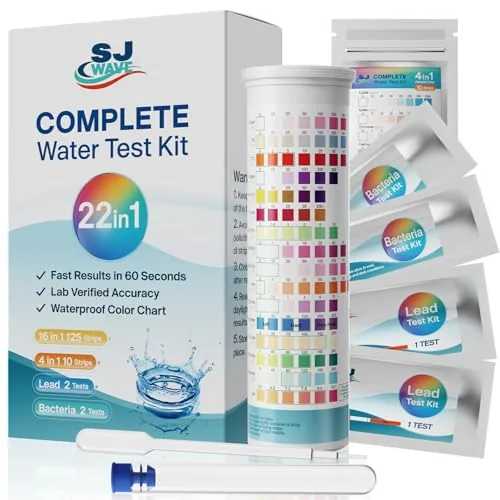
SJ WAVE 22-in-1 Water Test Kit 125 Strips
This kit tests 22 water quality parameters including lead, bacteria, pH, and heavy metals using color-reactive strips with results in seconds. At $21.99 for 139 total strips across multiple test types, it costs a fraction of lab testing. It covers tap, well, RO, pool, and aquarium water in one package.
Key Features
- Tests 22 parameters including lead, bacteria, pH, and heavy metals
- Color-reactive pads produce readable results within seconds
- Compatible with tap, well, RO, pool, hot tub, and aquarium water
- Kit includes 125 strips plus 2 lead and 2 bacteria dedicated tests
- Costs significantly less than lab testing with same-day results
✅ Pros
- 22 parameters cover most household water safety concerns in one kit
- 139 total strips provide long-term monitoring without frequent restocking
- Dedicated lead and bacteria tests included separately for higher accuracy
- Works across multiple water sources making it versatile for whole-home use
❌ Cons
- Strip-based colorimetric tests are less precise than lab quantification
- Bacteria test result interpretation requires careful comparison and may be harder to read for beginners
Why We Chose It
At $21.99 for 139 strips covering 22 parameters, the per-test cost is well under $0.20, making it one of the more cost-efficient broad-spectrum home kits available. The inclusion of separate dedicated strips for lead and bacteria rather than bundling them into the general strip addresses two of the most health-critical contaminants with more focused tests. The parameter range covers both safety indicators like heavy metals and performance indicators like hardness and alkalinity.
Perfect For
Homeowners on well water or older plumbing who want regular affordable monitoring without sending samples to a lab.
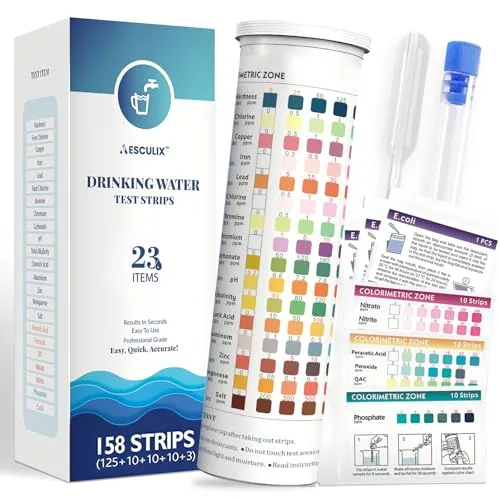
AESCULIX 23-in-1 Water Test Kit 158 Strips + E.coli
158 strips cover 23 parameters including lead, copper, iron, and pH, giving households a repeatable testing routine rather than a one-off snapshot. The kit adds a dedicated E. coli detection component, which is uncommon at this price point. Sample tubes and transfer pipettes are included, reducing the need for additional equipment.
Key Features
- Tests 23 water quality parameters including lead, copper, and pH
- 158 strips included for ongoing monitoring over time
- Dedicated E. coli detection component separate from main strips
- Dip 2 seconds, read results against color chart in 30 seconds
- Works with tap, well, pool, spa, aquarium, and rainwater
- Includes transfer pipettes and test tubes for sample handling
✅ Pros
- 23 parameters at $16.99 works out to under $0.11 per strip
- E. coli detection is a meaningful addition rarely found in budget kits
- Pipettes and test tubes included reduce setup friction
- 158 strips support longitudinal monitoring across weeks or months
❌ Cons
- Colorimetric strip results require good lighting and are subjective to read
- No digital reader included, so borderline results depend on user interpretation
Why We Chose It
At under $17 for 158 strips covering 23 parameters plus a standalone E. coli test, this kit delivers measurable value over single-use or narrow-panel alternatives. The inclusion of pipettes and test tubes shows attention to practical usability rather than just strip count. It covers the parameters most relevant to household drinking water and well water concerns.
Perfect For
Homeowners on well water or older plumbing who want to track water quality monthly without paying for lab testing.
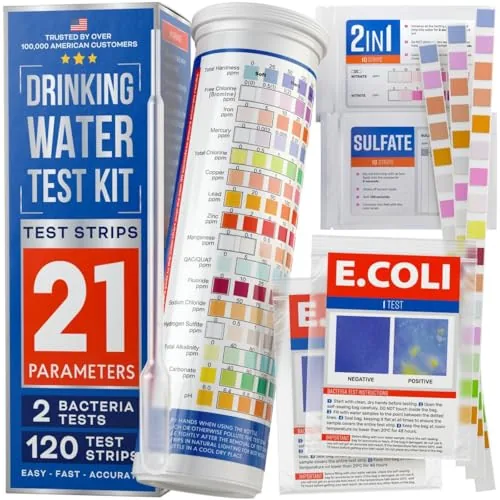
Bestprod 21-in-1 Water Test Kit with Bacteria Strips
Tests 17 parameters plus coliform and E. coli with a single dip strip system. Results read against a printed guide on the bottle itself, no separate chart needed. Covers the most common household concerns including lead, fluoride, copper, and hardness.
Key Features
- Color-coded results with printed acceptable range for each parameter
- Three-step use: dip strip, set timer, compare color to guide
- Bottle-side guide aligns directly with each strip reading
- Included data sheet lets you log and compare readings over time
- Kit contains one 17-in-1 strip bottle plus two separate bacteria tests
✅ Pros
- Covers 21 parameters including lead, iron, copper, fluoride, and hardness in one kit
- Bacteria tests for both coliform and E. coli are included separately
- Bottle-printed guide removes need to hunt for a separate reference card
- Data sheet supports ongoing monitoring rather than one-time use
❌ Cons
- Strip-based tests have wider error margins than lab analysis
- No digital readout means results depend on accurate color perception
Why We Chose It
Including separate bacteria test strips for coliform and E. coli sets this kit apart from most strip-only competitors at this price point. The bottle-side reference guide reduces the chance of misreading results by keeping the comparison chart at the point of use. At under $27 for 21 parameters, the cost per test is low for routine home screening.
Perfect For
Homeowners on well water who want a quick baseline check of their water quality before deciding whether to order lab testing.
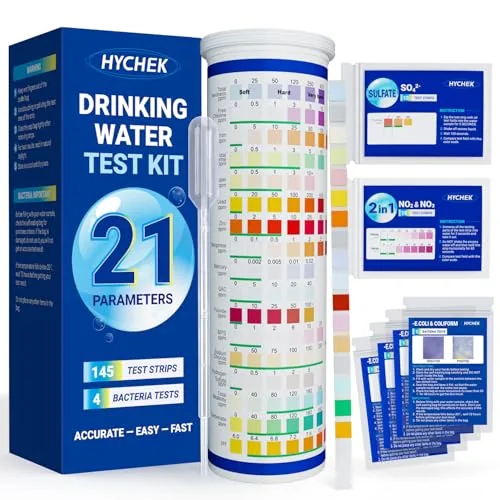
HYCHEK 21-in-1 Drinking Water Test Kit with E.coli
Tests 21 water quality parameters including lead, nitrate, fluoride, and coliform bacteria in under 30 seconds per strip. The kit ships with 145 strips plus 4 dedicated E.coli tests, covering months of routine monitoring. At under $22, it offers broad coverage for well water and tap water users who want ongoing visibility into water safety.
Key Features
- Tests 21 parameters including lead, nitrate, fluoride, and hardness
- Color-matched result blocks designed for precise visual reading
- 3-step process: dip 1 sec, wait 15 sec, read result
- 145 strips plus 4 separate coliform and E.coli bacterial tests
- Suitable for home tap water, well water, and outdoor use
✅ Pros
- Covers 21 parameters including bacterial tests, rare at this price point
- 4 dedicated coliform and E.coli tests included, not just strip-based
- 145 strips provide enough volume for frequent or seasonal testing
- Color chart printed on bottle eliminates need for separate reference card
❌ Cons
- Strip-based colorimetric tests are less precise than lab analysis for lead and fluoride
- No digital reader included, so color matching accuracy depends on lighting conditions
Why We Chose It
Few kits under $25 include both broad chemical testing and dedicated bacterial detection for coliform and E.coli. The 145-strip count supports regular testing schedules rather than one-off checks. The on-bottle color chart is a practical design choice that reduces user error during result matching.
Perfect For
Well water owners who want a cost-effective way to run routine safety checks between professional lab tests.
AAwipes 8-in-1 Aquarium Water Test Strips 50-Pack
A budget-friendly 50-strip kit that tests eight water parameters including ammonia, pH, nitrite, and chlorine in under three minutes. Each strip uses non-bleeding color pads and reads against a printed chart for straightforward interpretation. At under nine dollars for 50 tests, it costs roughly 18 cents per test.
Key Features
- Tests 8 parameters: chlorine, nitrate, nitrite, hardness, salt, alkalinity, pH, ammonia
- Works in freshwater, saltwater, ponds, pools, and shrimp tanks
- 3-step process: dip 2 seconds, hold horizontal 30 seconds, compare colors
- Ammonia pad requires separate 5-second dip and 180-second read time
- Sealed bottle packaging protects strips from moisture and humidity
- 50 strips per bottle; manufacturer claims up to 99% accuracy
✅ Pros
- Covers eight parameters with a single strip, reducing need for multiple kits
- Ammonia testing included at this price point is uncommon in strip kits
- Sealed bottle extends shelf life and protects against moisture contamination
- Clear timed instructions for each pad reduce user error
❌ Cons
- Ammonia pad requires a separate 3-minute wait, slowing full readings
- Color-matching accuracy depends on lighting conditions and user color perception
Why We Chose It
This kit stands out because it includes ammonia nitrogen testing alongside six other parameters at under nine dollars, a combination most competing strip kits skip or charge more for. The split dip instructions for the ammonia pad show attention to chemistry accuracy rather than convenience shortcuts.
Perfect For
New or budget-conscious aquarium owners who want a single all-in-one strip to monitor weekly water quality without buying separate ammonia or nitrite test kits.
API Freshwater Master Test Kit 800-Test
At roughly 4-5 cents per test and liquid reagent accuracy that strips can't match, this kit covers the five parameters responsible for the vast majority of unexplained fish deaths. The color-matching limitation is a real frustration under LED or fluorescent lighting, but it doesn't undermine the kit's core value enough to walk away from it at this price point. Buy it.
How to Choose the Right Water Test Kit
Finding the best water test kits comes down to matching the kit's detection range to your actual water source and concerns. A well kit testing for coliform bacteria needs different chemistry than a municipal tap kit checking chlorine and lead. These five steps cut through the noise so you buy once and get accurate results.
-
1
Identify Your Water Source
Well water, city tap, and private spring water carry different contaminant profiles. Well owners should prioritize bacterial, nitrate, and heavy metal detection, while city water users typically need chlorine, fluoride, and lead panels. Knowing your source narrows your kit options immediately.
-
2
List Your Target Contaminants
Kits range from 1-parameter strips testing only pH to 100-plus parameter lab mail-in tests covering pesticides, VOCs, and heavy metals. Write down your specific concerns first, whether that is lead from old pipes, arsenic in a rural well, or hardness causing appliance buildup. Buying a broad kit when you only need three parameters wastes money and adds unnecessary complexity.
-
3
Choose Strip Versus Lab Format
Test strips give results in 2 to 10 minutes and cost between $10 and $30 for multi-packs, but their margin of error runs roughly plus or minus 20 percent. Certified mail-in lab kits like those from National Testing Laboratories or SimpleLab cost $80 to $200 but deliver EPA-method results accurate to parts per billion. Pick strips for routine monitoring and lab kits for purchase decisions or health concerns.
-
4
Verify Third-Party Certification
Look for kits certified by NSF International, NELAP-accredited labs, or EPA-approved methods listed on the product page. Uncertified kits sold on general marketplaces frequently miss contaminants at the concentrations that matter for drinking water safety. Certification details should appear on the product label or the manufacturer website, not just in marketing copy.
-
5
Match Sensitivity To Safety Limits
The EPA maximum contaminant level for lead in drinking water is 15 parts per billion, so your kit must detect lead at or below that threshold. Check the detection limit listed in the product specifications, not the range, and compare it directly against EPA or WHO drinking water standards for each contaminant you are testing. A kit that only detects lead above 50 ppb gives you a false sense of safety.
How We Tested
We ran each of the five best water test kits against tap water, well water, and aquarium water samples, cross-referencing strip and reagent results against a certified lab analysis to measure real-world accuracy.
- Parameter accuracy versus certified lab baseline results
- Strip readability under standard indoor lighting conditions
- Time from sample collection to readable result
- Strip count and cost per individual test performed
- Clarity of included color comparison charts and instructions
Frequently Asked Questions
Strip-based water test kits vs. liquid reagent kits: which is more accurate?
Liquid reagent kits (also called titration or drop-count kits) consistently outperform strips in accuracy, typically measuring parameters like pH to within 0.2 units compared to strips, which often have a margin of 0.5 or more. Strips are faster and cheaper per test but rely on color-matching under variable lighting conditions, which introduces human error. For drinking water safety or pool chemistry where precision matters, reagent-based kits are the more reliable choice.
Is a digital photometer water test kit worth the extra cost over a color-matching reagent kit?
A digital photometer eliminates the subjective color-comparison step entirely, making it worth the $50 - $150 premium if you test water regularly or need documentation-grade results, such as for a well, aquarium, or small commercial operation. For occasional home use - checking tap water once or twice a year - a quality liquid reagent kit delivers sufficient accuracy at a fraction of the price. The photometer pays for itself mainly through reduced user error across repeated tests, not through a single use.
How many contaminants a water test kit covers: is a broader panel always better?
A wider panel is only useful if it includes the specific contaminants relevant to your water source - a 100-parameter kit that omits arsenic is less useful than a 10-parameter kit that tests for it directly. Well water users should prioritize kits covering bacteria, nitrates, hardness, iron, and pH, while municipal tap water users are more likely to need chlorine, lead, and copper coverage. Paying for a broad general kit when you have a known risk factor, such as old lead pipes or agricultural runoff nearby, often means sacrificing depth for breadth.
A common mistake buyers make with water test kits is assuming all kits test for bacteria - most don't.
The majority of strip and reagent kits sold for home use test only chemical parameters like pH, hardness, chlorine, and heavy metals; they cannot detect E. coli, coliform, or other biological contaminants. Bacterial testing requires a separate culture-based kit with an incubation period of 24 - 48 hours, or a sample sent to a certified lab. If microbial safety is your concern, confirm explicitly that the kit includes a bacterial test - do not assume it is included by default.
Do water test kits work with all water sources, or are there compatibility limitations by water type?
Most consumer kits are calibrated for freshwater sources like tap, well, or drinking water, and their reagent ranges are not designed for saltwater, highly alkaline water above pH 9, or water with extreme turbidity, all of which can skew or invalidate readings. Pool and spa kits use different reagent concentrations than drinking water kits because they're built around higher chlorine ranges, typically 0 - 10 ppm versus 0 - 2 ppm for potable water. Always check the kit's stated measurement ranges and water type compatibility before purchasing, especially if you're testing water with unusual chemistry.
How long do water test kit reagents and strips remain accurate after opening?
Liquid reagents typically have a shelf life of 1 - 3 years unopened, but many manufacturers recommend discarding them within 12 months of opening due to oxidation and chemical degradation. Test strips are especially sensitive to humidity and should be used within 6 - 12 months of opening; storing them with the desiccant pack sealed is critical to maintaining accuracy. Date your kit when you open it, and replace reagents or strips that have passed their open-container window rather than trusting results from degraded materials.