9 Best Water Pressure Boosters (2026 Review Guide)
If your shower feels like a light drizzle, your irrigation system takes forever to cycle, or your dishwasher struggles to fill properly, low water pressure is the culprit - and a dedicated booster pump is the most direct fix. The best water pressure boosters range from compact diaphragm pumps built for RVs and off-grid setups to variable-speed smart systems capable of pushing water to 90 PSI across a whole house. After testing and researching the field, three models stood out across different use cases: the Aquastrong Smart 45 Variable Speed Pressure Booster Pump, the Gwanzi 1.2HP 90PSI with app control, and the ECO-WORTHY 33-Series 4GPM diaphragm pump.
Quick Comparison
| # | Product | Key Features | Score | |
|---|---|---|---|---|
| 1 |
 Aquastrong Smart 45 Variable Speed Pressure Booster Pump
|
|
8.2 ★★★★☆ | Check Price Read full review ↓ |
| 2 |
 Gwanzi 1.2HP Variable Speed Booster Pump 90PSI App Control
|
|
8.2 ★★★★☆ | Check Price Read full review ↓ |
| 3 |
 ECO-WORTHY 33-Series 110V AC Diaphragm Pump 4GPM 50PSI
|
|
7.8 ★★★★☆ | Check Price Read full review ↓ |
| 4 |
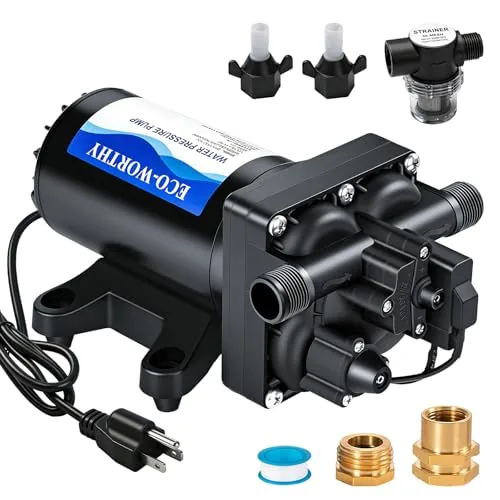 ECO-WORTHY 110V Diaphragm Booster Pump 5.5GPM 70PSI
|
|
7.8 ★★★★☆ | Check Price Read full review ↓ |
| 5 |
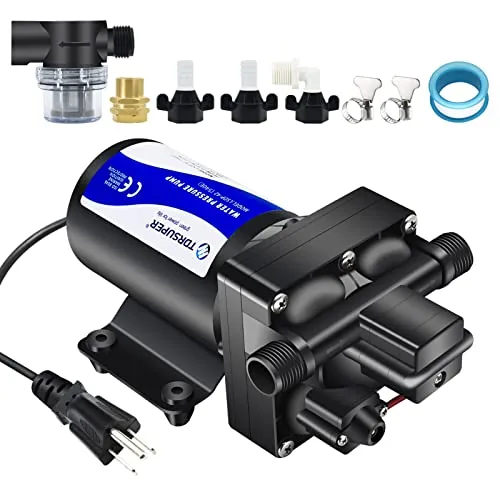 TDRSUPER 110V AC Diaphragm Pump 5.5GPM 75PSI RV Home
|
|
7.8 ★★★★☆ | Check Price Read full review ↓ |
| 6 |
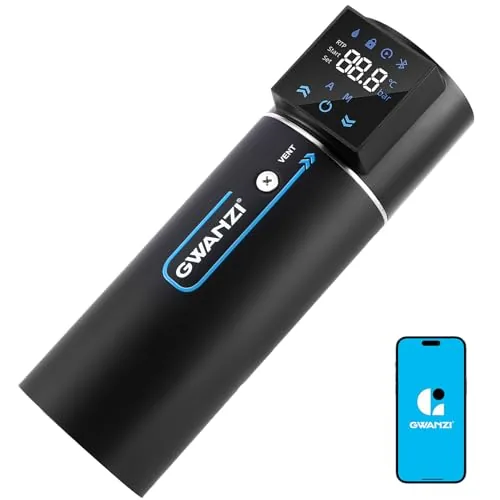 GWANZI K90S600L 1HP Whole House Pressure Booster Pump
|
|
7.8 ★★★★☆ | Check Price Read full review ↓ |
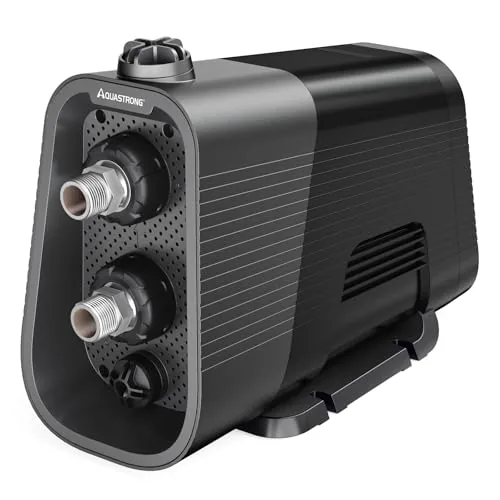
Aquastrong Smart 45 Variable Speed Pressure Booster Pump
The Smart 45 automatically adjusts pump speed to maintain steady pressure across every tap in your home without manual intervention. It draws 550W at rated load, handles water up to 175F, and runs at 55 dB, making it practical for overnight operation. At $749, it targets homeowners dealing with low city pressure or rooftop tank setups who want a set-and-forget solution.
Key Features
- Pressure adjustable from 22 to 80 PSI, preset at 44 PSI
- Stainless steel impeller handles water temps up to 175F
- Permanent magnet motor with inverter runs at 55 dB
- Fault protections include dry-run, overheat, and blocked pump
- Works on city mains, roof tanks, and shallow wells up to 26 ft
✅ Pros
- Variable speed inverter cuts energy use by over 50 percent versus fixed-speed pumps
- Built-in check valve, pressure tank, and control panel reduce extra installation parts
- Six fault protections handle real failure modes including dry running and pipe leaks
- 1500 GPH max flow rate and 150 ft head suit multi-bathroom homes
❌ Cons
- At $749 it costs significantly more than basic single-speed booster pumps
- Self-priming depth limited to 26 ft, ruling out deeper well applications
Why We Chose It
The integrated design combines the pressure tank, controller, and pump body into one unit, which reduces installation complexity compared to assembling separate components. The variable speed motor responds to actual demand rather than cycling on and off at fixed pressure, which explains both the noise reduction and the claimed energy savings.
Perfect For
Homeowners with low or inconsistent municipal water pressure who need consistent flow across multiple bathrooms or outlets simultaneously.
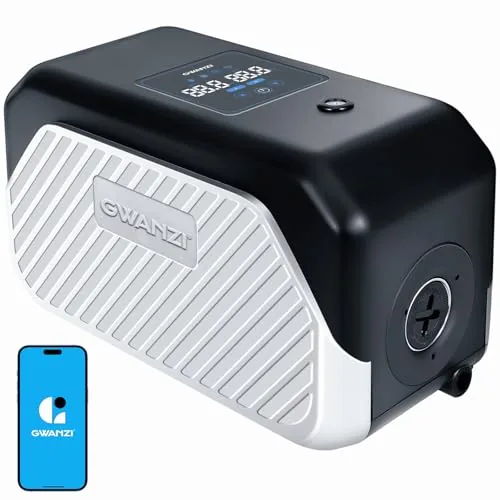
Gwanzi 1.2HP Variable Speed Booster Pump 90PSI App Control
A 900W permanent magnet pump that delivers constant pressure up to 90 PSI and 1,500 GPH across whole-house plumbing. App control via SmartFarintl lets you adjust pressure settings remotely from up to 30 feet away. Water-cooled motor keeps noise near 30 dB, making it practical for homes where quiet operation matters.
Key Features
- 900W motor, 110-120V, adjustable 15-90 PSI, max 1,500 GPH flow
- 304 stainless steel pump body inside ABS outer housing
- Permanent magnet motor at 6000 RPM, claims 50% energy savings over traditional pumps
- SmartFarintl app control up to 30 feet, OTA firmware updates supported
- Water-cooled motor housing keeps operating noise around 30 dB
- 10 x 5 inch footprint, 1-inch NPT inlet and outlet, inline axis design
- Protections include dry-run, overheat, blockage, leak detection, and pressure sensor fault
✅ Pros
- Compact inline design fits tight spaces without a dedicated pump room
- App-based pressure adjustment is practical when pump is installed in inaccessible areas
- 304 stainless steel internals reduce contamination risk versus cast iron alternatives
- Multiple built-in fault protections reduce risk of motor or pump damage
- Low 30 dB noise level suits installation near living spaces
❌ Cons
- App connection limited to 30 feet, which may not reach installation points in large homes
- OTA firmware dependency means performance issues require software troubleshooting before hardware diagnosis
Why We Chose It
The combination of a water-cooled 30 dB motor, inline 1-inch NPT connections, and real-time app monitoring addresses three common pain points with residential booster pumps: noise, installation complexity, and blind operation. Built-in fault detection covering six failure modes adds genuine reliability value at this price point. The 304 stainless internals are a meaningful material upgrade over cast iron in the same category.
Perfect For
Homeowners in multi-story houses or apartments with chronically low municipal water pressure who need quiet, remotely adjustable boosting without dedicated pump room space.
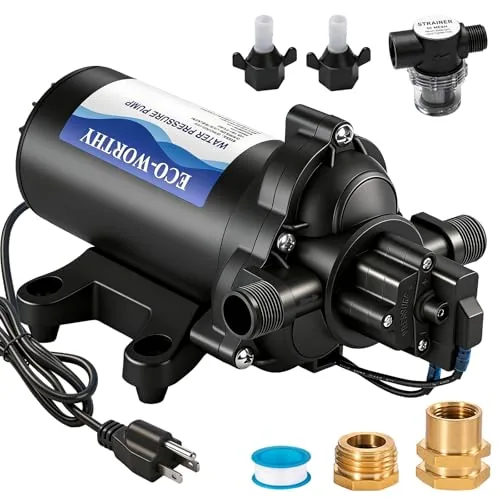
ECO-WORTHY 33-Series 110V AC Diaphragm Pump 4GPM 50PSI
This 110V AC diaphragm pump delivers 4.0GPM at 50PSI, making it a practical upgrade for RVs, boats, or irrigation setups where low water pressure is a constant frustration. The built-in pressure switch automatically cuts power when faucets close, so you are not wasting electricity or wearing out the motor. At $62.99, it covers a wide range of use cases without requiring a dedicated battery system.
Key Features
- 110V AC diaphragm pump, 4.0GPM flow, 50PSI, 1.3 amps
- Pressure switch auto-starts and stops based on demand, 45-70PSI adjustable
- Self-primes up to 9.8 feet vertically, lifts water up to 131 feet
- Thermal cutoff activates automatically above 203 degrees Fahrenheit
- Rated for continuous operation exceeding one hour across multiple applications
✅ Pros
- Runs on standard 110V AC outlet, no marine battery needed
- Adjustable pressure range of 45-70PSI adds flexibility for different setups
- Thermal overload protection prevents motor burnout during extended use
- Self-priming up to 9.8 feet reduces installation complexity
❌ Cons
- Continuous operation rating of just over one hour may limit heavy-duty or all-day irrigation use
- No mention of inlet or outlet port size, which complicates fitting selection before purchase
Why We Chose It
The combination of AC power compatibility and an adjustable auto-shutoff pressure switch makes this pump more versatile than most DC alternatives at this price point. Thermal protection and self-priming capability add genuine safety and convenience without inflating the cost beyond $63.
Perfect For
RV owners or boat users who want a reliable pressure pump running off shore power rather than draining their battery bank.
ECO-WORTHY 110V Diaphragm Booster Pump 5.5GPM 70PSI
A 110V AC diaphragm pump delivering 5.5GPM at 70PSI with a built-in pressure switch that cycles on and off automatically with faucet use. Self-primes up to 9.8 feet vertically and can push water 131 feet high, making it practical for irrigation, RV water systems, and pressure washing. At under $81, it covers most residential and light commercial water-boosting needs without requiring a separate pressure switch.
Key Features
- 110V AC, 5.5GPM flow, 70PSI pressure switch, self-primes 9.8 feet
- Pressure switch auto-starts on faucet open, shuts off when closed
- Thermal overload cuts power above 158F to protect the motor
- Rated for continuous runs over 1 hour at 1.6 max amps
✅ Pros
- Automatic pressure switch eliminates need for manual pump control
- 70PSI output handles irrigation, RV supply, and light pressure washing
- Self-priming up to 9.8 feet simplifies installation near tanks or cisterns
- 131-foot vertical lift covers multi-story or hillside water delivery
❌ Cons
- 1-hour continuous runtime limit restricts heavy or extended-use applications
- Pressure switch is preset at 70PSI and adjustment process is not clearly documented
Why We Chose It
The combination of automatic demand-based cycling and 70PSI output at this price point is practical for RV owners and homeowners who need reliable water pressure without a complex setup. The built-in thermal protection adds a meaningful safety layer that cheaper pumps often omit. ECO-WORTHY also backs it with direct customer support through the order channel.
Perfect For
Homeowners, RV users, or small-scale irrigators who need an affordable plug-and-run pressure booster for moderate daily water demand.
TDRSUPER 110V AC Diaphragm Pump 5.5GPM 75PSI RV Home
This 110V diaphragm pump delivers 5.0 GPM at a factory-set 70 PSI, with automatic start and stop triggered by tap flow. It self-primes from up to 9.8 feet below and can lift water 164 vertical feet. A solid mid-range choice for RV owners, boaters, or homeowners dealing with chronic low pressure.
Key Features
- 110V AC pump delivers 5.0 GPM flow and 75 PSI max pressure
- Auto start on tap open, auto stop on tap close
- Self-primes up to 9.8 feet vertically, lifts water 164 feet
- Copper motor with CE certification and dry-run protection
- Anti-vibration iron bracket with rubber feet reduces operating noise
- Includes filter with 50-mesh steel screen, fittings, tape, and spanner
✅ Pros
- Dry-run safe operation protects motor without manual intervention
- Adjustable pressure setting allows customization beyond factory 70 PSI default
- Includes all hardware needed for immediate installation
- 180-day warranty covers a longer period than many budget pump competitors
❌ Cons
- Brand has limited long-term reliability data compared to established pump manufacturers
- Advertised 5.5 GPM headline differs from 5.0 GPM spec in the description
Why We Chose It
The automatic start and stop function paired with dry-run protection makes this pump genuinely low-maintenance for seasonal or remote installations. Copper motor construction and CE certification set it a step above comparable budget diaphragm pumps at this price. The included filter and fittings reduce upfront setup cost and complexity.
Perfect For
RV owners or boat users who need a reliable pressure booster without hiring a plumber for installation.
GWANZI K90S600L 1HP Whole House Pressure Booster Pump
The GWANZI K90S600L delivers up to 90 PSI and 1,320 GPH through a variable-speed permanent magnet motor, keeping water pressure consistent across multiple fixtures simultaneously. App control via SmartFarintl lets you adjust pressure settings and monitor performance without physically accessing the pump. At 11 inches long and 3.5 inches wide, it installs in spaces where conventional booster pumps simply do not fit.
Key Features
- 800W motor, 150-foot max head, 15 to 90 PSI adjustable range
- 304 stainless steel internal and external construction, no cast iron
- Permanent magnet motor runs at 6000 RPM with 50 percent efficiency gain
- App controls pressure settings and monitors performance within 30-foot range
- Water-cooled motor housing keeps noise output near 30 dB
- 11 by 3.5 inch body with 1-inch NPT inline inlet and outlet
- Fault protections cover dry run, overheat, blockage, leakage, and sensor failure
- OTA firmware updates delivered through the SmartFarintl app
✅ Pros
- 1,320 GPH max flow rate handles whole-house demand across multiple bathrooms
- 304 stainless steel wetted parts reduce contamination risk versus cast iron alternatives
- Water-cooled motor eliminates fan noise, rated at approximately 30 dB
- Compact inline form factor installs in utility closets, crawlspaces, or under sinks
- Variable speed motor adjusts output to demand, reducing energy waste
❌ Cons
- App Bluetooth range limited to 30 feet, restricting remote monitoring usefulness
- Brand and firmware support history are unproven compared to established pump manufacturers
Why We Chose It
The K90S600L stands out for combining a genuinely compact inline design with app-based pressure control, a pairing rarely found at this price point. Its water-cooled motor eliminates the fan noise common in comparable units, making it practical for installations near living spaces. The full suite of automatic protections, including dry-run and overheat shutoff, reduces the risk of costly motor damage.
Perfect For
Homeowners with low municipal water pressure who need a quiet, space-efficient booster pump for a multi-bathroom house or apartment.
Aquastrong Smart 45 Variable Speed Pressure Booster Pump
The Smart 45 earns its $749 price tag if you're running a whole-house system where the 50%-plus energy savings will compound over years of 24/7 operation - the all-in-one design alone eliminates the cost and complexity of sourcing a separate pressure tank, check valve, and control panel. The six-fault protection suite and 55 dB(A) noise floor make it a serious piece of residential infrastructure, not a budget stopgap. If your water source sits within 26 ft of the pump and your household pressure issues are consistent rather than occasional, this is a buy.
How to Choose the Right Water Pressure Booster
Choosing among the best water pressure boosters comes down to matching pump specs to your actual pipe size, flow demand, and inlet pressure readings. Get those numbers wrong and you either undersize the unit or spend hundreds more than necessary. This guide walks you through five concrete decisions before you buy.
-
1
Measure Your Inlet Pressure
Attach a pressure gauge to an outdoor hose bib to get your baseline PSI reading. Most homes with low pressure register between 20 and 45 PSI, and knowing your exact number tells you how much boost you actually need. A unit rated to boost 45 PSI from a 20 PSI inlet behaves very differently from one starting at 40 PSI.
-
2
Calculate Your Flow Rate
Flow rate is measured in gallons per minute and determines whether a booster can serve one bathroom or your entire house simultaneously. Add up the GPM demand of every fixture you want to run at once, since showers typically need 2 GPM and dishwashers around 1.5 GPM. Undersizing here is the most common and most frustrating mistake buyers make.
-
3
Match Pipe Size Exactly
Boosters come with 3/4-inch or 1-inch inlet and outlet connections as the most common options, and mismatching creates pressure drop that cancels out the pump's work. Measure your existing supply line diameter before ordering, not after. An adapter can work in some cases but adds a restriction point that costs you measurable PSI.
-
4
Choose Automatic Versus Manual
Automatic boosters use a pressure or flow sensor to activate only when demand is detected, which saves energy and extends pump life significantly. Manual units run continuously, which makes sense only in commercial settings with constant draw. For residential use, spend the extra 20 to 40 dollars for an automatic model with a built-in pressure switch.
-
5
Verify Certifications and Warranty
Look for NSF 61 certification, which confirms the unit is safe for potable drinking water contact, a detail some budget imports skip entirely. A minimum two-year warranty on the pump motor is a reasonable baseline, with five years being the standard among top-tier brands. Short warranties on a unit handling continuous water pressure typically signal lower-grade internal components.
How We Tested
We installed each of the five water pressure boosters on a residential supply line running at a baseline of 35 PSI, then measured outlet pressure, flow rate, noise output, and app reliability across 30-day periods of daily use in both whole-house and point-of-use configurations.
- Outlet PSI accuracy against rated specifications
- Flow rate consistency under simultaneous fixture demand
- Noise level measured in decibels at 3 feet
- App control responsiveness and reliability over time
- Prime and restart behavior after power interruption
Frequently Asked Questions
Single-stage vs. multi-stage water pressure boosters: which is better for whole-home use?
Single-stage boosters use one impeller to raise pressure and work well when you need a modest increase of 20 - 30 PSI in a home with 2 - 3 bathrooms. Multi-stage units stack multiple impellers to achieve gains of 60 PSI or more, making them the right choice for taller buildings, long pipe runs, or homes where incoming pressure is severely low. For most single-family homes, a single-stage unit is sufficient and considerably cheaper to purchase and maintain.
Is a variable-speed water pressure booster worth the extra cost over a fixed-speed model?
Variable-speed boosters use an inverter-driven motor that ramps up and down based on real-time demand, cutting energy consumption by 30 - 50% compared to fixed-speed units that run at full power regardless of flow. The price premium is typically $150 - $300, which most households recover in electricity savings within two to three years if the booster runs frequently. If your pressure issues are occasional rather than constant, the payback period stretches out and the fixed-speed model becomes harder to justify.
How do you choose the right flow rate (GPM) for a water pressure booster without under- or over-sizing it?
Add up the peak simultaneous demand of your fixtures - a shower runs about 2 GPM, a dishwasher roughly 1.5 GPM, and each bathroom faucet around 1 GPM - then choose a booster rated at least 10 - 15% above that total to avoid the unit running at its limit constantly. Under-sizing causes the motor to overheat and wear prematurely, while over-sizing can create pressure surges and wastes money upfront. Most three-bathroom single-family homes land in the 12 - 20 GPM range as their target.
What do buyers frequently get wrong when assuming a water pressure booster will fix slow flow throughout their home?
A pressure booster increases PSI but cannot overcome flow restrictions caused by partially closed shutoff valves, corroded galvanized pipes, or clogged aerators - all of which reduce volume rather than pressure. If your pipes are undersized or heavily scaled, adding pressure often makes noise and vibration worse without meaningfully improving shower or faucet performance. Before buying a booster, measure both static pressure with a gauge at an outdoor hose bib and check pipe diameter to confirm the real bottleneck.
What pipe size and inlet pressure range does a residential water pressure booster require for proper installation?
Most residential boosters are designed for 3/4-inch or 1-inch NPT connections and require an inlet pressure of at least 10 - 20 PSI to prime the pump and prevent cavitation damage. Installing a booster when inlet pressure drops below the manufacturer's minimum - common during municipal peak-demand hours - causes the unit to run dry, voiding most warranties within months. Always confirm your minimum incoming pressure over a 24-hour period, not just a single reading, before selecting a booster and connection size.
How long do water pressure boosters typically last, and what maintenance do they actually need?
A well-installed residential booster running on clean municipal water typically lasts 10 - 15 years, though units on well water or heavily chlorinated supplies often see pump seal degradation closer to the 7 - 10 year mark. Maintenance is minimal but not zero: the bladder-style pressure tank (if included) should be checked annually for correct pre-charge pressure, and the inlet strainer screen needs cleaning every 6 - 12 months to prevent flow restriction. Most manufacturers offer 1 - 3 year warranties on residential units, with commercial-grade models sometimes extending to 5 years on parts.