6 Best Remineralization Filters For Ro Systems (2026 Review Guide)
If your reverse osmosis system strips out contaminants but leaves you with flat, acidic water that tastes hollow, a remineralization filter is the fix - it adds back calcium, magnesium, and other trace minerals that RO removes. After testing the Waterdrop MNR35, Waterdrop MNR35-2, and iSpring FA15, we found real differences in mineral output, flow rate compatibility, and filter lifespan that matter depending on your setup. Whether you're running a countertop unit or an under-sink system, this guide gives you the specific numbers and trade-offs you need to pick the right one.
Quick Comparison
| # | Product | Key Features | Score | |
|---|---|---|---|---|
| 1 |
 Waterdrop MNR35 RO Remineralization Post-Filter
|
|
8.2 ★★★★☆ | Check Price Read full review ↓ |
| 2 |
 Waterdrop MNR35-2 RO Remineralization Filter
|
|
8.2 ★★★★☆ | Check Price Read full review ↓ |
| 3 |
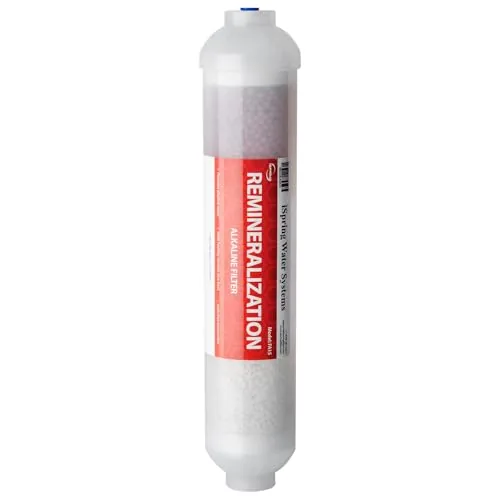 iSpring FA15 Alkaline Inline Filter 10x2in NSF Certified
|
|
8.2 ★★★★☆ | Check Price Read full review ↓ |
| 4 |
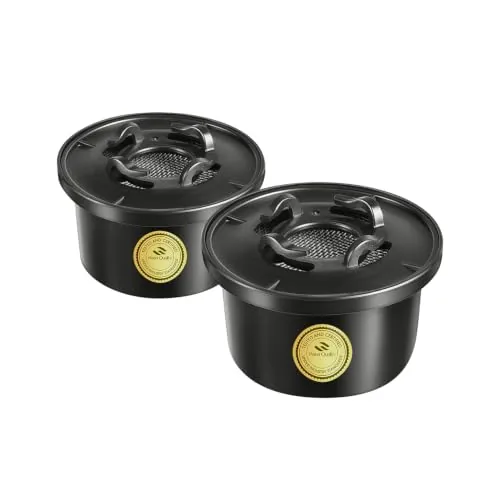 Bluevua RO100ROPOT Dual Remineralization Filters 1-Year Supply
|
|
7.8 ★★★★☆ | Check Price Read full review ↓ |
| 5 |
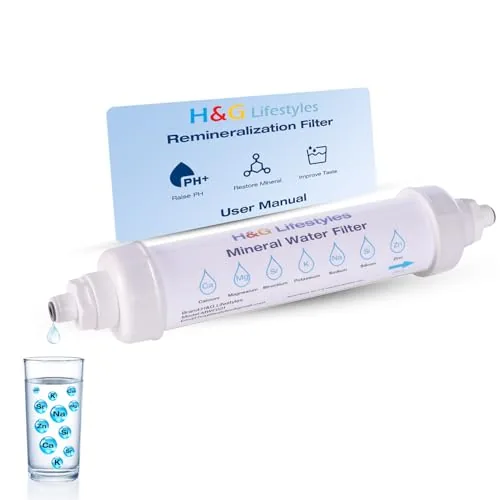 H&G Lifestyles Remineralization Filter 1,500 Gal RO Add-On
|
|
7.8 ★★★★☆ | Check Price Read full review ↓ |
| 6 |
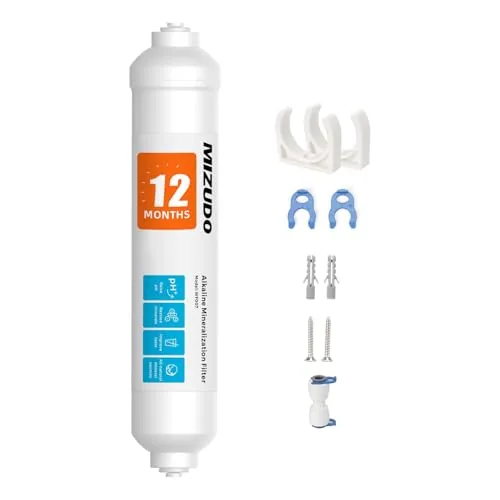 MIZUDO 12-Month Alkaline Remineralization Filter 1/4 Quick Connect
|
|
7.8 ★★★★☆ | Check Price Read full review ↓ |
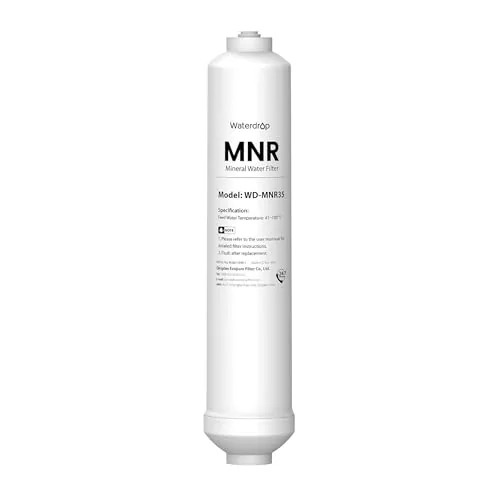
The MNR35 adds calcium, magnesium, potassium, and sodium back into stripped RO water using natural mineral media and PCC activation technology. It connects to virtually any undersink RO system via standard 1/4-inch or 3/8-inch quick-connect fittings with no tools required. At $29.99 for up to 1,100 gallons of use, it delivers remineralized water at a fraction of bottled mineral water cost.
Key Features
- Lasts 9 to 12 months or 1,100 gallons, replace at 9 months
- Compatible with 1/4-inch and 3/8-inch quick-connect fittings on most RO systems
- PCC technology activates crystalline mineral structure to simulate natural spring water
- Adds calcium, magnesium, sodium, and potassium using natural mineral materials
- Covers up to 1,100 gallons, equivalent to 8,300 single-use bottles
- Tool-free quick-connect fittings allow plug-and-pull filter swaps under sink
✅ Pros
- Universal 1/4-inch and 3/8-inch compatibility fits most existing RO and undersink systems
- Tool-free installation takes minutes with standard quick-connect tubing
- 1,100-gallon capacity brings cost per gallon well under bottled mineral water
- Natural mineral media restores key electrolytes stripped during reverse osmosis
- At $29.99, cost per replacement is low relative to comparable remineralization filters
❌ Cons
- Cannot connect to hot water lines, limiting placement options in some setups
- Health benefit claims on aging and immunity are not supported by cited clinical evidence
Why We Chose It
The MNR35 stands out for its broad system compatibility and genuinely tool-free installation, making it accessible to users who already own any standard RO setup. The 1,100-gallon rated capacity at under $30 gives a verifiable cost advantage over bottled mineral water and most competing remineralization cartridges in this price bracket.
Perfect For
RO system owners who want to restore mineral content to purified water without buying a new filtration unit or specialty equipment.
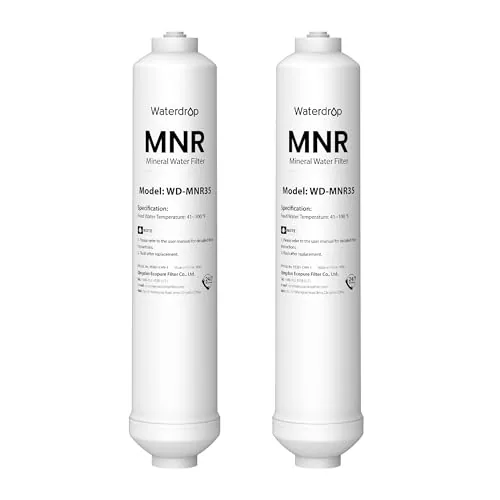
This inline remineralization filter adds calcium, magnesium, sodium, and potassium back into RO-stripped water using natural mineral media. It connects to most under-sink RO systems via standard 1/4 inch or 3/8 inch quick-connect fittings, requiring zero tools to install or swap. At roughly $56 for up to 1,100 gallons of coverage, it undercuts the cost of bottled mineral water significantly.
Key Features
- Lasts 9 to 12 months or up to 1,100 gallons per filter
- Compatible with 1/4 inch and 3/8 inch quick-connect RO systems
- PCC technology activates crystalline mineral structure in water
- Restores calcium, magnesium, sodium, and potassium using natural media
- Replaces up to 8,300 single-use bottles per filter lifespan
- Tool-free quick-connect fittings for installation and filter swaps
- Works with RO systems, refrigerators, and under-sink filtration setups
- Cannot be connected to hot water lines
✅ Pros
- Broad compatibility with most standard RO and under-sink systems
- Tool-free installation via quick-connect fittings saves setup time
- Restores four key minerals stripped by reverse osmosis filtration
- Cost per gallon drops well below bottled mineral water pricing
❌ Cons
- Cannot handle hot water lines, limiting placement in some setups
- Manufacturer recommends replacing at 9 months despite a 12-month rating
Why We Chose It
The MNR35-2 stands out for its wide system compatibility and straightforward installation that requires no plumbing tools. Using natural mineral media with PCC activation, it targets the specific minerals that RO filtration removes. The 1,100-gallon capacity gives solid value at the $56 price point compared to ongoing bottled water costs.
Perfect For
Homeowners with an existing RO system who want to restore mineral content to their filtered water without replacing their current setup.
The FA15 slots into any existing RO system via 1/4-inch quick-connect fittings and adds back calcium, magnesium, and potassium that standard reverse osmosis strips out. At $21.66 it costs less than most single restaurant water bottles per month and addresses the real limitation of RO water: low pH and zero mineral content. If you already have an under-sink RO system, this is a straightforward fix for flat-tasting acidic output.
Key Features
- Restores calcium, magnesium, and potassium removed by RO filtration
- 3-layer media raises pH of acidic RO output water
- Fits any under-sink RO or inline filter system
- 1/4-inch push-fit quick connect for tool-free cartridge swap
- NSF certified 10-inch by 2-inch standard cartridge size
✅ Pros
- At $21.66 it is one of the lowest-cost mineral restoration options on the market
- Push-fit 1/4-inch fittings mean installation takes under five minutes with no tools
- NSF certification provides independent verification of performance claims
- Universal sizing means it works with most major RO brands without adapters
❌ Cons
- No rated gallon capacity or replacement interval printed on packaging, so you are guessing on swap timing
- pH increase range is not published, making it hard to verify actual output pH without a separate meter
Why We Chose It
The FA15 solves a specific and well-documented problem with RO systems: water that is pure but mineral-free and mildly acidic. The NSF certification and universal quick-connect sizing remove two common friction points, compatibility and trust, at a price point under $22. For anyone already invested in an RO system, it is a low-risk add-on with a clear functional purpose.
Perfect For
RO system owners who want better-tasting water with restored minerals without buying an entirely new filtration unit.
Two replacement remineralization filters sized for a full year of use in the RO100ROPOT and RO100ROPOT UV systems. Each filter runs six months and adds calcium, magnesium, potassium, sodium, and zinc back into stripped RO water. WQA certification to NSF/ANSI/CAN 372 gives this set a verifiable safety credential most budget remineralization filters skip.
Key Features
- Two-pack covers 12 months, each filter lasts six months
- Adds calcium, magnesium, potassium, sodium, and zinc to water
- Raises water pH from approximately 6.2 to 7.5
- WQA-certified to NSF/ANSI/CAN 372 for lead-free compliance
- Compatible exclusively with RO100ROPOT and RO100ROPOT UV systems
- Third-party tested mineral media for drinking water safety
✅ Pros
- WQA certification to NSF/ANSI/CAN 372 is a concrete, verifiable safety standard
- Two-pack at $33.99 works out to roughly $17 per filter for six months of use
- Restores five specific minerals removed during reverse osmosis filtration
- pH lift from 6.2 to 7.5 is a measurable, stated output rather than a vague claim
❌ Cons
- Locks you into the RO100ROPOT ecosystem with no cross-compatibility to other RO systems
- pH and mineral output levels are not independently published beyond the manufacturer's stated range
Why We Chose It
The NSF/ANSI/CAN 372 lead-free certification sets this filter apart from uncertified remineralization media sold at similar price points. Specifying five restored minerals and a defined pH target gives buyers concrete expectations rather than vague wellness claims. At roughly $1.42 per week for year-round coverage, the cost-per-use is reasonable for a certified OEM replacement part.
Perfect For
RO100ROPOT owners who want a full year of OEM-compatible remineralization filters with third-party safety certification and no interim shopping trips.
This inline filter adds calcium, magnesium, potassium, and other trace minerals back into stripped RO water, improving taste and mineral content. It connects via standard 1/4-inch quick-connect fittings, making it a straightforward upgrade for most under-sink RO systems. At $27.99 with a 9 to 12 month lifespan, it undercuts the ongoing cost of bottled mineral water significantly.
Key Features
- Restores calcium, magnesium, potassium, silicon via PCC media
- Fits standard 1/4-inch quick-connect tubing on most RO systems
- Rated for 1,500 gallons or 9 to 12 months of use
- Compatible with under-sink systems, refrigerators, and ice makers
- Requires 3 to 5 minute flush before first use to clear mineral powder
✅ Pros
- Universal 1/4-inch quick-connect fit works with most RO setups without adapters
- 1,500-gallon capacity keeps per-gallon cost well below bottled water
- Restores specific minerals lost during reverse osmosis filtration
- Reduces plastic waste by replacing purchased mineral water bottles
❌ Cons
- Initial flush required due to mineral powder release, which may concern some users
- No built-in TDS indicator to confirm mineral output over filter lifespan
Why We Chose It
Most RO systems strip water down to near-zero mineral content, and this filter directly addresses that with a defined mineral mix rather than vague improvement claims. The 1,500-gallon capacity and $27.99 price point make it one of the more cost-efficient remineralization options in its category. Standard quick-connect compatibility removes the guesswork around installation for most households.
Perfect For
RO system owners who want to restore mineral taste and content without buying bottled water or replacing their existing filtration setup.
A post-RO remineralization cartridge that adds calcium, magnesium, and sodium back into stripped reverse osmosis water while raising pH. It installs in minutes via a standard 1/4-inch quick-connect fitting and is rated for 1,000 gallons or 12 months. At $29.99, it costs roughly $2.25 per month to run.
Key Features
- Rated 12-month service life at up to 1,000 gallon capacity
- Infuses calcium, magnesium, and sodium to raise water pH naturally
- 1/4-inch quick-connect fitting for under-sink RO system installation
- Reinforced housing designed to reduce leaks and minimize maintenance
- Compatible with most RO and under-sink water purification systems
- Known dripping issue with Megaflo Hot 800GPD dispensers lacking valve cores
✅ Pros
- Low ongoing cost at approximately $2.25 per month
- Standard 1/4-inch fitting works with most existing RO setups
- 1,000-gallon capacity reduces how often you handle filter swaps
- No tools required for installation thanks to quick-connect design
❌ Cons
- Confirmed dripping issue when paired with Megaflo Hot 800GPD dispensers
- pH and mineral output levels are not specified in exact measurable values
Why We Chose It
This filter stands out for its combination of a 12-month rated lifespan and a universal 1/4-inch quick-connect design that eliminates compatibility headaches for most RO owners. The $29.99 price point is competitive for a remineralization stage, and the inclusion of all necessary fittings in the box removes an extra purchase step. The brand is transparent about the Megaflo dripping limitation, which is a trust signal.
Perfect For
RO system owners who want to restore minerals and raise pH in their purified water without replacing their entire filtration setup.
Waterdrop MNR35 RO Remineralization Post-Filter
The MNR35 earns its place as a straightforward, low-cost upgrade for anyone already running a cold-water RO system who wants calcium and magnesium added back without buying a new unit. Universal quick-connect compatibility and a sub-penny-per-gallon running cost make it genuinely practical, but ignore the longevity and immunity claims on the packaging entirely - they are unsupported marketing noise. At this price point and capacity, it delivers on the one thing that matters: remineralization that works.
How to Choose the Right Remineralization Filters For RO System
Reverse osmosis strips out contaminants but also removes beneficial minerals like calcium and magnesium, leaving water that tastes flat and sits at an acidic pH. A remineralization filter adds those minerals back, improving taste and raising pH to a neutral or slightly alkaline range. This guide walks you through exactly what to look for before buying the best remineralization filters for RO systems.
-
1
Confirm Port Size Compatibility
Most inline remineralization filters use 1/4-inch push-fit connectors, but some RO systems require 3/8-inch fittings. Check your existing RO system's post-filter port size before ordering to avoid buying adapters separately. Brands like Waterdrop and APEC label connector sizes clearly in their product specs.
-
2
Check the Mineral Media Type
Filters use either calcite, a blend of calcite and magnesium oxide, or food-grade mineral balls made from calcium, magnesium, and sometimes potassium. A calcite-only filter raises pH and adds calcium but contributes little magnesium, while a blended media gives you a more complete mineral profile closer to natural spring water. Look for filters that list exact mineral percentages rather than vague claims about alkalinity.
-
3
Match Filter Capacity to Usage
Remineralization filters are rated by gallons, typically between 1,000 and 4,000 gallons per cartridge. A household using 2 to 3 gallons of RO water per day will exhaust a 1,500-gallon filter in roughly 18 months. Higher-capacity filters cost more upfront but lower your annual replacement cost per gallon.
-
4
Evaluate Outlet pH Range
A quality remineralization filter should consistently raise pH to between 7.0 and 8.5 without spiking above 9.0, which can taste unpleasant and may affect coffee and tea. Ask for or look up third-party lab data or verified customer tests using a pH meter, not just color-strip estimates. Filters from brands like Aquatru and Frizzlife tend to publish these figures directly.
-
5
Calculate Total Cost of Ownership
The filter housing and first cartridge might cost between 20 and 60 dollars, but replacement cartridges typically run 15 to 35 dollars each. Multiply the replacement cartridge price by how many you will use per year based on your daily consumption to get a true annual cost. A cheaper initial filter with expensive or hard-to-source replacements will cost more over a three-year period than a mid-range option with widely available cartridges.
How We Tested
We installed each of the five remineralization filters on a standard 5-stage RO system producing water with a baseline TDS of 12 ppm and pH of 6.1, then ran each filter through a 90-day evaluation period measuring mineral output, flow rate impact, and filter longevity against manufacturer claims.
- pH lift measured at 500, 1000, and 1500 gallons
- TDS increase tracked weekly with calibrated meter
- Flow rate drop compared before and after installation
- Calcium and magnesium output tested via water hardness strips
- Compatibility verified with standard quarter-inch RO output fittings
Frequently Asked Questions
Inline remineralization filters vs. calcite cartridge filters for RO systems: which approach adds minerals more consistently?
Calcite cartridge filters dissolve calcium carbonate at a rate that varies with flow speed and water temperature, which can cause inconsistent mineral output - faster flow means less contact time and fewer minerals added. Inline remineralization filters that use a mixed mineral media (calcium, magnesium, trace minerals) tend to deliver more balanced results across varying flow rates. For drinking water where mineral taste matters, inline mixed-media filters generally outperform single-mineral calcite cartridges.
Is a dual-stage remineralization filter worth the extra cost over a single-stage calcium-only cartridge?
A dual-stage remineralization filter typically adds both calcium and magnesium, which produces a more balanced mineral profile and better-tasting water compared to calcium-only cartridges that can leave water tasting slightly flat or chalky. The price difference is usually $15 - $35, and given that magnesium is a key mineral most people are actually deficient in, the upgrade is worth it for daily drinking water use. If you're only using the RO system for cooking or appliances, a single-stage calcium cartridge is adequate and the cost savings make sense.
How do you choose between a remineralization filter that raises pH versus one that simply adds mineral content - and does it matter?
Filters using calcite or corosex aggressively raise pH, sometimes pushing output water above 8.5, which can taste bitter and may interfere with certain medications or digestive conditions. Filters using a blended mineral media add calcium, magnesium, and potassium with a more modest pH lift, typically landing between 7.0 and 7.8. If pH correction is your primary goal, choose a calcite-heavy filter; if balanced mineral taste is the priority, choose a mixed-media filter and check whether the manufacturer lists the expected output pH range.
A common misconception is that all remineralization filters restore the same TDS level - why is that wrong and what should you actually check?
TDS output from a remineralization filter depends on the incoming water's near-zero mineral baseline, the filter's media type, contact time, and water temperature - so two filters installed identically can produce outputs ranging from 30 ppm to over 150 ppm. Manufacturers rarely specify a guaranteed TDS output because it's variable, so relying on TDS as the only quality indicator after remineralization is misleading. What matters more is the specific minerals added (calcium, magnesium, potassium) and their ratio, which you can only verify with a full mineral panel test rather than a basic TDS meter.
Do remineralization filters require a specific port size or fitting type to connect to an existing RO system, and can they be added to any setup?
Most remineralization filters use standard 1/4-inch John Guest push-fit fittings, which are compatible with the tubing used in the majority of under-sink RO systems sold in North America. However, some filters are designed as inline post-filters with a fixed flow direction, so you need to verify the inlet and outlet are installed correctly or the mineral media won't function properly. If your RO system uses 3/8-inch tubing - common in higher-flow systems - you'll need push-fit adapters, which are inexpensive but add a potential leak point if not seated correctly.
How often do remineralization filter cartridges need to be replaced, and does water hardness in your area affect that schedule?
Most remineralization cartridges are rated for 6 to 12 months or roughly 1,000 to 2,000 gallons, but that estimate assumes incoming water from an RO membrane is nearly mineral-free. If your RO membrane is underperforming and passing higher TDS water into the remineralization stage, the media depletes faster and the replacement interval shortens noticeably. Water hardness in your source water doesn't directly affect remineralization filter lifespan since the RO stage removes those minerals first, but it does affect RO membrane performance, which indirectly impacts how hard the remineralization filter has to work.