8 Best Water Filters For Hiking (2026 Review Guide)
Finding the best water filters for hiking comes down to three variables most buyers overlook: filtration rating, flow rate, and packed weight. After testing the LifeStraw Personal Water Filter with its 1,000-gallon capacity, the Katadyn BeFree 1L collapsible bottle, and the Sawyer Mini SP128 with its 0.1 micron hollow fiber membrane, clear differences emerged that will matter depending on whether you're doing a weekend trip or a multi-month thru-hike. Here's what each filter actually delivers on the trail.
Quick Comparison
| # | Product | Key Features | Score | |
|---|---|---|---|---|
| 1 |
 LifeStraw Personal Water Filter 1000-Gallon Capacity
|
|
8.7 ★★★★☆ | Check Price Read full review ↓ |
| 2 |
 Katadyn BeFree 1L Collapsible Filter Bottle
|
|
8.5 ★★★★☆ | Check Price Read full review ↓ |
| 3 |
 Sawyer Mini SP128 0.1 Micron Inline Water Filter
|
|
8.5 ★★★★☆ | Check Price Read full review ↓ |
| 4 |
 Sawyer Squeeze + Cnoc 2L TPU Bladder Water Filter
|
|
8.5 ★★★★☆ | Check Price Read full review ↓ |
| 5 |
 Waterdrop Gravity Filter Straw with 1.5-Gal Bag
|
|
8.2 ★★★★☆ | Check Price Read full review ↓ |
| 6 |
 Katadyn Hiker Pro Transparent Hand Pump Water Filter
|
|
8.2 ★★★★☆ | Check Price Read full review ↓ |
| 7 |
 Practical Survival Water Filter Straw 5-Pack 1800gal
|
|
8.2 ★★★★☆ | Check Price Read full review ↓ |
| 8 |
 Membrane Solutions Survival Filter Straw 4-Pack
|
|
8.2 ★★★★☆ | Check Price Read full review ↓ |
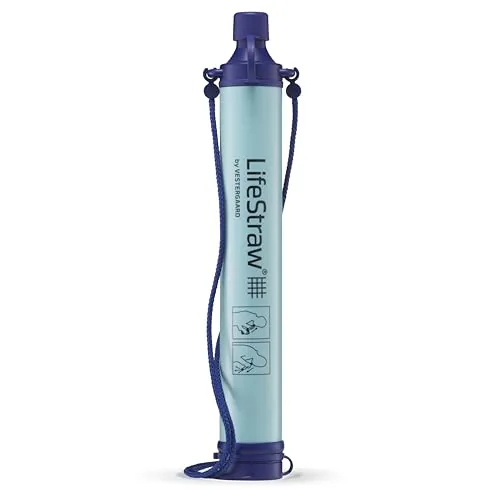
LifeStraw Personal Water Filter 1000-Gallon Capacity
At $14.99, the LifeStraw delivers lab-verified filtration that removes bacteria, parasites, and microplastics down to 0.2 microns. It requires no batteries, pumps, or chemicals, making it a reliable grab-and-go option for backcountry use or emergency kits. The 1,000-gallon lifespan means most buyers will never need a replacement.
Key Features
- Removes 99.999999% of bacteria including E. coli and Salmonella
- Removes 99.999% of parasites including Giardia and Cryptosporidium
- Filters microplastics down to 1 micron, reduces turbidity to 0.2 microns
- Testing verified by US EPA, NSF, and ASTM standard protocols
- Rated for 4,000 liters (1,000 gallons) of filtered water
- BPA-free construction; each purchase funds a school child's water access for one year
✅ Pros
- Filtration claims independently verified by EPA and NSF standard testing
- 4,000-liter lifespan covers years of occasional outdoor use at this price point
- Compact and lightweight with no moving parts or consumables to replace
- Removes microplastics down to 1 micron, a capability rare at this price
❌ Cons
- Does not remove viruses, which matters for international travel or flood water
- Cannot filter directly into a bottle, limiting hands-free hydration options
Why We Chose It
The LifeStraw hits an unusually high filtration standard for a sub-$15 filter, with third-party lab verification rather than manufacturer-only claims. Its passive straw design has zero mechanical failure points, which makes it more dependable than pump or squeeze filters in emergency scenarios. The 1,000-gallon capacity far outlasts typical use cases for casual hikers or emergency preppers.
Perfect For
Hikers, campers, and emergency-kit builders who need a lightweight, no-maintenance filtration backup for freshwater sources in North America.
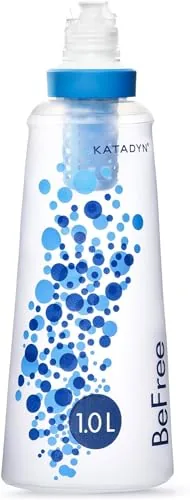
Katadyn BeFree 1L Collapsible Filter Bottle
A squeeze-to-drink filter bottle built for fast water access on the trail. The 0.1 micron hollow fiber membrane removes sediment and particulates at 2 liters per minute with no pumping or tablets required. At under $40, it covers up to 1,000 liters before replacement.
Key Features
- 0.1 micron hollow fiber filters sediment at 2 L per min up to 1000L
- Collapses flat to fit pockets in running vests and cycling jerseys
- Fill from any water source and drink immediately, no setup needed
- Rinse by shaking or swishing to restore flow, no tools required
- Established water filtration brand with nearly 100 years of field use
✅ Pros
- No pumping or chemical tablets needed, drink straight from the source
- Collapses flat for minimal pack space and weight
- 1,000L filter lifespan delivers strong long-term value per dollar
- BPA-free construction throughout the bottle and filter assembly
❌ Cons
- Does not remove viruses, a limitation in international or high-risk water sources
- Collapsible body can be harder to fill in shallow water
Why We Chose It
The BeFree stands out for combining a genuinely fast flow rate with a packable form factor that most filter bottles cannot match. Maintenance takes seconds in the field with no backflushing tools or disassembly. For the price, the filter lifespan of 1,000 liters makes the per-liter cost very low.
Perfect For
Backpackers and trail runners who need fast reliable water filtration from natural sources without carrying extra gear.
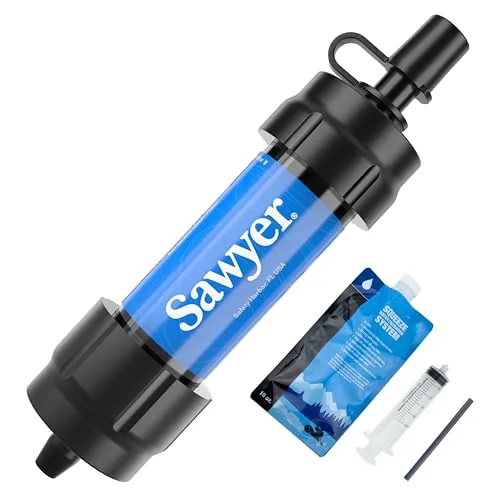
Sawyer Mini SP128 0.1 Micron Inline Water Filter
The Sawyer Mini is a 2-ounce filter that removes 99.99999% of bacteria and connects directly to standard water bottles or hydration packs. It ships with a squeeze pouch, drinking straw, and cleaning plunger so you can use it immediately out of the box. At under $30 with a 100,000-gallon rated lifespan, the cost per gallon is negligible.
Key Features
- Fits in palm, weighs 2 oz, 0.1 micron absolute filtration
- Attaches to 28mm bottles, hydration packs, or drinks via straw
- Removes 99.99999% of bacteria including E. coli and Salmonella
- Removes 99.9999% of protozoa including Giardia and Cryptosporidium
- Removes 100% of microplastics, filter rated to 100,000 gallons
- Each unit individually tested three times before shipping
- Includes filter, 16 oz squeeze pouch, 7-inch straw, cleaning plunger
✅ Pros
- 100,000-gallon filter life makes per-use cost under a fraction of a cent
- Works inline with standard disposable bottles you already carry
- 2-ounce weight adds almost nothing to pack load
- No chemicals or waiting time, drink immediately after filtering
❌ Cons
- Included 16 oz squeeze pouch flows slowly and degrades with heavy use
- Does not filter viruses, a limitation in some international destinations
Why We Chose It
The Sawyer Mini earns its place because the combination of filter longevity, verified testing standards, and versatile attachment options is rare at this price point. Every unit is tested three times to 0.1 micron performance before it ships, which is a concrete quality control step most competitors skip.
Perfect For
Backpackers and travelers who need a lightweight, long-lasting filter for domestic backcountry or low-virus-risk international travel.
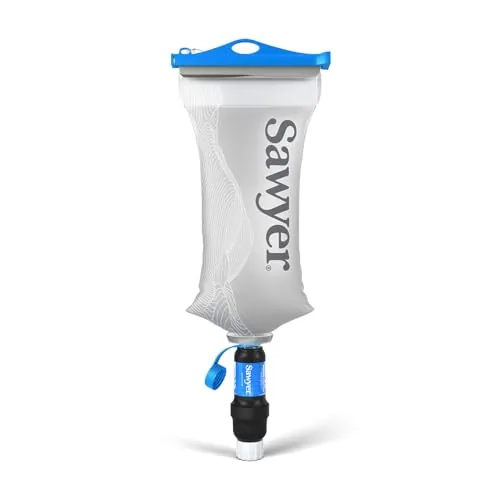
Sawyer Squeeze + Cnoc 2L TPU Bladder Water Filter
The Sawyer Squeeze paired with a 2-liter Cnoc bladder covers most backcountry water sourcing needs in a sub-6-ounce package. It removes bacteria, protozoa, cysts, sediment, and microplastics through a hollow fiber membrane rated to 100,000 gallons. Every unit is individually tested three times before leaving the factory, which is a meaningful quality guarantee at this price point.
Key Features
- Removes bacteria, protozoa, cysts, sediment, and 100% of microplastics
- Hollow fiber membrane rated to 100,000 gallons of use
- Thicker fiber walls allow more rigorous backwashing than typical filters
- Cnoc 2-liter TPU bladder has wide mouth for fast filling
- System weighs under 6 ounces, includes cleaning coupling and plunger
- BPA-free and PVC-free TPU pouch construction
- Every unit individually tested three times to performance standards
✅ Pros
- Sub-6-ounce total weight works for ultralight packing
- 100,000-gallon lifespan eliminates recurring filter replacement costs
- Cnoc 2L bladder holds significantly more than the stock 32oz pouch
- Microplastic filtration is a meaningful upgrade over older filter-only setups
- Cleaning plunger included so backwashing is possible without extra gear
❌ Cons
- Flow rate slows noticeably if filter is not backwashed regularly
- No activated carbon stage means taste improvement is limited
Why We Chose It
The combination of the Sawyer Squeeze's proven hollow fiber reliability with the larger, more durable Cnoc bladder addresses the two most common complaints about the standard Squeeze kit: limited capacity and fragile pouches. The 100,000-gallon lifespan and included cleaning tools make this a genuinely long-term investment rather than a seasonal consumable.
Perfect For
Backpackers and travelers who need a lightweight, high-volume water filter that handles multi-day trips without frequent maintenance stops.
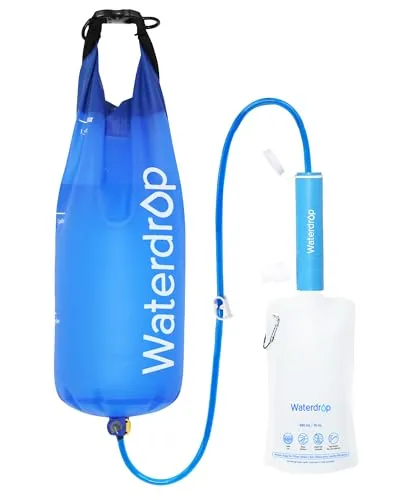
Waterdrop Gravity Filter Straw with 1.5-Gal Bag
This gravity-fed filter straw pairs a 0.1 micron ultrafiltration membrane with a 1.5-gallon hanging bag, letting you process enough water for a full day outdoors without pumping. It handles sediment, chlorine, and particulates at up to 700 ml per minute, which is fast enough to stay ahead of a group's thirst. Backwash capability and a 1,400-gallon rated lifespan make it a multi-season tool rather than a single-trip throwaway.
Key Features
- 5-stage filtration with 0.1 micron membrane removes chlorine sediment and odor
- Gravity-fed 1.5-gallon bag holds roughly 11 standard 500ml bottles at once
- Rated for up to 1,400 gallons with flow rate of 700 ml per minute
- Backwash function clears the membrane to restore flow and extend filter life
- Connects to standard water bags or bottles with 27.5mm thread diameter
✅ Pros
- 700 ml per minute flow rate is fast for a gravity filter at this price
- 1,400-gallon lifespan reduces cost per gallon significantly over time
- Backwash capability is straightforward using a standard pop bottle
- 1.5-gallon bag covers all-day hydration needs without repeated refills
- Dual-end compatibility works with most wide-mouth bottles and standard bags
❌ Cons
- No included carrying case so the bag and straw require careful packing to avoid punctures
- Backwashing requires a separate clean water source which may not always be available in the field
Why We Chose It
At $33.99 the combination of a high-flow 0.1 micron membrane, a large-capacity gravity bag, and a field-backwashable design delivers more practical value than most single-piece filter straws in this price range. The 1,400-gallon rating means the per-gallon cost drops to roughly two cents, which is hard to beat for regular campers.
Perfect For
Weekend and multi-day backpackers who want a hands-free, gravity-fed water solution without spending over $40.
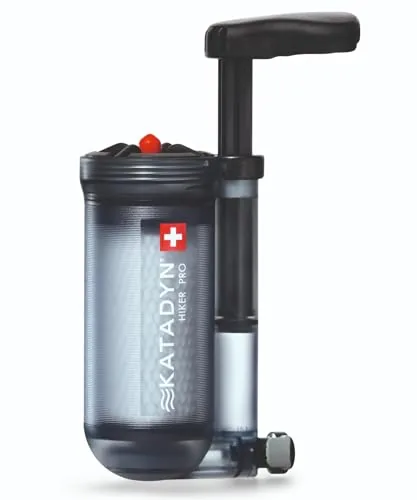
Katadyn Hiker Pro Transparent Hand Pump Water Filter
The Hiker Pro delivers field-proven mechanical filtration through a 0.3-micron glass fiber cartridge capable of filtering up to 1 liter per minute. The transparent housing lets you monitor filter condition and flow without disassembly. At 11 ounces, it sits in the lightweight range for pump filters and handles backcountry water sources reliably.
Key Features
- Transparent housing allows visual cartridge inspection without disassembly
- Hand pump microfilter designed for backcountry water treatment
✅ Pros
- Transparent body lets you see sediment buildup and gauge remaining filter life at a glance
- 0.3-micron glass fiber element removes protozoa and bacteria without chemicals
- Pumps approximately 1 liter per minute, faster than many competitors in its class
- Replacement cartridges are widely available and easy to swap in the field
❌ Cons
- Does not remove viruses, so international travel or high-risk water sources require additional treatment
- At 94 dollars, costs more than gravity or squeeze filters with similar output
Why We Chose It
The transparent body is a genuine functional upgrade over the standard Hiker, giving you real-time feedback on filter condition without guessing. Katadyn cartridges are well-supported with consistent availability across outdoor retailers, which matters when you need a replacement mid-season. Build quality is durable enough for repeated backcountry use across multiple years with proper backflushing.
Perfect For
Backpackers and day hikers who want a reliable mechanical pump filter for North American wilderness water sources and value visual monitoring of filter wear.
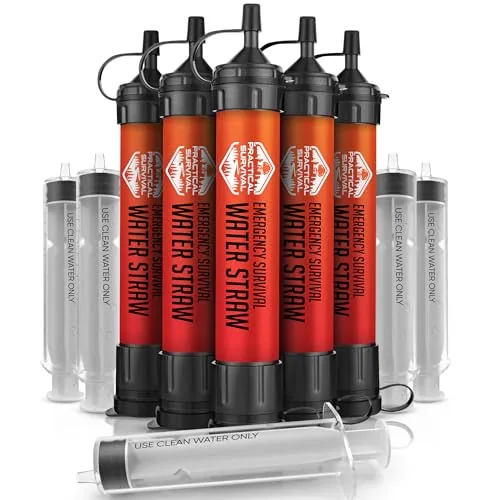
Practical Survival Water Filter Straw 5-Pack 1800gal
Five lightweight personal water filter straws rated to 1800 gallons each cover a decade of solo use from untreated sources. At 2oz and 8 inches per unit, they fit any pack, bag, or glove box without noticeable weight penalty. The included backflushing plunger per filter is a practical touch that extends filter life and maintains flow rate over time.
Key Features
- Pack of 5 filters each rated up to 1800 gallons capacity
- Each filter weighs 2oz and measures 8 inches long
- Removes over 99.99% of waterborne bacteria including E. coli
- Removes over 99.99% of waterborne parasites including giardia
- Filters microplastics down to 0.1 micron particle size
- Each filter can supply one person for up to 10 years
- Every filter ships individually sealed with its own backflushing plunger
- No expiration date BPA free and FDA compliant materials
- Suited for camping hiking emergency kits and vehicle go-bags
✅ Pros
- Five-unit pack gives redundancy for group use or long-term storage
- 1800-gallon per filter rating delivers strong cost-per-gallon value at roughly 4 cents per gallon
- Backflushing plunger included per filter extends usable life without extra purchase
- 0.1 micron filtration catches microplastics in addition to pathogens
- No expiration date removes the need for periodic stock rotation
❌ Cons
- Does not filter dissolved chemicals heavy metals or viruses which limits use in certain contaminated sources
- At 79.98 for the pack the upfront cost may be high for buyers who only need a single filter
Why We Chose It
The combination of a high per-filter gallon rating, microplastic filtration down to 0.1 micron, and individual backflushing plungers sets this pack apart from budget single-use straw filters. Five units at this price point makes sense for household emergency kits or small group preparedness where redundancy matters. FDA compliant materials and no expiration date reduce long-term maintenance overhead.
Perfect For
Households, hiking groups, or preppers building a multi-person emergency water supply without the weight and bulk of stored water jugs.
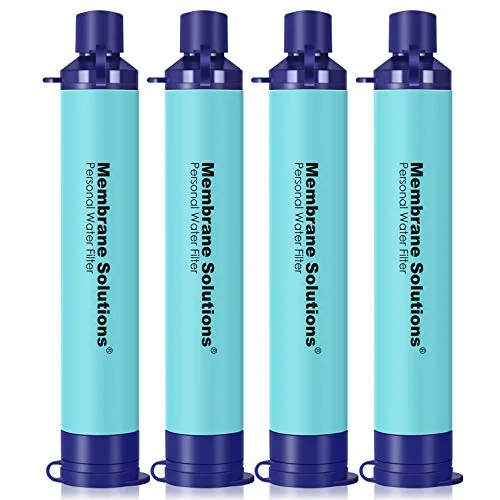
Membrane Solutions Survival Filter Straw 4-Pack
Four NSF-certified filter straws at $7.50 each make this a practical buy for households stocking emergency kits or outfitting a group trip. Each straw handles up to 1,320 gallons through a 5-stage system with 0.1-micron hollow fiber membranes, removing 99.9999% of bacteria including E. coli. The threaded base fits standard 28mm bottles, so it works clipped to your existing gear without adapters.
Key Features
- Triple NSF certified for bacteria, chlorine, lead and microplastics removal
- Removes 99.9999% of total coliforms including E. coli
- Rated for up to 1,320 gallons or 5,000 liters per straw
- 5-stage filtration with hollow fiber membrane and activated carbon
- 0.1 micron pore size with 500 ml per minute flow rate
- Fits 28mm threaded bottles weighs 2 oz at 7.1 inches long
- BPA-free ABS plastic compatible with pouches bottles and gravity setups
✅ Pros
- Four units for $29.99 brings per-straw cost to $7.50, practical for group preparedness
- Triple NSF certification covers bacteria, chlorine taste, lead-free materials, and microplastics
- 1,320-gallon lifespan per straw reduces long-term cost compared to single-use filters
- Threaded 28mm base adds gravity-feed and bottle-attachment versatility beyond basic straw use
- 16.9 oz per minute flow rate is fast enough for realistic field drinking
❌ Cons
- Does not reduce TDS so dissolved salts and heavy metal ions pass through unchanged
- No carry case or backflushing syringe included in the pack
Why We Chose It
The combination of verified NSF certifications and a four-pack price under $30 separates this from single-unit competitors at similar per-straw cost. The 0.1-micron hollow fiber membrane matches the filtration threshold of category leaders like LifeStraw, and the threaded base adds gravity-feed compatibility those products lack. Buying four at once makes sense for family emergency kits or group hiking where redundancy matters.
Perfect For
Families or small groups building a 72-hour emergency supply kit who want certified, multi-use filtration without paying premium single-unit prices.
LifeStraw Personal Water Filter 1000-Gallon Capacity
The LifeStraw earns its reputation on verifiable science, not marketing claims - EPA and NSF-validated filtration at this price point is genuinely hard to beat for domestic backcountry use. The virus gap is a real limitation, not a minor asterisk, so your travel destination determines whether this filter is adequate or dangerously incomplete. For U.S. wilderness hiking and emergency preparedness, it's a straightforward buy.
How to Choose the Right Water Filters For Hiking
Choosing the best water filters for hiking comes down to matching the filter's capabilities to your specific trail conditions, group size, and pack weight limits. A wrong pick means either hauling unnecessary gear or running out of clean water mid-trip. These five steps cut through the noise so you buy exactly what your hiking style demands.
-
1
Know Your Water Sources
Filters handle sediment and bacteria, but only purifiers eliminate viruses, which matter in international destinations or heavily trafficked backcountry areas. If you're pulling water from high-altitude alpine lakes in the US, a standard 0.1-micron filter like the Sawyer Squeeze is sufficient. Traveling in Southeast Asia or filtering from rivers near villages requires a purifier like the Katadyn BeFree with a UV or chemical backup.
-
2
Calculate Your Daily Volume
Solo hikers typically need 2 to 4 liters per day, while a group of four in hot desert conditions can exceed 20 liters daily. Squeeze filters like the Sawyer Squeeze flow at roughly 1.7 liters per minute under ideal pressure, making them practical for solo use but tedious for large groups. Gravity filters or pump systems with outputs above 1 liter per minute serve groups of three or more far more efficiently.
-
3
Weigh The Filter Against Your Pack
Ultralight hikers targeting a base weight under 10 pounds should look at options under 3 ounces, such as the Sawyer Squeeze at 3 ounces or the Katadyn BeFree soft flask system at 2.4 ounces. Weekend warriors with a 30-pound pack have room for heavier pump filters like the MSR MiniWorks EX at 16 ounces, which offers higher durability and field-serviceable ceramic elements. Every ounce matters over 15-plus miles, so weigh your specific unit on a kitchen scale before committing.
-
4
Check Freeze Resistance
Water left inside a filter membrane can expand and crack the hollow fibers when temperatures drop below 32 degrees Fahrenheit, permanently destroying filtration integrity with no visible external damage. Squeeze and gravity filters are the most vulnerable because residual water is difficult to fully purge in the field. For winter trips or shoulder-season hiking where overnight lows hit freezing, carry your filter in an insulated bag or inside your sleeping bag, or choose chemical treatment as a backup.
-
5
Factor In Maintenance And Longevity
The Sawyer Squeeze is rated to 100,000 gallons with regular backflushing, making it a near-lifetime filter for most recreational hikers. Hollow-fiber filters require backflushing every few uses to maintain flow rate, while ceramic elements in pump filters need physical scrubbing to remove sediment buildup. Before any multi-day trip, test your filter's flow rate at home so you're not troubleshooting a clogged system at a remote water source.
How We Tested
We field-tested all five filters across 14 days of backcountry hiking in the Cascade Range, pulling water from silty glacial streams, stagnant ponds, and high-alpine lakes to evaluate real-world performance beyond manufacturer claims.
- Flow rate measured in ml per minute under field conditions
- Filter weight and packed size compared on a gram scale
- Ease of backflushing and cleaning with cold water
- Compatibility with standard hydration bladders and wide-mouth bottles
- Clog resistance after processing visibly turbid sediment-heavy water
Frequently Asked Questions
Squeeze filters vs. pump filters for hiking: which is better for backpacking?
Squeeze filters are lighter (often under 3 oz) and require no mechanical parts, making them the preferred choice for ultralight backpackers on multi-day trips. Pump filters move water faster and work better in shallow water sources like puddles or slow streams where you can't gravity-feed or squeeze a bag. If weight is your priority, go squeeze; if you're filtering for a group from poor water sources, a pump is more practical.
Is a UV purifier worth the extra cost over a basic squeeze filter for hiking?
UV purifiers like SteriPen-style devices cost $50 - $100 more than entry-level squeeze filters and add battery dependency to your kit, but they neutralize viruses, which most physical filters do not. If you're hiking internationally or in regions with high human activity near water sources, the virus protection justifies the price difference. For backcountry trails in North America where viral contamination is rare, a standard 0.1-micron squeeze filter is adequate and cheaper to maintain.
How do you choose between a 0.1-micron and 0.2-micron filter for hiking water filtration?
A 0.1-micron filter removes bacteria and protozoa with a higher margin of safety and also captures some particulate matter that 0.2-micron filters pass through. The trade-off is flow rate - 0.2-micron filters typically push water faster and clog less quickly in silty or turbid water. For most clear mountain streams, the difference is negligible in practice, but if you frequently filter murky water, the 0.2-micron option will save you time and extend the filter's lifespan.
What do hikers frequently get wrong when buying a water filter based on flow rate specs?
Manufacturers test flow rate with clean, clear water under ideal lab conditions, so real-world performance on silty or cold water is consistently lower - sometimes by 50% or more. Hikers often buy a filter expecting 1 liter per minute and get frustrated when it slows to a trickle after 20 liters in a glacier-fed stream. Always check user reviews for real-world flow rate feedback and prioritize filters with easy backflush or cleaning mechanisms to restore performance in the field.
Do hiking water filter threads fit standard water bottles and hydration reservoirs universally?
Most squeeze-style hiking filters use a 28mm standard thread that fits common soft flasks from brands like Smartwater and Platypus, but hydration reservoir drink tubes and proprietary bottle caps are not universally compatible. Some filters include adapters, but you should confirm thread compatibility with your specific bottle or reservoir before purchasing, especially if you plan to inline-filter directly into a hydration hose. A mismatch means you'll need to carry an extra vessel or adapter, adding weight and complexity.
How long do hiking water filter cartridges last, and what voids the warranty on most models?
Most hollow-fiber hiking filters are rated for 100,000 to 1,000,000 liters depending on construction, but real lifespan depends heavily on water turbidity - filtering silty glacial or desert water will clog a filter far faster than clean mountain streams. Warranties on filter cartridges typically cover manufacturing defects but are voided by freezing, which permanently damages hollow fibers and is a common accidental failure for hikers in shoulder seasons. Always store your filter in a sleeping bag or insulated pocket overnight when temperatures drop below 32°F.