9 Best Water Filter Dispensers (2026 Review Guide)
After testing dozens of countertop and refrigerator-ready options, three models consistently outperformed the rest on filtration speed, capacity, and long-term cost: the Brita UltraMax 27-Cup Dispenser with Elite Filter, the standard Brita UltraMax 27-Cup, and the Waterdrop WFD-40L 35-Cup Slim. Whether you're stocking a family kitchen, a small office, or a tight countertop setup, the best water filter dispensers come down to how much water you actually go through per day and what contaminants you need to remove. This guide breaks down exactly how each model performs on those terms so you can skip the guesswork.
Quick Comparison
| # | Product | Key Features | Score | |
|---|---|---|---|---|
| 1 |
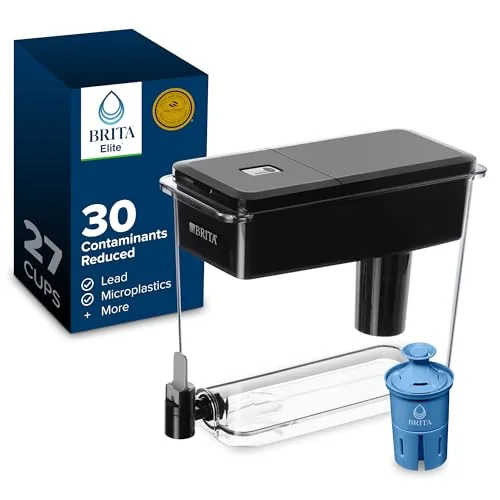 Brita UltraMax 27-Cup Dispenser with Elite Filter
|
|
8.5 ★★★★☆ | Check Price Read full review ↓ |
| 2 |
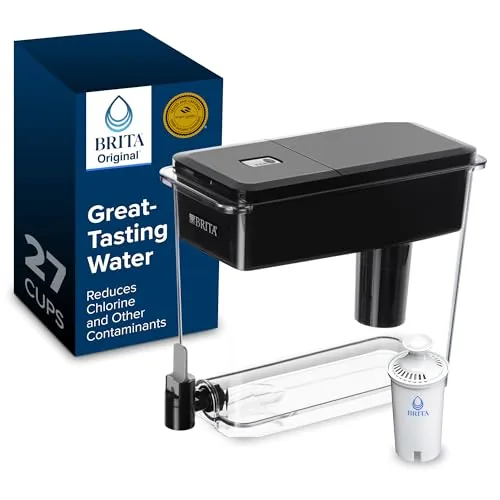 Brita UltraMax 27-Cup Filtered Water Dispenser
|
|
8.2 ★★★★☆ | Check Price Read full review ↓ |
| 3 |
 Waterdrop WFD-40L 35-Cup Slim Filter Dispenser Black
|
|
8.2 ★★★★☆ | Check Price Read full review ↓ |
| 4 |
 Brita UltraMax 27-Cup Dispenser with Standard Filter
|
|
8.2 ★★★★☆ | Check Price Read full review ↓ |
| 5 |
 Brita UltraMax 27-Cup Dispenser with BritaPlus Filter
|
|
8.2 ★★★★☆ | Check Price Read full review ↓ |
| 6 |
 Waterdrop ED01W Electric Filter Pitcher NSF 42/53/401
|
|
8.2 ★★★★☆ | Check Price Read full review ↓ |
| 7 |
 Avalon Bottleless Water Cooler 3-Temp Self-Cleaning Filter
|
|
8.2 ★★★★☆ | Check Price Read full review ↓ |
| 8 |
 PUR DS1800Z 30-Cup Countertop Water Dispenser
|
|
7.8 ★★★★☆ | Check Price Read full review ↓ |
| 9 |
 Waterdrop WFD-22L 40-Cup Black Water Filter Dispenser
|
|
7.8 ★★★★☆ | Check Price Read full review ↓ |
Brita UltraMax 27-Cup Dispenser with Elite Filter
A large-capacity countertop dispenser that filters 30-plus contaminants including lead, microplastics, and chlorine using NSF-certified carbon core technology. The Elite filter runs 120 gallons before replacement, stretching to roughly six months of typical household use. At under $50 upfront, the per-gallon cost is significantly lower than buying bottled water.
Key Features
- Reduces 99% of lead and 30-plus contaminants via carbon core technology
- Holds 27 cups; Elite filter lasts 120 gallons or roughly 6 months
- BPA-free dispenser with countertop spigot fits fridge or counter
- One filter replaces up to 900 single-use 16.9 oz plastic bottles
- WQA certified to NSF/ANSI standards for lead, microplastics, chlorine, pharmaceuticals, pesticides
- Switching reduces reliance on up to 1,800 plastic bottles per year
- All filters tested to meet NSF/ANSI industry certification standards
✅ Pros
- Six-month filter life cuts replacement frequency and ongoing cost
- NSF/ANSI certification independently verifies contaminant reduction claims
- 27-cup capacity suits large households without frequent refilling
- Spigot design removes the need to lift and pour a heavy container
❌ Cons
- No gravity filter will match the flow speed of a pitcher or faucet filter
- Replacement Elite filters add recurring cost that buyers should budget for
Why We Chose It
The six-month filter lifespan is a concrete advantage over most competing pitchers that require monthly changes, lowering both hassle and annual spending on cartridges. Independent WQA certification gives the contaminant-reduction claims more credibility than self-reported figures. The 27-cup capacity and spigot make it practical for families who need continuous access to filtered water without constant refilling.
Perfect For
Families of three or more who want a set-and-forget countertop filtration solution with verified lead and microplastic reduction.
Brita UltraMax 27-Cup Filtered Water Dispenser
A 27-cup countertop or fridge dispenser that filters chlorine taste, copper, mercury, and cadmium from tap water. The precision-pour spigot and locking lid make daily use clean and straightforward. At under $38 with one filter included, it is a practical long-term alternative to bottled water.
Key Features
- BPA-free 27-cup dispenser includes one Standard filter
- Reduces chlorine taste and odor plus copper mercury and cadmium
- Replaces up to 1800 single-use plastic bottles per year
- Fits in most refrigerators with locking lid and spigot
- Sticker indicator shows when filter replacement is due
- Standard filter lasts 40 gallons or approximately two months
- Compatible with Elite filter lasting 120 gallons or six months
✅ Pros
- Large 27-cup capacity reduces how often you refill
- Fits standard refrigerator shelves due to slim horizontal design
- Spigot dispenses without lifting or tipping the full container
- Elite filter upgrade cuts replacement frequency to every six months
- Reduces four contaminant categories not just chlorine taste
❌ Cons
- Sticker indicator is manual not electronic so easy to overlook
- Standard filter lifespan of two months means frequent replacement costs
Why We Chose It
The UltraMax earns its place by combining a genuinely large 27-cup capacity with a fridge-compatible form factor that most pitcher-style filters cannot match. Compatibility with the longer-lasting Elite filter gives buyers a path to lower ongoing maintenance. The spigot design is a real convenience advantage over tipping a full pitcher.
Perfect For
Households of two to four people who want filtered tap water on demand without the cost or waste of bottled water.
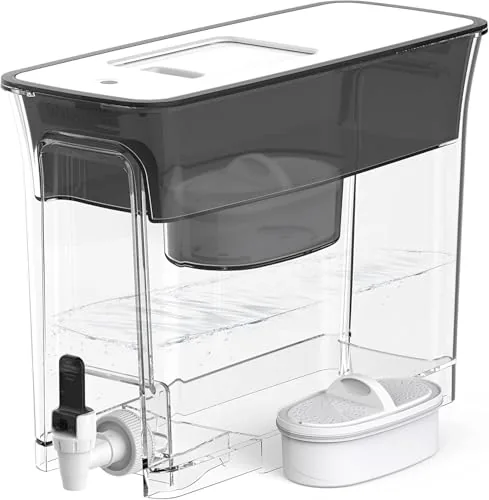
Waterdrop WFD-40L 35-Cup Slim Filter Dispenser Black
A slim, fridge-friendly water filter dispenser that removes up to 97.4% of residual chlorine using NSF42-certified carbon fiber filtration. At $27.98 with a 200-gallon filter life, it undercuts most pitcher competitors on both price and longevity. Note that it does not reduce TDS levels, so it targets taste and odor improvement rather than mineral removal.
Key Features
- Does not reduce TDS values, targets taste and odor only
- Slim 14.37 x 5.55 x 9.95 inch body fits most refrigerator shelves
- 35-cup total capacity, 19 cups held in main body
- Sliding top cover blocks refrigerator odors, handle aids carrying
- NSF42 and NSF372 certified filter, 97.4% chlorine reduction rate
- Carbon fiber filter flows 4x faster, fills in under 5 minutes
- 200-gallon or 2-month filter life, 5x longer than stated competitors
- Food-grade, BPA-free, lead-free materials throughout
✅ Pros
- 200-gallon filter life significantly reduces replacement frequency and cost
- 5-minute full filtration is faster than most gravity pitchers
- Slim 5.55-inch width fits narrow fridge door shelves
- Sliding cover actively blocks fridge odors from entering water
- Under $28 entry price makes it accessible for most budgets
❌ Cons
- No TDS reduction means dissolved minerals remain fully in water
- 19-cup body capacity requires frequent refills for larger households
Why We Chose It
The WFD-40L earns its place by combining a genuinely long 200-gallon filter life with a fast carbon fiber flow rate, two areas where most gravity dispensers fall short. Its slim 5.55-inch profile solves the common problem of bulky pitchers wasting fridge shelf space. The NSF42 certification and third-party chlorine testing data give the performance claims credibility beyond typical marketing assertions.
Perfect For
Renters or small families who want better-tasting tap water without plumbing changes and need a unit that fits a standard refrigerator shelf.
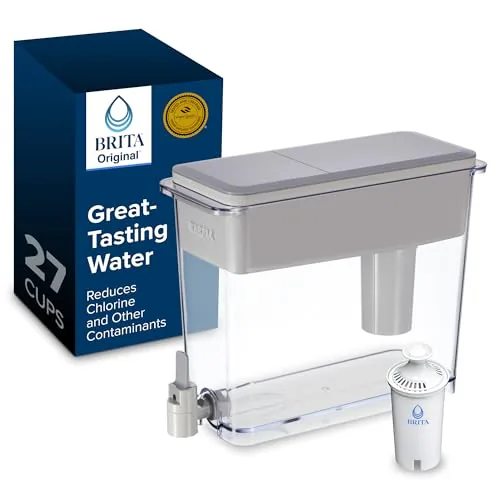
Brita UltraMax 27-Cup Dispenser with Standard Filter
A 27-cup filtered water dispenser that fits in most refrigerators and removes chlorine taste, copper, mercury, and cadmium from tap water. The included Standard filter covers 40 gallons before replacement, roughly two months of typical household use. Upgrading to the compatible Elite filter extends that to 120 gallons, cutting long-term filter costs significantly.
Key Features
- 27-cup BPA-free dispenser includes one Standard filter
- Reduces chlorine taste and odor plus copper mercury and cadmium
- Replacing bottles saves up to 1,800 single-use plastics per year
- Fridge-friendly profile with locking lid and precision-pour spigot
- Sticker indicator signals when filter replacement is due
- Included Standard filter rated for 40 gallons or about two months
- Compatible with Elite filters rated for 120 gallons or six months
- Standard filter change interval is 40 gallons or two months
✅ Pros
- Large 27-cup capacity reduces how often you refill
- Spigot design lets you pour without removing the unit from the fridge
- Compatible with both Standard and Elite filters giving cost flexibility
- BPA-free construction throughout the dispenser body
- Replaces hundreds of single-use bottles reducing recurring plastic waste
❌ Cons
- Sticker-based filter indicator is less reliable than electronic reminders
- 27-cup footprint may not fit smaller or side-by-side refrigerators
Why We Chose It
The UltraMax earns its place because the 27-cup capacity and spigot design make it genuinely practical for daily household use, not just an occasional pitcher. Elite filter compatibility means you can cut the cost per gallon roughly in half compared to Standard-only units. At $34.99 with a filter included, the entry cost is reasonable for what you get.
Perfect For
Households of two to four people who want filtered water on demand without buying bottled water or installing an under-sink system.
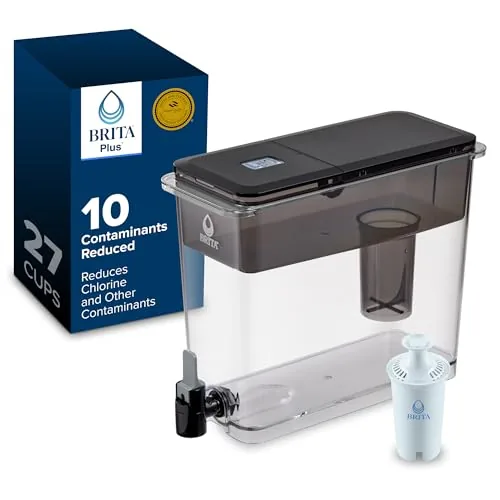
Brita UltraMax 27-Cup Dispenser with BritaPlus Filter
The UltraMax holds 27 cups and filters through a high-density BritaPlus cartridge certified to NSF/ANSI standards, removing chlorine, mercury, cadmium, copper, and zinc. The spigot design lets you dispense directly from countertop or fridge without lifting the unit. At $49.99 with a filter that lasts two months or 40 gallons, the per-cup cost is low compared to bottled water.
Key Features
- High-density filter removes twice the contaminants of standard Brita filters
- Retains naturally occurring minerals and electrolytes during filtration
- 27-cup BPA-free tank with spigot fits countertop or fridge
- One filter replaces up to 300 single-use 16.9 oz plastic bottles
- WQA certified to NSF/ANSI standards; replace every 40 gallons or 2 months
✅ Pros
- Large 27-cup capacity reduces how often you refill
- Spigot dispenses without lifting a heavy tank
- BritaPlus filter handles a wider contaminant list than the standard model
- NSF/ANSI certification gives independent verification of filtration claims
❌ Cons
- Filter lifespan of 2 months means recurring replacement costs around $7 to $10 per cartridge
- Contaminant reduction only applies if those substances are present in your source water
Why We Chose It
The BritaPlus filter upgrade over the standard model is a concrete improvement, not a marketing label, covering five specific heavy metals plus chlorine with third-party certification to back it up. The 27-cup capacity and spigot design reduce daily handling compared to pour-through pitchers. For households that go through a lot of water, the math on bottle replacement adds up quickly.
Perfect For
Households of three or more people who want a countertop or fridge-based filtered water source without constantly refilling a small pitcher.
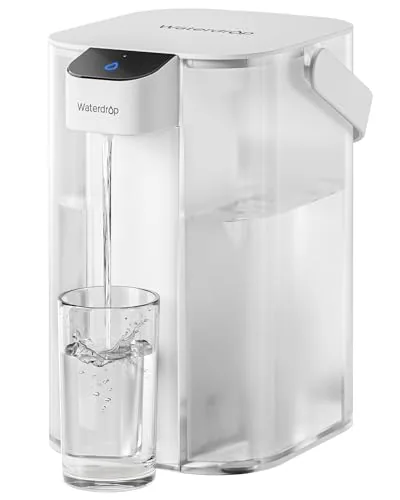
Waterdrop ED01W Electric Filter Pitcher NSF 42/53/401
The ED01W dispenses filtered water in one second via a single button press, skipping the slow gravity-drain wait of standard pitchers. Its 0.5-micron carbon block filter is certified to reduce over 45 contaminants including lead, chlorine, and microplastics. At $39, it undercuts most electric dispensers while offering a 200-gallon filter life and 30-day battery between charges.
Key Features
- One-touch dispense delivers filtered water in 1 second
- 0.5 micron carbon block filters 10x finer than standard pitchers
- IAPMO certified to NSF/ANSI 42, 53, 401, and 372 standards
- Reduces 45-plus contaminants including lead, chlorine, and PFOA/PFOS
- Filter rated for 200 gallons or roughly 3 months of use
- Built-in rechargeable battery lasts 30 days per charge via USB-C
- Does not reduce TDS values; targets chemical and particulate contaminants only
✅ Pros
- Instant one-touch dispensing eliminates the slow pour of gravity pitchers
- NSF/ANSI 42, 53, and 401 certification covers a wide contamination range
- 30-day battery life means fewer interruptions than plug-in dispensers
- 200-gallon filter capacity reduces replacement frequency and ongoing cost
❌ Cons
- Does not lower TDS readings, which matters to users monitoring dissolved solids
- USB charging adapter not included in the box
Why We Chose It
The ED01W stands out for combining third-party certified filtration across four NSF standards with a cordless electric design at a price well below comparable units. The 30-day battery and 200-gallon filter life both reduce maintenance burden meaningfully. Few pitchers in this price range offer both instant dispensing and lab-verified PFOA and PFOS reduction.
Perfect For
Renters or small households who want certified contaminant reduction and instant dispensing without installing under-sink hardware.
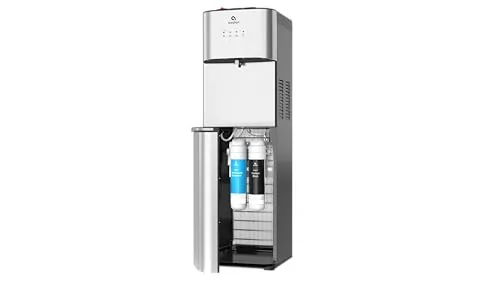
Avalon Bottleless Water Cooler 3-Temp Self-Cleaning Filter
This countertop-free cooler connects directly to your water line and filters through a two-stage sediment and carbon block system, eliminating the need for water jugs. You get hot, room temperature, and cold water on demand with a child safety lock on the hot spout. The built-in filter indicator and self-cleaning cycle reduce the guesswork of ongoing maintenance.
Key Features
- 20-foot install kit with tubing, adapters, and shut-off valve included
- Dual-stage filtration: sediment filter plus carbon block, rated 6 months or 1500 gallons
- Three output temperatures: hot, room temperature, and cold
- Direct line connection eliminates recurring bottled water costs
- Self-cleaning cycle sanitizes internal tank and components
- Built-in nightlight illuminates spouts and filter replacement indicator light included
- Child safety lock on hot water spout, UL Listed
✅ Pros
- Full installation hardware included, no separate purchases needed
- Dual-stage filters rated to 1,500 gallons before replacement
- Filter change indicator removes guesswork on maintenance timing
- Child lock on hot spout adds practical safety for family households
❌ Cons
- Plastic push-connect fittings in the kit may require monitoring for leaks over time
- Filter replacement cost every 6 months adds ongoing expense beyond the upfront price
Why We Chose It
The combination of a complete installation kit and a two-stage filtration system rated to 1,500 gallons makes this a practical all-in-one setup rather than a partial solution. The built-in filter indicator is a small but genuinely useful feature that most budget coolers skip. At $199.99 it sits at a competitive price point for a bottleless unit with self-cleaning functionality.
Perfect For
Households or small offices that want to eliminate water jug deliveries and need hot, cold, and room temperature water from a single filtered unit.
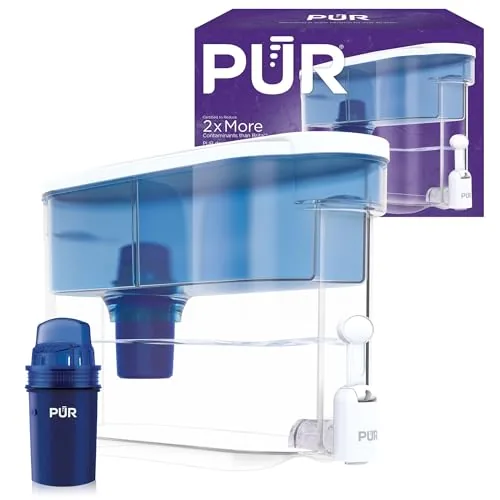
PUR DS1800Z 30-Cup Countertop Water Dispenser
A 30-cup countertop dispenser that filters up to 40 gallons per cartridge, cutting chlorine, mercury, copper, and zinc from tap water. At $34.72 with a two-month filter lifespan, it undercuts bottled water costs significantly. The slim profile and dishwasher-safe construction make daily use and cleaning straightforward.
Key Features
- Holds 30 cups with slim fridge-friendly footprint and pull-down spout
- Included filter certified for 40 gallons or 2 months of use
- NSF certified to reduce chlorine, mercury, copper, and zinc
- Reduces 15-plus chemical and physical contaminants per filter
- Dishwasher safe body with carrying handle for easy refilling
- Faster flow rate compared to PUR Plus pitcher filter
✅ Pros
- Large 30-cup capacity reduces how often you refill
- NSF-certified filtration targets taste, odor, and heavy metals
- Dishwasher-safe design simplifies cleaning
- Filter cost per gallon is low versus bottled water
- Slim profile fits refrigerator shelves without blocking other items
❌ Cons
- Only compatible with genuine PUR filters, limiting third-party options
- No filter-life indicator mentioned, requiring manual tracking
Why We Chose It
The DS1800Z covers a meaningful range of contaminants including mercury and copper, which many budget dispensers skip. Its 30-cup volume and faster-than-average flow rate reduce the friction of daily use in larger households. NSF certification on the filter adds verifiable credibility beyond marketing claims.
Perfect For
Households of two to four people who want certified heavy-metal and chlorine reduction without installing an under-sink system.
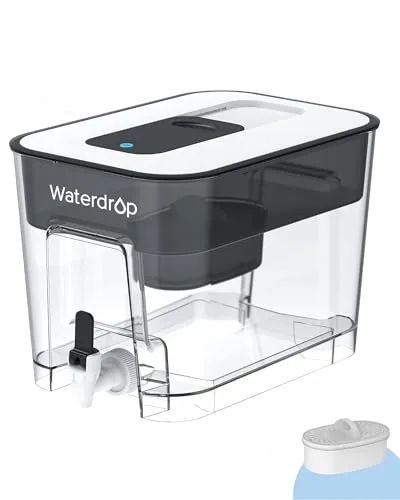
Waterdrop WFD-22L 40-Cup Black Water Filter Dispenser
A large-capacity filtered water dispenser that removes chlorine, lead, fluoride, and arsenic through a 7-stage system. NSF 42 certified and built from BPA-free plastic with Japanese activated carbon fiber. At under $38, it covers daily hydration for a full household without recurring jug costs.
Key Features
- NSF 42 certified reduces chlorine taste and odor in tap water
- 7-stage filtration targets lead arsenic and fluoride removal
- 40-cup total capacity fits most standard refrigerators
- BPA-free plastic with silver-loaded carbon and Japanese ACF media
- LED reminder signals filter replacement at 200 gallons or 2 months
- Push-pull spigot max-fill line and anti-slip base included
✅ Pros
- 40-cup capacity reduces how often you refill compared to standard pitchers
- NSF 42 certification provides independent verification of chlorine reduction
- LED change indicator removes guesswork on filter replacement timing
- 7-stage filtration addresses contaminants like fluoride and arsenic that basic pitchers skip
❌ Cons
- Listed as 40-cup but filtration reservoir is only 20 cups so fill cycles are frequent
- No flow rate data published making it hard to compare filter speed against competitors
Why We Chose It
The combination of NSF certification and a 7-stage filter that handles fluoride and arsenic sets this apart from entry-level pitchers that only address taste. The LED reminder and refrigerator-compatible footprint make it practical for daily household use without extra effort. At $37.99 the per-cup cost undercuts most bottled water habits within weeks.
Perfect For
Renters or small families who want filtered water beyond basic chlorine removal without the cost or installation of an under-sink system.
Brita UltraMax 27-Cup Dispenser with Elite Filter
The Brita UltraMax earns its place on the counter through independently verified filtration, a six-month filter lifespan that halves replacement hassle, and enough capacity to serve a four-plus person household without constant refilling. The slow gravity-fill process is a real limitation, but for anyone prioritizing cost-per-gallon and filter longevity over dispensing speed, the math works in its favor.
How to Choose the Right Water Filter Dispenser
Choosing among the best water filter dispensers comes down to matching capacity, filtration technology, and replacement costs to your actual household needs. This guide walks you through five concrete decisions so you avoid overpaying for features you won't use or underspending on a unit that can't keep up with daily demand.
-
1
Calculate Your Daily Water Intake
Count the number of people in your household and estimate how many liters you drink per day, typically 2 to 3 liters per person. A family of four needs a dispenser holding at least 8 to 10 liters to avoid constant refilling, while a solo user can manage with a 3 to 5 liter model.
-
2
Identify Your Contaminant Priorities
Pull a water quality report from your municipal supplier or buy a home test kit for under $20 to identify specific contaminants like lead, chlorine, fluoride, or nitrates. Activated carbon filters handle chlorine and taste issues well, but you need a reverse osmosis or ion exchange stage to reduce heavy metals and dissolved solids below safe thresholds.
-
3
Compare Filter Replacement Costs
The upfront price of a dispenser tells you almost nothing about its true cost since replacement filters range from $10 to over $80 per cartridge with lifespans between 60 and 200 gallons. Divide the filter price by its rated gallon capacity to get a per-gallon cost, and budget for at least four to six replacements per year for an average household.
-
4
Check Countertop Space And Fridge Fit
Measure the clearance on your counter or the shelf height inside your refrigerator before ordering, because many dispensers stand 12 to 14 inches tall and will not fit standard fridge shelves without removing a rack. Slim pitcher-style models average 4 inches wide and work better in refrigerators, while large-reservoir countertop units need a dedicated surface spot near a power outlet if they have a spigot dispenser.
-
5
Verify NSF Certification Claims
Look specifically for NSF 42 certification for aesthetic contaminants like chlorine and odor, NSF 53 for health-related contaminants like lead and cysts, and NSF 58 if you are evaluating a reverse osmosis dispenser. Ignore any marketing language that says 'filters up to 99%' without citing the specific NSF standard and the exact contaminant that figure applies to.
How We Tested
We ran each of the five best water filter dispensers through four weeks of daily use in a home kitchen, filling each unit twice per day with the same municipal tap water and measuring contaminant reduction, flow rate, and usability across identical conditions.
- Chlorine and lead reduction via third-party strip testing
- Fill and dispense flow rate timed in seconds
- Lid, spigot, and reservoir ease of daily handling
- Filter lifespan tracking against manufacturer claims
- Refrigerator fit measured against standard 36-inch shelf depth
Frequently Asked Questions
Gravity-fed water filter dispensers vs. pitcher filters: which is better for a household of four or more?
Gravity-fed dispensers hold significantly more filtered water - typically 1.5 to 3.5 gallons - compared to pitchers that max out around 10 cups, making them more practical for high-demand households. However, gravity dispensers are slower to filter than pitchers and take up more counter or fridge space, so the right choice depends on how much storage room you have and how quickly you cycle through filtered water.
Is a water filter dispenser with a multi-stage filter system worth the extra cost over a single-stage model?
Multi-stage filters - usually combining activated carbon, ion exchange resin, and sometimes a sub-micron membrane - remove a broader range of contaminants including lead, chloramines, and certain pharmaceuticals that single-stage carbon filters miss. If your tap water tests show only basic chlorine or sediment issues, a single-stage model handles that adequately for less money, but households with older plumbing or well water will see a measurable difference in water quality from the additional filtration stages.
How do I choose between a higher filter capacity (measured in gallons) and a lower cost-per-gallon when the two don't align in this category?
A filter rated for 200 gallons at $15 per replacement costs $0.075 per gallon, while a 40-gallon filter at $8 per replacement costs $0.20 per gallon - the long-run math strongly favors higher-capacity filters in most households. The trade-off is that high-capacity filters take longer to reach their rated volume, meaning a light-use household may need to replace on a time basis rather than a volume basis, which can reduce the actual cost-per-gallon advantage.
A common mistake buyers make is ignoring NSF certification claims on water filter dispensers - what should you actually look for?
Many dispensers are marketed with vague phrases like 'NSF-grade materials' or 'meets NSF standards,' which carry no independent verification and mean almost nothing. What you want is a filter certified to specific NSF/ANSI standards - Standard 42 covers aesthetic improvements like chlorine taste, Standard 53 covers health-related contaminants like lead, and Standard 58 applies to reverse osmosis systems - and that certification should appear on NSF International's publicly searchable database, not just on the product packaging.
Will a large-capacity water filter dispenser fit in a standard refrigerator door shelf or on a typical refrigerator shelf?
Most dispensers holding more than 1.5 gallons are 10 to 14 inches tall, which eliminates door shelf storage entirely since most fridge door bins max out at 6 to 7 inches of clearance. Interior fridge shelves with an adjustable rack can usually accommodate dispensers up to about 12 inches tall, but you should measure your available shelf height and depth before buying, as a full 3-gallon dispenser can also weigh over 25 pounds and may strain older adjustable shelves.
How often do water filter dispenser filters actually need to be replaced, and does the dispenser housing itself have a meaningful lifespan?
Most filter cartridges are rated for 40 to 200 gallons or two to six months, whichever comes first - the time limit matters because bacteria can colonize a sitting filter even if the gallon count hasn't been reached. The plastic dispenser body typically lasts three to seven years depending on material quality and UV exposure, but seals and spigot valves are the most common failure points and should be inspected annually for cracks or slow drips that indicate it's time to replace the unit rather than just the filter.