6 Best Mineral Drops For Drinking Water (2026 Review Guide)
If you've switched to filtered, reverse osmosis, or distilled water, you've likely stripped out the contaminants you wanted gone - but also the naturally occurring minerals your body actually uses. The best mineral drops for drinking water let you add those back on your own terms, controlling exactly what goes into every glass. After testing the top options on the market, including multiple sizes and formulations of Trace Minerals ConcenTrace Drops, here's what you need to know before buying.
Quick Comparison
| # | Product | Key Features | Score | |
|---|---|---|---|---|
| 1 |
 Trace Minerals ConcenTrace Drops 70+ Ionic Minerals 2oz
|
|
8.5 ★★★★☆ | Check Price Read full review ↓ |
| 2 |
 Trace Minerals ConcenTrace Drops 70+ Ionic Minerals 8oz
|
|
8.2 ★★★★☆ | Check Price Read full review ↓ |
| 3 |
 Trace Minerals ConcenTrace Drops - 70+ Ionic Minerals
|
|
8.2 ★★★★☆ | Check Price Read full review ↓ |
| 4 |
 MAYU Trace Mineral Drops Full-Spectrum Ionic Blend 30srv
|
|
8.2 ★★★★☆ | Check Price Read full review ↓ |
| 5 |
 AquaTru Perfect Minerals - 72 Trace Mineral Drops 60ml
|
|
7.8 ★★★★☆ | Check Price Read full review ↓ |
| 6 |
 Baja Gold Liquid Ocean Trace Mineral Drops 4 fl oz
|
|
7.8 ★★★★☆ | Check Price Read full review ↓ |
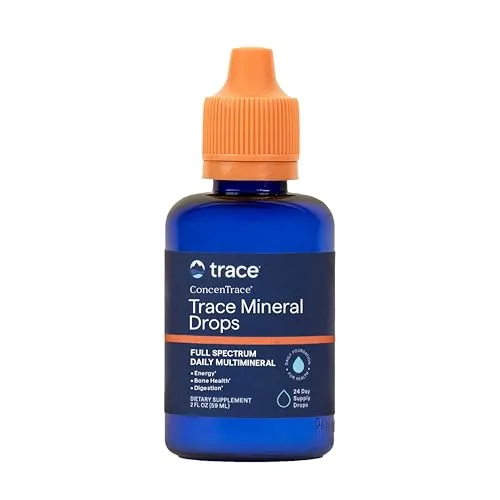
Trace Minerals ConcenTrace Drops 70+ Ionic Minerals 2oz
ConcenTrace delivers over 70 ionic trace minerals in a concentrated liquid form sourced from a single inland sea location in the USA. Two drops per 16oz of water is enough to remineralize filtered or distilled water that has been stripped of natural minerals. It has been produced from the same source for over 50 years, which gives it a verifiable supply chain most competitors lack.
Key Features
- Provides 70 plus ionic trace minerals including magnesium chloride and potassium
- Minerals support energy bone health digestion hydration and sleep function
- Modern diets lack minerals due to farming and water filtration practices
- Harvested from a single USA inland sea source for over 50 years
- Available as drops powder tablets or capsules for different preferences
✅ Pros
- High mineral concentration means one small bottle lasts several weeks
- Ionic form improves absorption compared to colloidal or chelated alternatives
- Single verifiable US source with over 50 years of consistent harvesting
- Versatile format fits any liquid without significantly altering taste at low doses
❌ Cons
- Bitter mineral taste at higher doses requires careful dilution
- No third-party lab results included in product listing to verify mineral content
Why We Chose It
ConcenTrace stands out for its sourcing transparency and concentration level, delivering meaningful mineral amounts per serving rather than trace quantities that register as negligible. The ionic mineral form is better absorbed than powder-based competitors, and the 50-year single-source track record is difficult to dismiss. At under 16 dollars for a supply that stretches weeks with daily use, the cost per serving is low relative to comparable mineral supplements.
Perfect For
People who drink filtered or reverse osmosis water daily and want a simple low-cost way to restore depleted trace minerals without adding capsules or tablets to their routine.
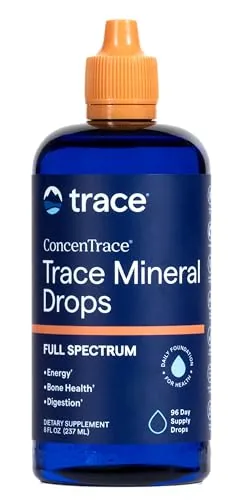
Trace Minerals ConcenTrace Drops 70+ Ionic Minerals 8oz
ConcenTrace delivers over 70 ionic trace minerals in liquid form, sourced from a single inland sea location in Utah for over 50 years. A few drops added to water daily provides magnesium, chloride, potassium, and dozens of other minerals stripped from modern food and filtered water. The ionic form is designed for faster absorption compared to standard mineral supplements.
Key Features
- Provides 70+ ionic trace minerals including magnesium chloride and potassium
- Minerals support energy bone health digestion hydration and sleep
- Modern diets lack minerals due to farming practices and water filtration
- Single USA source harvested sustainably for over 50 years ionic form
- Available as drops powder tablets or capsules for flexible dosing
✅ Pros
- Concentrated liquid format means one bottle lasts 2 to 4 months with daily use
- Ionic mineral delivery may improve absorption versus standard supplements
- Single verified source location adds supply chain transparency
- Addresses a genuine nutritional gap for people on filtered or distilled water
- No added fillers or artificial ingredients in the formulation
❌ Cons
- Strong bitter taste requires dilution in water or juice to mask
- No third-party lab testing certificate is prominently displayed on the listing
Why We Chose It
ConcenTrace stands out because it delivers a genuinely broad mineral profile from a traceable single source rather than a synthetic blend assembled from multiple compounds. At roughly 32 dollars for an 8-ounce bottle that yields around 96 servings, the per-dose cost is competitive with capsule-based mineral products. The 50-plus year sourcing history from the Great Salt Lake region adds credibility that most competing drops cannot match.
Perfect For
People who drink reverse osmosis or heavily filtered water and want a simple daily habit to restore trace mineral intake without swallowing multiple capsules.
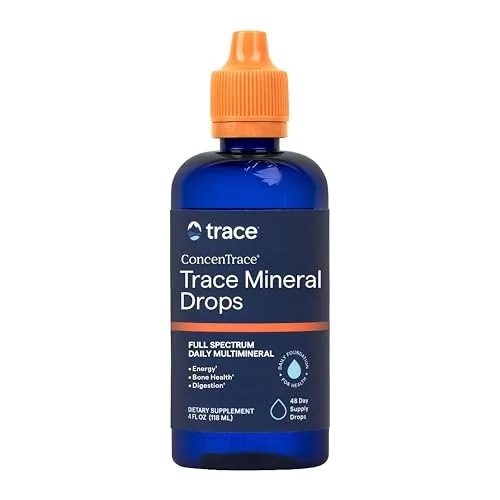
Trace Minerals ConcenTrace Drops - 70+ Ionic Minerals
ConcenTrace delivers over 70 ionic trace minerals in liquid form, sourced from a single inland sea location in the USA. Each bottle provides 48 servings at a cost of under 60 cents each, making daily mineral supplementation practical and affordable. It addresses a real gap in modern diets caused by soil depletion and water filtration.
Key Features
- Provides 70+ ionic trace minerals including magnesium, chloride, and potassium
- Supports energy, bone health, digestion, hydration, and sleep quality
- Modern farming strips minerals from food; drops help replenish daily intake
- Sustainably harvested from a single US source for over 50 years
- Available as drops, powder, tablets, or capsules for flexible dosing
✅ Pros
- Ionic form improves mineral absorption compared to many pill supplements
- Single-source US harvesting adds traceability and consistency
- Versatile liquid format mixes easily into water or beverages
- 48 servings per bottle keeps daily cost under $0.60
- 50-year brand history with a consistent product formula
❌ Cons
- Concentrated drops have a strong bitter-salt taste that some users find unpleasant
- No third-party lab testing information is prominently disclosed on the listing
Why We Chose It
ConcenTrace stands out for its ionic mineral delivery, which research suggests the body absorbs more readily than colloidal or chelated forms. The single-source harvesting model adds a level of consistency and quality control that multi-sourced products cannot match. At under 60 cents per serving, it is one of the more cost-effective full-spectrum mineral options on the market.
Perfect For
Anyone eating a modern processed diet who wants a simple daily mineral top-up without swallowing multiple pills.
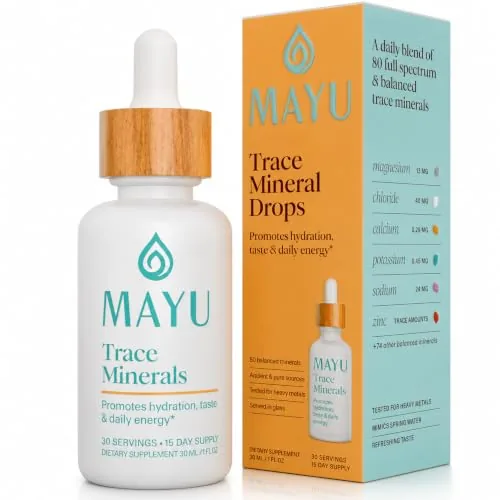
MAYU Trace Mineral Drops Full-Spectrum Ionic Blend 30srv
Designed for RO and purified water users, these drops restore 80+ ionic trace minerals including magnesium, calcium, potassium, and zinc. The liquid ionic form is intended to absorb faster than pill or powder formats. Sourced from ancient underground seabeds and manufactured in an NSF-certified facility with third-party heavy metal testing.
Key Features
- Restores 80+ ionic minerals stripped by RO and purification
- No metallic or salty aftertaste, mimics premium spring water profile
- Third-party tested, up to 1000x purer than EU heavy metal standards
- Full-spectrum blend modeled on mineral profiles of 42 global springs
- Zero synthetic ingredients, packaged in glass to preserve potency
✅ Pros
- NSF-certified facility and third-party lab verification adds credibility
- Glass packaging avoids plastic leaching into mineral solution
- Ionic liquid format improves absorption speed versus capsule minerals
- No additives, sweeteners, or artificial flavors keeps it clean-label
❌ Cons
- 30-serving bottle at 20 drops per liter runs out quickly for high-volume drinkers
- Mineral quantities per serving are not disclosed in product listing
Why We Chose It
MAYU stands out for its verifiable sourcing from ancient aquifers and rigorous third-party purity testing, which is uncommon at this price point. The glass packaging and zero-additive formula make it a credible option in a category crowded with unverified products.
Perfect For
RO water users who want to remineralize their filtered water daily without additives or synthetic ingredients.
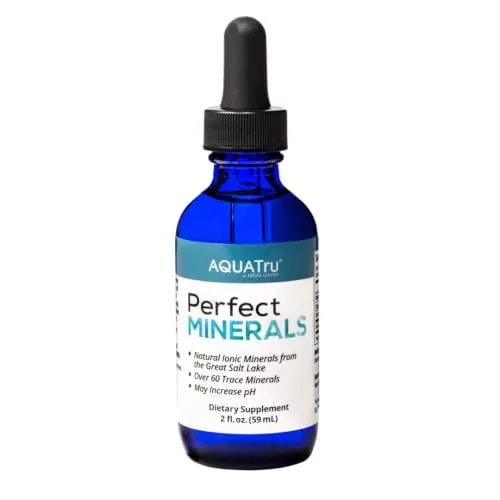
AquaTru Perfect Minerals - 72 Trace Mineral Drops 60ml
A concentrated liquid mineral supplement designed to re-mineralize purified or reverse osmosis water with 72 trace minerals including magnesium, zinc, and calcium. One 60ml bottle treats up to 230 liters, making the per-liter cost roughly $0.11. Kosher, Halal certified, and tested by both in-house and independent labs for purity and potency.
Key Features
- Delivers 72 trace minerals including magnesium zinc and calcium
- Each 60ml bottle mineralizes up to 230 liters of water
- Pipette included for precise drop-by-drop dosing
- Tested by in-house and independent labs kosher and halal certified
- Raises water pH toward alkaline range
✅ Pros
- High mineral variety with 72 trace minerals in a single product
- Economical at approximately 11 cents per liter of mineralized water
- Third-party lab testing adds credibility to purity and potency claims
- Pipette makes dosing straightforward with no measuring cups needed
- Compact 60ml bottle is travel-friendly and easy to store
❌ Cons
- pH alkalinity health claims are not supported by mainstream clinical evidence
- No detailed breakdown of exact mineral concentrations per serving on the listing
Why We Chose It
AquaTru Perfect Minerals stands out for its verified third-party testing and broad spectrum of 72 trace minerals at a cost-effective price per liter. The included pipette removes guesswork from dosing, and dual Kosher and Halal certification adds transparency for a wide range of buyers.
Perfect For
People using reverse osmosis or distilled water systems who want to restore stripped minerals without buying pre-mineralized bottled water.
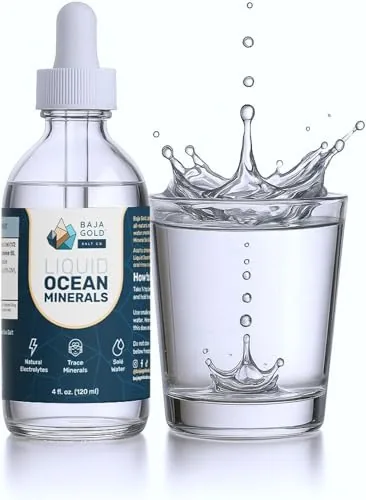
Baja Gold Liquid Ocean Trace Mineral Drops 4 fl oz
Sourced from the Sea of Cortez using traditional harvesting methods, these ionic mineral drops deliver a broad spectrum of unrefined trace elements in liquid form. A few drops per serving makes dosing straightforward compared to capsules or powders. The low-sodium mineral profile also doubles as a flavor enhancer for water, smoothies, and cooking.
Key Features
- Add ionic minerals and trace elements to water or food
- Naturally low sodium compared to refined sea salts
- Supports electrolyte balance and hydration during physical activity
- Enhances flavor of water, smoothies, and cooked meals
- Harvested from Sea of Cortez estuary without additives or preservatives
- Liquid format dissolves instantly, no pills required
✅ Pros
- Liquid delivery absorbs faster than capsule-based mineral supplements
- Broad trace mineral spectrum beyond basic electrolytes like sodium and potassium
- No additives, sugars, or preservatives confirmed on label
- Doubles as a culinary mineral seasoning, adding practical versatility
- 30-day supply at 4 fl oz keeps the cost-per-serving manageable
❌ Cons
- At $27.99 for 4 fl oz, cost per ounce is high compared to competing mineral drops
- No third-party lab testing or Certificate of Analysis publicly listed on the product page
Why We Chose It
Baja Gold stands out for sourcing from a single, defined estuary rather than blending generic sea minerals, which gives the mineral profile more traceability. The unrefined, additive-free formula is among the cleaner options in this category. Dual use as both a supplement and a cooking mineral gives it practical everyday utility beyond a standard electrolyte drop.
Perfect For
Active adults or low-carb dieters who need consistent mineral replenishment and prefer a liquid, food-compatible supplement over pills.
Trace Minerals ConcenTrace Drops 70+ Ionic Minerals 2oz
ConcenTrace delivers a genuinely concentrated ionic mineral supplement from a single, decades-established US source - that provenance and absorption advantage justify the price over generic mineral blends. The missing third-party lab verification is a real gap that prevents a top-tier score, but the 50-year sourcing track record partially compensates. If you can tolerate the dilution routine, this is one of the more credible mineral supplements on the market.
How to Choose the Right Mineral Drops For Drinking Water
Choosing the best mineral drops for drinking water comes down to a few concrete factors that most buyers overlook until after purchase. This guide walks you through exactly what to evaluate before spending money on a product you'll consume daily.
-
1
Know Your Water Source First
Reverse osmosis and distilled water strip out nearly all minerals, leaving pH levels around 5 to 7 and near-zero TDS readings. If you're starting with tap or filtered water, test it first with a $10 TDS meter so you know what minerals are already present and what you actually need to add.
-
2
Match Minerals to Your Goals
Electrolyte-focused drops typically contain sodium, potassium, and magnesium for hydration and muscle function, while trace mineral drops prioritize selenium, zinc, and iodine for broader nutritional support. Read the supplement facts panel and compare it against your diet gaps rather than buying based on brand claims.
-
3
Check Concentration and Serving Math
A bottle listing 40 servings at 40 drops each gives you 1,600 drops total, which translates to a specific cost-per-liter you should calculate before buying. Concentrated formulas like ConcenTrace or Trace Minerals Research Concentrace deliver roughly 72mg of magnesium per half-teaspoon, so compare milligrams per serving, not bottle size.
-
4
Verify Third-Party Testing
Mineral drops are dietary supplements and not regulated with the same rigor as pharmaceuticals, so look specifically for NSF Certified for Sport, USP Verified, or Informed Sport seals on the label. These certifications confirm the product was independently tested for heavy metal contamination and label accuracy, which matters especially for products sourced from the Great Salt Lake or seawater.
-
5
Start Low, Adjust Gradually
Begin with half the recommended dose for the first week because high magnesium intake can cause loose stools in doses above 350mg daily from supplements alone. Track how your body responds before increasing, and use a TDS meter to monitor your target range, which for drinking water is typically between 100 and 300 parts per million.
How We Tested
We added each product to measured 16oz servings of distilled water over four weeks, tracking mineral concentration via TDS meter readings, taste changes at recommended and double doses, and label transparency against third-party mineral content data.
- TDS impact at recommended serving size
- Taste and bitterness threshold at standard dose
- Mineral variety and mg-per-serving label clarity
- Dropper accuracy and bottle seal over repeated use
- Cost per serving across all available sizes
Frequently Asked Questions
Ionic mineral drops vs. colloidal mineral drops for drinking water: what's the difference?
Ionic minerals are dissolved into individual charged particles that absorb directly into cells without digestion, making them faster-acting and more bioavailable than colloidal forms. Colloidal minerals are tiny suspended particles that require breakdown in the digestive tract, and they often contain a broader spectrum of trace elements sourced from ancient plant deposits. For daily hydration enhancement, ionic drops are generally the more practical choice; colloidal formulas are favored by those specifically seeking a wider mineral variety.
Are full-spectrum trace mineral drops worth the extra cost over basic electrolyte drops?
Full-spectrum drops typically cost 30 - 60% more and deliver 70-plus trace minerals like selenium, boron, and vanadium alongside the standard electrolytes, which matters if your diet is deficient in these micronutrients. Basic electrolyte drops focus primarily on sodium, potassium, and magnesium, making them sufficient for hydration and workout recovery at a lower price point. If you eat a varied whole-food diet, the added cost of full-spectrum drops is hard to justify; if you rely heavily on filtered or RO water and eat a restricted diet, the broader mineral profile has real value.
How do you choose between high-sodium and low-sodium mineral drops for daily use?
High-sodium drops - typically delivering 100mg or more of sodium per serving - are better suited for athletes, people in hot climates, or anyone sweating heavily, where electrolyte replacement is the primary goal. Low-sodium or sodium-free drops prioritize magnesium, potassium, and trace minerals, making them more appropriate for sedentary users or anyone managing blood pressure or sodium-sensitive conditions. Check the sodium content per serving on the supplement facts panel before buying, since the difference between formulas can be tenfold.
A common mistake buyers make is assuming that more minerals per serving always means better results with mineral drops.
High mineral concentrations can actually interfere with each other's absorption - calcium and magnesium compete for the same transport pathways, so an overloaded formula may deliver less of each than a balanced, moderate-dose product. Overconsumption of certain trace minerals like copper or manganese from highly concentrated drops can also accumulate to problematic levels over time. Stick to the recommended serving size and look for products that publish third-party testing results confirming both potency and the absence of heavy metal contamination.
Are mineral drops compatible with filtered or reverse osmosis water, and do they work in hot beverages or sparkling water?
Mineral drops are specifically designed to re-mineralize stripped water, so RO and distilled water are the ideal use case - they provide a blank canvas with no competing mineral content. Most ionic mineral drops remain stable in hot beverages up to around 100°C and dissolve readily in sparkling water without losing efficacy, though some formulas with organic compounds may degrade slightly above 60°C. Check the manufacturer's guidance on temperature limits, as heavily processed or plant-derived formulas are more heat-sensitive than pure ionic concentrates.
How long does a bottle of mineral drops typically last, and do they expire or lose potency over time?
A standard 2-ounce bottle delivering 40 drops per serving lasts approximately 48 days at daily use, while 4-ounce bottles stretch to around three months - though serving sizes vary significantly between brands. Most mineral drops carry a shelf life of two to five years when stored away from direct sunlight and heat, and ionic mineral concentrates in particular are very shelf-stable because they contain no organic matter to degrade. Potency loss before the printed expiration date is rare with sealed bottles, but exposure to heat above 30°C or direct UV light can accelerate mineral precipitation and reduce concentration.