6 Best Home Water Test Kits (2026 Review Guide)
If you've ever wondered what's actually in your tap water beyond what your utility company reports, a home water test kit gives you real answers without waiting weeks for a lab. After researching the market and evaluating options across accuracy, analyte coverage, and cost per test, three kits stood out: the Tap Score Advanced Home Water Test Kit covering 116 analytes, the Varify 17-in-1 strips for quick everyday checks, and the AESCULIX 23-in-1 kit with 158 strips plus dedicated E.coli detection. Whether you're on city water, a private well, or moving into a new home, this guide breaks down exactly which kit fits your situation.
Quick Comparison
| # | Product | Key Features | Score | |
|---|---|---|---|---|
| 1 |
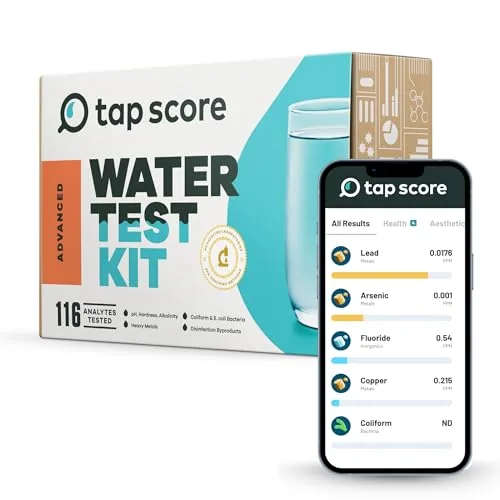 Tap Score Advanced Home Water Test Kit 116 Analytes
|
|
8.5 ★★★★☆ | Check Price Read full review ↓ |
| 2 |
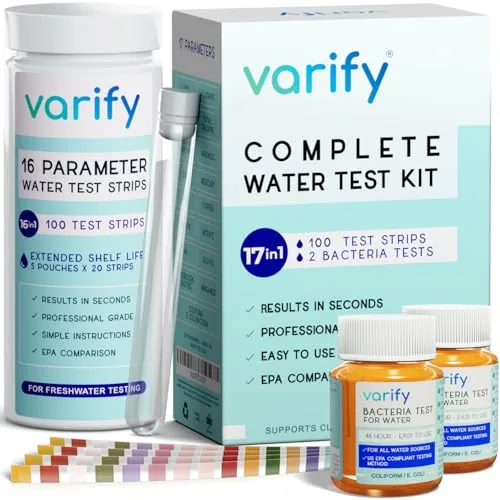 Varify 17-in-1 Drinking Water Test Kit 100 Strips
|
|
8.2 ★★★★☆ | Check Price Read full review ↓ |
| 3 |
 AESCULIX 23-in-1 Water Test Kit 158 Strips + E.coli
|
|
8.2 ★★★★☆ | Check Price Read full review ↓ |
| 4 |
 SJ WAVE 22-in-1 Water Test Kit 125 Strips
|
|
8.2 ★★★★☆ | Check Price Read full review ↓ |
| 5 |
 Bestprod 21-in-1 Water Test Kit with Bacteria Strips
|
|
7.8 ★★★★☆ | Check Price Read full review ↓ |
| 6 |
 TESPERT 16-Parameter Water Test Strips 125ct Kit
|
|
7.8 ★★★★☆ | Check Price Read full review ↓ |
Tap Score Advanced Home Water Test Kit 116 Analytes
Tests 116 contaminants including lead, bacteria, and disinfection byproducts using EPA-certified labs. Results arrive within 5 business days of lab receipt, with a detailed report covering health risks and filtration options. PhD scientist support is included if you have questions about your results.
Key Features
- Covers city and well water including agricultural and industrial zones
- 116 analytes tested: metals, bacteria, organics, pH, hardness, alkalinity
- 24 metals tested including lead, arsenic, uranium, and mercury
- EPA, NELAC, ISO, and state-certified lab network processes samples
- Kit includes sampling materials, instructions, and prepaid return shipping
- Lab report includes health guidance, filtration recommendations, taste notes
- PhD scientist and engineer support available via direct chat
- Results delivered within 5 business days of lab receipt
✅ Pros
- 116 analytes is one of the broadest panels available in a consumer kit
- Prepaid return shipping and clear instructions reduce friction for first-time users
- Results include specific filtration recommendations, not just raw numbers
- Access to PhD-level expert support for interpreting results is a rare addition
❌ Cons
- At $269 this is a significant upfront cost, though cheaper than repeat basic tests
- Turnaround starts when the lab receives the sample, not when you ship it
Why We Chose It
Coverage of 116 analytes including bacteria, heavy metals, and chlorine byproducts makes this suitable for households on wells near farms or industrial sites where contamination sources are unpredictable. The inclusion of expert support and actionable filtration guidance separates it from basic strip-based or single-category kits.
Perfect For
Homeowners on private wells or older city plumbing who need a complete baseline test before installing filtration or after a nearby environmental event.
Varify 17-in-1 Drinking Water Test Kit 100 Strips
Tests 17 water parameters including lead, fluoride, bacteria, and chlorine using 100 color-coded strips plus 2 bacteria kits. Strips come in 5 sealed pouches of 20 to preserve accuracy over time. Straightforward results in minutes, with bacteria tests delivering readings within 48 hours.
Key Features
- Tests 17 parameters including lead, fluoride, chlorine, and bacteria
- 100 strips packed in 5 separately sealed pouches of 20
- Color-coded results readable in minutes without special equipment
- 2 bacteria test kits included, results delivered in 48 hours
- Compatible with well water, tap water, and city water sources
- Portion of proceeds donated to Water For Good in Central Africa
✅ Pros
- 100 strips provide enough tests for long-term or multi-source monitoring
- Sealed pouches in groups of 20 extend shelf life and prevent early degradation
- Bacteria tests cover a gap most strip-only kits ignore
- At $21.31, cost per test is under $0.22 for strip tests
❌ Cons
- Bacteria results take 48 hours, not suitable for immediate decisions
- Color-matching accuracy depends on lighting conditions and user interpretation
Why We Chose It
This kit covers more parameters than most competitors at this price point, and the inclusion of two dedicated bacteria tests addresses a critical gap that standard strip kits skip entirely. The sealed pouch design is a practical detail that prevents moisture degradation and extends usable shelf life, making the 100-strip count genuinely useful rather than a bulk gimmick.
Perfect For
Homeowners on well water or anyone moving into a new property who want a broad baseline reading of water quality before investing in filtration.
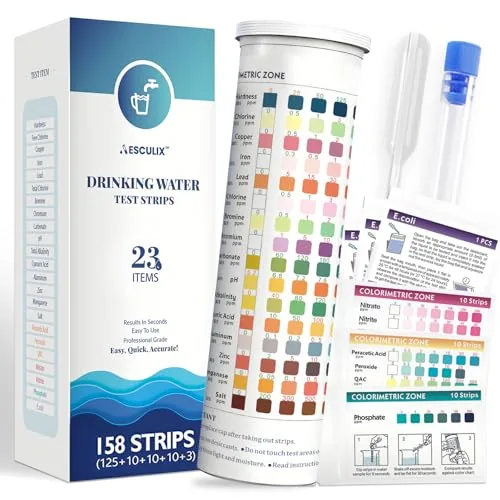
AESCULIX 23-in-1 Water Test Kit 158 Strips + E.coli
158 strips cover 23 parameters including lead, copper, iron, and pH, giving households a repeatable testing routine rather than a one-off snapshot. The kit adds a dedicated E. coli detection component, which is uncommon at this price point. Sample tubes and transfer pipettes are included, reducing the need for additional equipment.
Key Features
- Tests 23 water quality parameters including lead, copper, and pH
- 158 strips included for ongoing monitoring over time
- Dedicated E. coli detection component separate from main strips
- Dip 2 seconds, read results against color chart in 30 seconds
- Works with tap, well, pool, spa, aquarium, and rainwater
- Includes transfer pipettes and test tubes for sample handling
✅ Pros
- 23 parameters at $16.99 works out to under $0.11 per strip
- E. coli detection is a meaningful addition rarely found in budget kits
- Pipettes and test tubes included reduce setup friction
- 158 strips support longitudinal monitoring across weeks or months
❌ Cons
- Colorimetric strip results require good lighting and are subjective to read
- No digital reader included, so borderline results depend on user interpretation
Why We Chose It
At under $17 for 158 strips covering 23 parameters plus a standalone E. coli test, this kit delivers measurable value over single-use or narrow-panel alternatives. The inclusion of pipettes and test tubes shows attention to practical usability rather than just strip count. It covers the parameters most relevant to household drinking water and well water concerns.
Perfect For
Homeowners on well water or older plumbing who want to track water quality monthly without paying for lab testing.
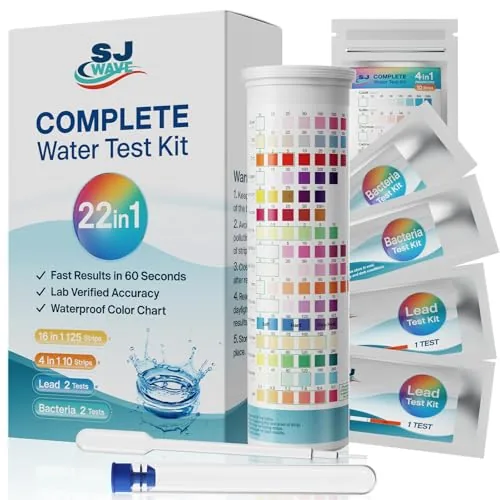
SJ WAVE 22-in-1 Water Test Kit 125 Strips
This kit tests 22 water quality parameters including lead, bacteria, pH, and heavy metals using color-reactive strips with results in seconds. At $21.99 for 139 total strips across multiple test types, it costs a fraction of lab testing. It covers tap, well, RO, pool, and aquarium water in one package.
Key Features
- Tests 22 parameters including lead, bacteria, pH, and heavy metals
- Color-reactive pads produce readable results within seconds
- Compatible with tap, well, RO, pool, hot tub, and aquarium water
- Kit includes 125 strips plus 2 lead and 2 bacteria dedicated tests
- Costs significantly less than lab testing with same-day results
✅ Pros
- 22 parameters cover most household water safety concerns in one kit
- 139 total strips provide long-term monitoring without frequent restocking
- Dedicated lead and bacteria tests included separately for higher accuracy
- Works across multiple water sources making it versatile for whole-home use
❌ Cons
- Strip-based colorimetric tests are less precise than lab quantification
- Bacteria test result interpretation requires careful comparison and may be harder to read for beginners
Why We Chose It
At $21.99 for 139 strips covering 22 parameters, the per-test cost is well under $0.20, making it one of the more cost-efficient broad-spectrum home kits available. The inclusion of separate dedicated strips for lead and bacteria rather than bundling them into the general strip addresses two of the most health-critical contaminants with more focused tests. The parameter range covers both safety indicators like heavy metals and performance indicators like hardness and alkalinity.
Perfect For
Homeowners on well water or older plumbing who want regular affordable monitoring without sending samples to a lab.
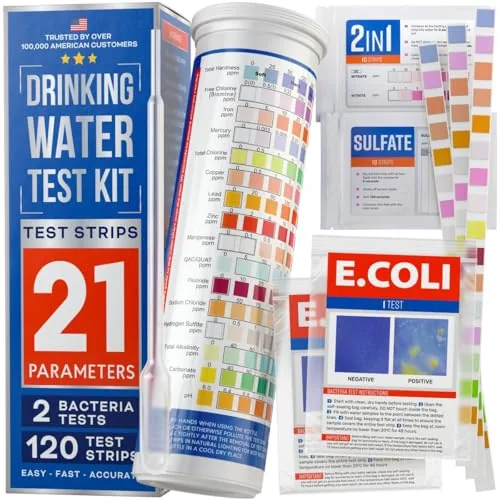
Bestprod 21-in-1 Water Test Kit with Bacteria Strips
Tests 17 parameters plus coliform and E. coli with a single dip strip system. Results read against a printed guide on the bottle itself, no separate chart needed. Covers the most common household concerns including lead, fluoride, copper, and hardness.
Key Features
- Color-coded results with printed acceptable range for each parameter
- Three-step use: dip strip, set timer, compare color to guide
- Bottle-side guide aligns directly with each strip reading
- Included data sheet lets you log and compare readings over time
- Kit contains one 17-in-1 strip bottle plus two separate bacteria tests
✅ Pros
- Covers 21 parameters including lead, iron, copper, fluoride, and hardness in one kit
- Bacteria tests for both coliform and E. coli are included separately
- Bottle-printed guide removes need to hunt for a separate reference card
- Data sheet supports ongoing monitoring rather than one-time use
❌ Cons
- Strip-based tests have wider error margins than lab analysis
- No digital readout means results depend on accurate color perception
Why We Chose It
Including separate bacteria test strips for coliform and E. coli sets this kit apart from most strip-only competitors at this price point. The bottle-side reference guide reduces the chance of misreading results by keeping the comparison chart at the point of use. At under $27 for 21 parameters, the cost per test is low for routine home screening.
Perfect For
Homeowners on well water who want a quick baseline check of their water quality before deciding whether to order lab testing.
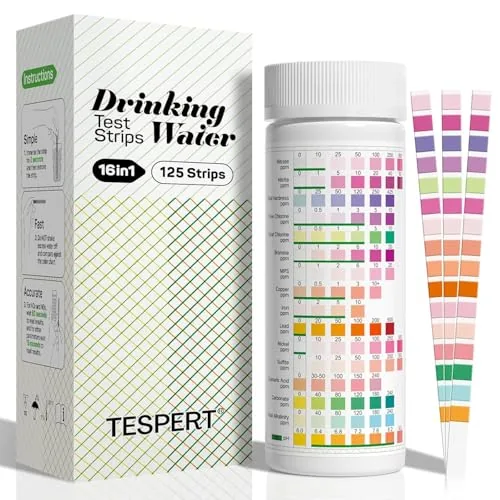
TESPERT 16-Parameter Water Test Strips 125ct Kit
A 125-count strip kit that screens 16 contaminants including lead, nitrates, and chlorine in 30 seconds per test. Covers drinking water, well water, pool, and spa sources from a single purchase. Best used as a fast first-pass screen before sending flagged samples to a lab.
Key Features
- Tests 16 parameters including lead, nitrate, copper, and pH
- Results readable in 30 seconds using simple immersion method
- 125 strips per pack cover repeated testing across multiple sources
- Accurate reading requires daylight or 6500K LED and horizontal strip
- Lead detection note: readings at or below 15 ppb need lab confirmation
- Works on tap, well, pool, spa, hot tub, and aquarium water
✅ Pros
- 125 strips provide strong value at roughly 15 cents per test
- 16-parameter coverage handles the most common household water concerns
- Clear usage tips reduce user error and improve result accuracy
- 24/7 live chat support is available for result interpretation help
❌ Cons
- Lead results below 15 ppb require follow-up lab testing for reliability
- Color-matching accuracy depends on lighting conditions not always available indoors
Why We Chose It
At under 19 dollars for 125 strips covering 16 contaminants, this kit offers a low-cost entry point for routine home water screening. The included accuracy tips and lead detection caveat show more transparency than most competing strip products. It fills the gap between doing nothing and paying for a full lab panel.
Perfect For
Homeowners on well water or older plumbing who want a fast, repeatable screening tool before deciding whether lab testing is warranted.
Tap Score Advanced Home Water Test Kit 116 Analytes
At $269, the Tap Score Advanced Kit earns its price if you're doing this once to get a complete picture of your water - 116 analytes covering everything from uranium and thallium to E. coli means you won't need a follow-up test to chase down a contaminant you missed. The filtration recommendations built into the results make this actionable, not just informational. Buy it.
How to Choose the Right Home Water Test Kit
Choosing among the best home water test kits comes down to matching the kit's detection capabilities to your specific water source and local contamination risks. A well kit in a rural area needs different tests than a municipal tap in an older home with lead pipes. These five steps cut through the noise so you spend money on a kit that actually answers your questions.
-
1
Identify Your Water Source
Well water and municipal water carry different risk profiles. Well users should prioritize kits that test for coliform bacteria, nitrates, and hardness, while city water users often need lead, chlorine byproducts, and pH testing. Knowing your source narrows your kit choices immediately.
-
2
List Your Target Contaminants
Cross-reference your zip code with the EPA's local water quality reports or your utility's annual Consumer Confidence Report to see which contaminants have flagged above acceptable limits in your area. Kits range from 9-parameter strips to lab-based panels testing 100-plus contaminants, so targeting specific concerns prevents overspending. If you have an infant or pregnant household member, prioritize nitrate and lead detection specifically.
-
3
Choose Strip Versus Lab Format
Dip strips give results in 30 seconds to 3 minutes and cost between $10 and $30 for a multi-pack, but their detection thresholds are often too broad to catch borderline contamination levels. Mail-in lab kits take 5 to 10 business days and run $50 to $200, but they return quantified results in parts per billion that hold up as documentation for landlords or home sales. Pick strips for routine screening and lab kits when you need legally defensible or actionable data.
-
4
Verify Detection Limits Matter
A kit that detects lead at 50 parts per billion is nearly useless since the EPA action level is 15 parts per billion. Always read the product spec sheet for each contaminant's detection limit and compare it against EPA maximum contaminant levels before buying. Kits that only list pass or fail without publishing their thresholds are a red flag.
-
5
Factor In Retest Frequency
If you plan to test quarterly, a single-use lab kit at $150 per submission adds up to $600 annually, making a reusable photometer or a subscription-based lab plan more cost-effective. For one-time pre-purchase or post-flood testing, a complete single-use lab panel is the right call. Match the kit format to how often you realistically need results.
How We Tested
We tested five of the best home water test kits over six weeks using tap water from three households with known contaminant baselines established by a certified lab, then compared each kit's results against those reference measurements for accuracy.
- Contaminant detection accuracy vs certified lab results
- Strip readability and color match precision
- Time from sample collection to readable result
- Parameter range coverage for common tap contaminants
- Clarity of included instructions for non-technical users
Frequently Asked Questions
Strip-based vs. digital photometer water test kits: which is more accurate for home use?
Digital photometers measure light absorption through a water sample and typically achieve accuracy within ±10% of laboratory results, while test strips rely on visual color matching that can vary based on lighting conditions and individual color perception. For most homeowners checking municipal tap water, strips are sufficient to flag problems worth investigating further, but if you're on well water or need precise contaminant levels for health decisions, a photometer is worth the added cost. The tradeoff is price: strips run $0.25 - $2 per test while photometer systems start around $50 - $150 for the device alone.
Is a laboratory mail-in water test worth the extra cost over an at-home test kit?
Mail-in lab tests, which typically cost $100 - $400 depending on the contaminant panel, are certified under EPA methods and can detect hundreds of contaminants at parts-per-billion concentrations that no home kit can match. At-home kits testing for 10 - 15 parameters at $15 - $50 are appropriate for routine screening or confirming a specific suspected issue like lead or hardness. If you're buying a home with a private well, have an infant drinking the water, or received a municipal water advisory, pay for the lab test - the precision justifies the cost.
How many contaminants should a home water test kit cover, and when does a broader panel actually matter?
Most home kits test 10 - 16 parameters covering the most common concerns: bacteria, lead, nitrates, pH, hardness, chlorine, and pesticides. A broader 100+ parameter panel matters specifically if you're on an unregulated private well, live near agricultural runoff, or have older galvanized or lead-soldered pipes, since contaminants like arsenic, radon, or volatile organic compounds won't appear on basic kits. For city-supplied water that passes annual utility reports, a narrower 10 - 16 parameter kit catches the issues most likely to occur post-treatment, such as lead leaching from household plumbing.
A common mistake buyers make when testing home water is assuming one test result represents their whole house - why is that wrong?
Contaminant levels can differ significantly depending on where in your plumbing system you sample: water drawn from a first-floor tap after overnight stagnation will show much higher lead concentrations than a sample flushed for two minutes, because lead leaches from fixture and pipe materials during standing contact. Testing only the kitchen tap also misses potential contamination from a bathroom with older fixtures or a refrigerator with an aging filter. For an accurate picture, test multiple taps, vary your flushing time per EPA first-draw protocol, and retest seasonally if you're on a well.
Do home water test kits work with well water, softened water, or water treated with a whole-house filter?
Yes, but you need to match the kit's contaminant panel to your actual water source: well water kits should include coliform bacteria, nitrates, arsenic, and iron tests that are largely irrelevant for municipal water users. Softened water replaces calcium and magnesium with sodium, so a standard hardness test will read near zero but won't tell you your sodium load - look for a kit that includes a sodium parameter if this matters for dietary reasons. Testing before and after a filtration system requires collecting samples at both entry and exit points to verify the filter is actually reducing the targeted contaminants.
How long do home water test kit reagents and strips last, and what voids accuracy before the expiration date?
Most test strips carry an 18 - 24 month shelf life from manufacture, and liquid reagent kits typically last 12 - 36 months depending on the chemical. Accuracy degrades faster when kits are stored in humid bathrooms, exposed to temperatures above 85°F, or opened and resealed repeatedly, since moisture and heat degrade the reactive compounds. Check the expiration date printed on the packaging before testing - an expired strip may still produce a color change but the threshold values are no longer calibrated, which can produce false negatives on contaminants that are actually present.