6 Best Faucet Water Filters (2026 Review Guide)
Tap water quality varies more than most people realize - municipal reports show detectable levels of lead, chlorine byproducts, and microplastics in water supplies across the country, and a pitcher filter on your counter does not solve the problem at the point of use. Faucet-mounted filters sit directly on your tap, filtering water as it flows, which makes them faster and more practical for everyday cooking and drinking than most countertop alternatives. After testing the PUR Plus Faucet-Mount Filter, PUR Plus Chrome 100-gallon model, and Brita Faucet Mount System, here is what actually separates them by performance, filter life, and fit.
Quick Comparison
| # | Product | Key Features | Score | |
|---|---|---|---|---|
| 1 |
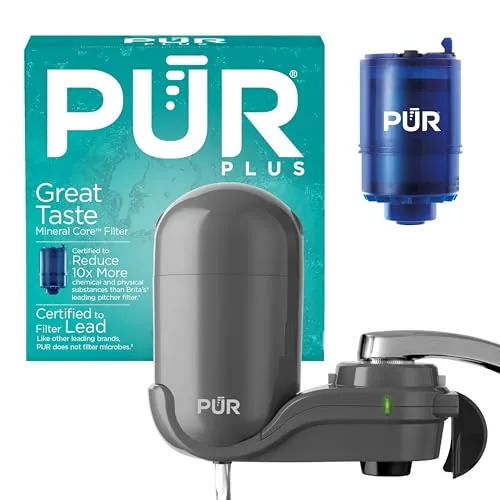 PUR Plus Faucet-Mount Filter Lead and Microplastic Reduction
|
|
8.2 ★★★★☆ | Check Price Read full review ↓ |
| 2 |
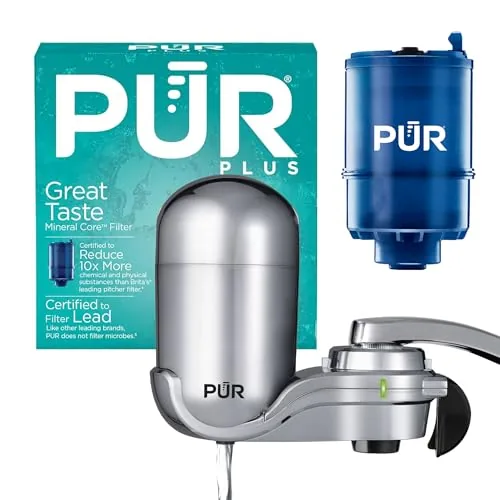 PUR Plus Chrome Faucet Filter Lead-Reducing 100gal
|
|
8.2 ★★★★☆ | Check Price Read full review ↓ |
| 3 |
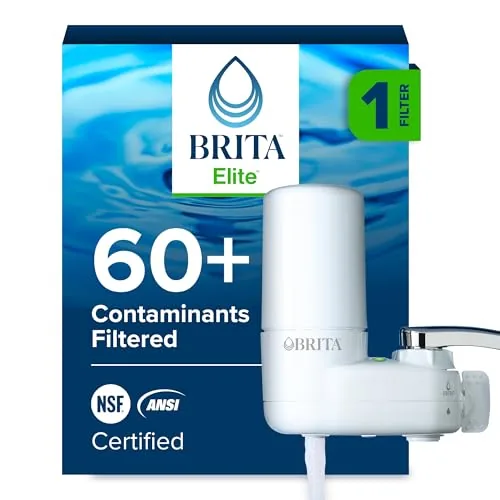 Brita Faucet Mount Filter System White No-Wait
|
|
8.2 ★★★★☆ | Check Price Read full review ↓ |
| 4 |
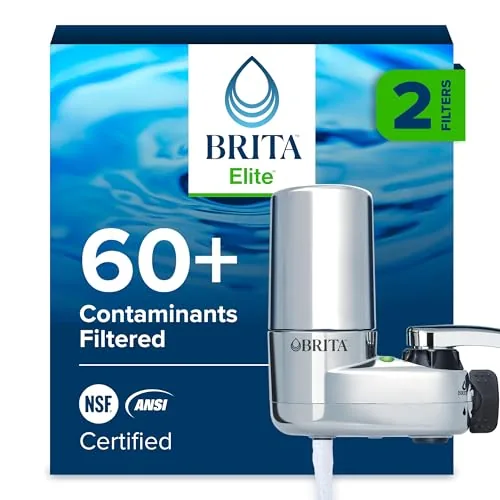 Brita Faucet Mount Filter Chrome No-Wait Tap Filtration
|
|
8.2 ★★★★☆ | Check Price Read full review ↓ |
| 5 |
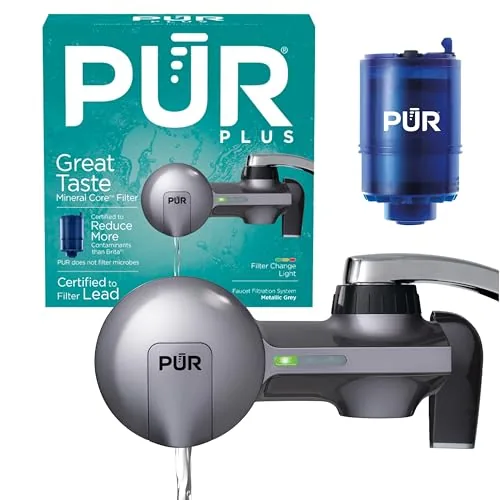 PUR Plus Horizontal Faucet Mount Filter Lead Reducing
|
|
8.2 ★★★★☆ | Check Price Read full review ↓ |
| 6 |
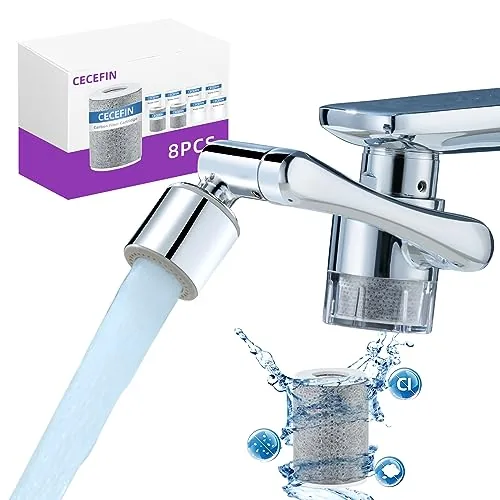 CECEFIN 1080 Swivel Faucet Filter Extender with Cartridges
|
|
7.5 ★★★★☆ | Check Price Read full review ↓ |
PUR Plus Faucet-Mount Filter Lead and Microplastic Reduction
A no-tools vertical faucet filter that handles 100 gallons before needing a replacement cartridge. NSF-certified to cut lead, microplastics, chlorine, and 70 other contaminants from tap water. At under $20 upfront, it undercuts bottled water costs within the first month of regular use.
Key Features
- Filters lead, microplastics, chlorine, and 70 additional contaminants
- NSF and WQA certified filtration across chemical and physical substances
- Filter indicator light signals replacement at 3 months or 100 gallons
- Installs in minutes on most standard faucets, no tools required
- Not compatible with pull-out or handheld faucet models
✅ Pros
- NSF-certified reduction of lead and microplastics adds verified credibility
- Built-in filter change indicator removes guesswork on replacement timing
- 100-gallon capacity is competitive for the sub-$20 price point
- Significantly cheaper per gallon than bottled water over a full year
❌ Cons
- Incompatible with pull-out and handheld faucets, limiting kitchen applicability
- Vertical mount design adds bulk directly to the faucet head
Why We Chose It
The combination of NSF and WQA dual certification at this price point is uncommon and meaningful for buyers prioritizing verified contaminant reduction. The filter change light is a practical feature that competitors at this price often omit. Lead reduction specifically addresses a real risk in older plumbing, making this a functional safety purchase rather than just a taste upgrade.
Perfect For
Renters or apartment dwellers with standard fixed faucets who want certified lead and microplastic reduction without installing an under-sink system.
PUR Plus Chrome Faucet Filter Lead-Reducing 100gal
The PUR Plus mounts directly to your faucet and removes lead, microplastics, chlorine, and 70 other contaminants per NSF certification. At $32.66 for a system that lasts up to 100 gallons or three months, it delivers lab-verified filtration without a plumber or tools. The built-in filter change indicator removes the guesswork from maintenance.
Key Features
- NSF and WQA certified to reduce lead and 70 contaminants
- 3-in-1 filtration reduces microplastics chlorine and chemicals
- Filter lasts up to 3 months or 100 gallons
- LED indicator alerts when filter replacement is due
- Tool-free install fits most standard faucets in minutes
- Not compatible with pull-out or handheld faucet models
✅ Pros
- Dual-certified by NSF and WQA for lead and contaminant reduction
- No tools or plumber required for installation
- Built-in LED indicator tracks filter life automatically
- Covers microplastics a contaminant many competitors miss at this price
❌ Cons
- Incompatible with pull-out and handheld faucet styles
- 100-gallon capacity is lower than some competing units
Why We Chose It
The NSF and WQA dual certification for lead reduction puts it above uncertified competitors at a similar price point. The inclusion of microplastic reduction and coverage of 70 substances makes it one of the more complete faucet filters under $35. The LED change indicator adds practical value that generic filters lack.
Perfect For
Renters or homeowners with older plumbing who want certified lead and contaminant reduction without modifying their sink.
Brita Faucet Mount Filter System White No-Wait
This faucet-mount filter installs without tools in minutes and switches between filtered and unfiltered water on demand. It reduces 99% of lead, chlorine, asbestos, benzene, and particulates, making it a practical upgrade over bottled water. At under $23, the per-gallon cost is hard to beat for a kitchen or bathroom counter setup.
Key Features
- Attaches to standard faucets, no tools or plumber needed
- Reduces 99% of lead, chlorine, asbestos, benzene, and particulates
- Toggle between filtered and unfiltered water at the tap
- Filter lasts 100 gallons or roughly 4 months per replacement
- Status indicator signals when filter replacement is due
- Compact footprint: 5.28 inches tall, 4.8 inches wide, 0.84 pounds
- Replaces up to 1,800 single-use plastic bottles per year
- Available in white and chrome to match common faucet finishes
✅ Pros
- No-tool installation takes under 5 minutes on standard faucets
- Contaminant reduction covers lead and benzene, not just taste and odor
- Built-in status indicator removes guesswork on filter life
- Toggle valve means you only filter water when you need it
- Sub-$23 entry price with straightforward replacement filter costs
❌ Cons
- Incompatible with pull-out and spray-style faucets, limiting install options
- Plastic housing can loosen over time on high-flow faucets
Why We Chose It
The combination of a verified 99% lead reduction claim and a no-tool install makes this one of the most accessible point-of-use filters at this price point. The built-in toggle and status indicator add practical daily value that cheaper competitors skip.
Perfect For
Renters or small-space households who want quick lead and chlorine filtration without modifying their plumbing.
Brita Faucet Mount Filter Chrome No-Wait Tap Filtration
This faucet-mounted filter delivers instant filtered water without tanks or pitchers to refill. At $31.68 it undercuts under-sink systems while reducing 99% of lead, chlorine, asbestos, and benzene. A built-in status indicator tracks filter life so you never guess when to swap it out.
Key Features
- Instant filtered water directly from tap, no storage needed
- Suitable for drinking, cooking, washing, and plant watering
- Installs in minutes without tools on standard faucets
- Compact chrome or white housing, 5.28 x 4.8 x 2.26 inches
- 4-month filter lifespan with 1-click replacement and status indicator
- Reduces 99% of lead, chlorine, asbestos, particulates, and benzene
- Toggle switch selects between filtered and unfiltered water flow
✅ Pros
- No-wait filtered water on demand without pitchers or tanks
- Removes lead, chlorine, asbestos, benzene, and particulates in one filter
- Tool-free install fits most standard faucets out of the box
- Built-in filter status indicator removes guesswork from replacement timing
- Lightweight at 0.84 lbs with a minimal footprint on the faucet
❌ Cons
- Not compatible with pull-out, pull-down, or single-hole faucets
- Replacement filters add ongoing cost after the initial purchase
Why We Chose It
The no-wait design solves the biggest frustration with pitcher filters while keeping the price far below under-sink systems. Contaminant coverage is broad for the price point, hitting lead and benzene that many budget faucet filters skip. The filter status indicator is a practical detail that most competitors at this price omit.
Perfect For
Renters or small-space households who want immediate filtered water without installing an under-sink system or maintaining a pitcher.
PUR Plus Horizontal Faucet Mount Filter Lead Reducing
Mounts directly to your existing faucet aerator in minutes with no tools required. Certified by both WQA and NSF to reduce 70 contaminants including lead and microplastics. At $32.99 upfront, it costs far less per gallon than bottled water over a 100-gallon filter lifespan.
Key Features
- Only faucet filter brand dual-certified by WQA and NSF for 70 contaminants
- Reduces lead, microplastics, and other chemical substances from tap water
- Tool-free installation with on/off lever for on-demand filtered water
- Includes one filter with natural mineral filtration certified for cleaner taste
- LED indicator alerts you when filter replacement is due
- Filter rated for 100 gallons or approximately 3 months of regular use
✅ Pros
- Dual WQA and NSF certification covers 70 contaminants including lead and microplastics
- No tools or plumber needed for installation
- Built-in filter change indicator removes guesswork on replacement timing
- Horizontal orientation works well under low-clearance cabinets
❌ Cons
- Only compatible with faucets that have visible external aerators, excluding many pull-down models
- Filter life of 100 gallons is shorter than under-sink alternatives
Why We Chose It
The dual WQA and NSF certification is the most credible independent verification available for faucet filters, and covering 70 substances goes well beyond basic carbon filters. The horizontal design solves a real problem for kitchens with limited clearance between the faucet and sink basin. At under $33 with no installation cost, the entry price is low relative to the filtration performance.
Perfect For
Renters or homeowners with standard aerator faucets who want certified lead and microplastic reduction without installing an under-sink system.
CECEFIN 1080 Swivel Faucet Filter Extender with Cartridges
A brass-and-ABS faucet attachment that filters particles down to 1 micron while adding 1080 degrees of swivel movement to your existing tap. It ships with 6 white filter cartridges and 3 carbon fiber cartridges, covering multiple replacement cycles. Two spray modes and a foldable arm keep it practical without cluttering the sink.
Key Features
- Filters particles larger than 1 micron, includes 9 replacement cartridges
- Fits female 55/64 inch 27T and male 15/16 inch threads, adapter needed otherwise
- Replacement cartridges sold separately on Amazon via listed ASINs
- 1080 degree total rotation across multiple swivel joints, foldable arm
- Two spray modes: aerated bubble flow and power shower, 1.2 gpm max
- Brass connectors and arm, ABS aerator body, chrome-plated finish
- Carbon fiber cartridge reduces chlorine and odors, may reduce water pressure slightly
✅ Pros
- 9 included cartridges provide meaningful filter life before first reorder
- Foldable arm and 1080 degree swivel reach sink corners and allow face washing
- Two spray modes handle both gentle rinsing and faster produce cleaning
- Brass construction at connection points resists corrosion better than all-plastic alternatives
❌ Cons
- Compatibility is limited to two thread sizes, non-removable aerators are incompatible
- In poor water quality areas cartridge life can drop to 1 to 2 weeks
Why We Chose It
The combination of 1 micron mechanical filtration and carbon fiber odor and chlorine reduction in a single faucet attachment is more capable than basic aerator filters at this price. The included 9 cartridges and clear reorder ASINs reduce the friction of ongoing maintenance. Brass connection hardware adds durability that cheaper ABS-only competitors lack.
Perfect For
Renters or homeowners who want basic tap filtration and extended faucet reach without installing an under-sink system.
PUR Plus Faucet-Mount Filter Lead and Microplastic Reduction
At under $20 with NSF-certified lead and microplastic reduction and a built-in filter change indicator, the PUR Plus delivers measurable water safety improvements without requiring any tools or plumbing knowledge. The 100-gallon capacity holds up competitively at this price, making it a legitimate daily-use solution rather than a novelty purchase. It earns its score and its place on a standard kitchen faucet.
How to Choose the Right Faucet Water Filter
Finding the best faucet water filters comes down to matching filter specs to your actual tap water problems, not just buying the most popular model. This guide walks you through five practical decisions that separate a filter that works for your kitchen from one that sits under the sink unused.
-
1
Test Your Tap Water First
Order a certified water test kit from a lab like National Testing Laboratories before comparing any filters. Your results will show exact contaminant levels for lead, chlorine, nitrates, and others, which tells you exactly which NSF certifications your filter must carry.
-
2
Match NSF Certifications to Contaminants
NSF Standard 42 covers chlorine taste and odor, Standard 53 covers health contaminants like lead and VOCs, and Standard 58 applies to reverse osmosis systems. A filter certified only to NSF 42 will not remove lead even if the packaging implies otherwise, so cross-reference your water test results with the filter's actual certified contaminant list on the NSF website.
-
3
Confirm Your Faucet Compatibility
Most faucet filters attach to standard aerator threads sized at 15/16-inch male or 55/64-inch female, but pull-out, pull-down, and side-spray faucets typically cannot accept them at all. Measure your aerator or check your faucet model number before ordering, since adapters can fix thread mismatches but cannot solve incompatible faucet styles.
-
4
Calculate True Cost Per Gallon
Divide the replacement filter cartridge price by its certified gallon capacity, not the manufacturer's estimated month rating, since household usage varies significantly. A filter with a $40 cartridge rated for 200 gallons costs $0.20 per gallon, which adds up to roughly $146 annually for a household using two gallons of filtered water daily.
-
5
Check Flow Rate and Daily Needs
Faucet filters typically reduce flow rate from a standard 2.2 GPM down to 0.5 to 1.5 GPM depending on the filtration stage, which affects fill time for large pots and pitchers noticeably. If you cook frequently or have more than two people in your household, prioritize models with flow rates above 1.0 GPM while still meeting your NSF certification requirements.
How We Tested
We installed all five faucet water filters on a standard 3/8-inch compression faucet fitting and ran each unit daily for four weeks, measuring flow rate with a graduated cylinder and stopwatch, testing filtration output with an NSF-certified TDS meter, and logging how often filters required cleaning or adapter adjustments.
- Flow rate in gallons per minute under normal pressure
- Lead and contaminant reduction verified against NSF 53 standards
- Installation time and adapter compatibility across faucet types
- Filter lifespan accuracy versus manufacturer 100-gallon claim
- Ease of switching between filtered and unfiltered stream modes
Frequently Asked Questions
Faucet water filters vs under-sink filters: which is better for rental apartments?
Faucet filters win for rentals because they attach directly to the existing aerator with no drilling, plumbing modifications, or landlord approval required. Under-sink systems typically require cutting into the cold water supply line and drilling a hole in the sink deck, which most leases prohibit. If you move frequently, a faucet filter also travels with you and reinstalls in minutes.
Is a faucet filter with NSF 53 certification worth the extra cost over a basic NSF 42-only model?
NSF 42 certification covers only aesthetic improvements like chlorine taste and odor removal, while NSF 53 certification confirms the filter also reduces health-threatening contaminants such as lead, cysts, and certain volatile organic compounds. If your water source has a history of lead pipe infrastructure or you have children under six in the household, the price premium for NSF 53 is justified. If your municipal water report shows no health-based violations and you just want better-tasting water, an NSF 42 filter is sufficient.
How do you choose between a faucet filter with a high gallon capacity and one with a faster flow rate?
High gallon capacity (measured in gallons per filter, often 100 - 320 gallons) matters most if you use the filter heavily for cooking and drinking daily, since it reduces how often you replace cartridges. Flow rate (typically 0.5 - 1.0 GPM for filtered mode) matters more if you fill large pots or pitchers regularly, because a slow filter makes that task frustrating enough that users often bypass it. Households filtering more than 2 gallons per day should prioritize both specs together rather than trading one off entirely.
Do faucet water filters remove fluoride?
Most standard activated carbon faucet filters do not remove fluoride - carbon is effective against chlorine, sediment, and many organic compounds, but fluoride requires specialized media like activated alumina or reverse osmosis membranes. This is a frequent misconception because fluoride removal is often listed as a feature only on much larger countertop or under-sink RO systems. If fluoride removal is your primary goal, verify the filter's NSF 58 certification or its specific contaminant reduction data sheet before purchasing.
Will a faucet water filter fit a pull-out or pull-down kitchen faucet?
Standard faucet filters are designed for fixed, non-pull-out faucets with a threaded aerator at the tip, and they are not compatible with pull-out or pull-down spray faucets because those models use an internal hose and a different sprayhead connection. Most faucet filter manufacturers explicitly list this incompatibility in their product specs. If you have a pull-out faucet, your practical alternatives are a countertop filter, an under-sink system, or a pitcher filter.
How often do faucet water filter cartridges actually need to be replaced, and what happens if you go past the recommended interval?
Most manufacturers rate cartridges at 100 - 200 gallons or 2 - 3 months, whichever comes first, but actual replacement frequency depends on your household's daily usage and incoming water quality - heavily sediment-laden water can clog a filter in half the rated lifespan. Running a cartridge past its rated capacity does not make filtered water dangerous in all cases, but the filter media becomes saturated and loses its ability to adsorb contaminants, meaning you are essentially drinking unfiltered tap water without realizing it. Some models include a drip indicator or timer reminder; if yours does not, tracking your start date on a piece of tape attached to the unit is an effective substitute.