7 Best Water Filters For Lead Removal (2026 Review Guide)
If you're shopping for the best water filters for lead removal, the options that actually matter come down to verified filtration performance, not just marketing claims - and Brita's Elite filter line earns its reputation by reducing lead by 99% as tested against NSF/ANSI Standard 53. Whether you need the high-capacity UltraMax 27-Cup Dispenser for a busy household, a straightforward 10-Cup Pitcher for a single person or couple, or just replacement Elite filters to keep your existing setup running, the right choice depends on how much water you go through and how often you want to deal with filter swaps. This breakdown cuts through the options so you can pick the right fit without overspending or undershooting your needs.
Quick Comparison
| # | Product | Key Features | Score | |
|---|---|---|---|---|
| 1 |
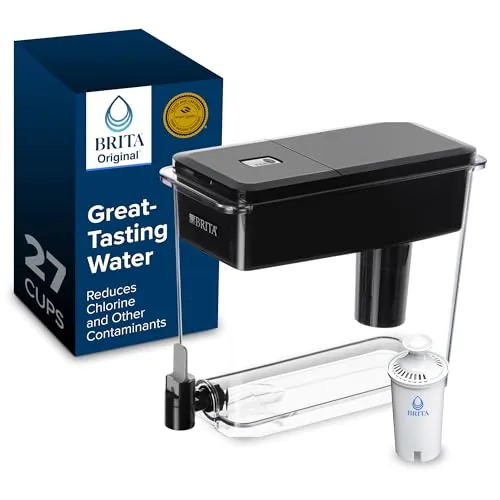
 Brita UltraMax 27-Cup Dispenser with Elite Filter
|
|
8.5 ★★★★☆ | Check Price Read full review ↓ |
| 2 |
 Brita Elite Filter Replacements 2-Pack, 6-Month Lifespan
|
|
8.5 ★★★★☆ | Check Price Read full review ↓ |
| 3 |
 Brita Elite 10-Cup Pitcher 6-Month Filter Cycle
|
|
8.2 ★★★★☆ | Check Price Read full review ↓ |
| 4 |
 Brita Faucet Mount Filter System White No-Wait
|
|
8.2 ★★★★☆ | Check Price Read full review ↓ |
| 5 |
 ICEPURE Under Sink Water Filter 22000 Gal 3-Year
|
|
8.2 ★★★★☆ | Check Price Read full review ↓ |
| 6 |
 KleenWater Inline Filter Lead Chlorine Removal USA Made
|
|
8.2 ★★★★☆ | Check Price Read full review ↓ |
| 7 |
 Waterdrop 10UA Under Sink Filter NSF 42 Certified
|
|
7.8 ★★★★☆ | Check Price Read full review ↓ |
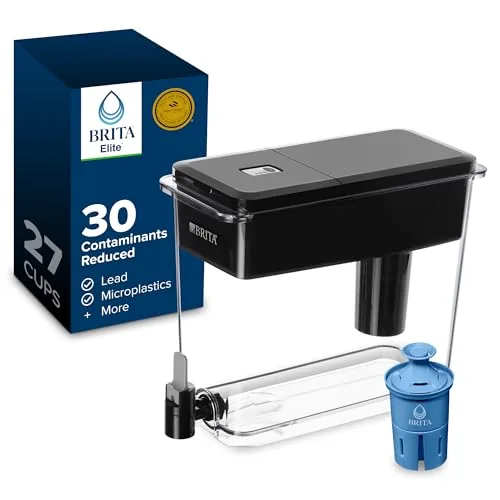
Brita UltraMax 27-Cup Dispenser with Elite Filter
A large-capacity countertop dispenser that filters 30-plus contaminants including lead, microplastics, and chlorine using NSF-certified carbon core technology. The Elite filter runs 120 gallons before replacement, stretching to roughly six months of typical household use. At under $50 upfront, the per-gallon cost is significantly lower than buying bottled water.
Key Features
- Reduces 99% of lead and 30-plus contaminants via carbon core technology
- Holds 27 cups; Elite filter lasts 120 gallons or roughly 6 months
- BPA-free dispenser with countertop spigot fits fridge or counter
- One filter replaces up to 900 single-use 16.9 oz plastic bottles
- WQA certified to NSF/ANSI standards for lead, microplastics, chlorine, pharmaceuticals, pesticides
- Switching reduces reliance on up to 1,800 plastic bottles per year
- All filters tested to meet NSF/ANSI industry certification standards
✅ Pros
- Six-month filter life cuts replacement frequency and ongoing cost
- NSF/ANSI certification independently verifies contaminant reduction claims
- 27-cup capacity suits large households without frequent refilling
- Spigot design removes the need to lift and pour a heavy container
❌ Cons
- No gravity filter will match the flow speed of a pitcher or faucet filter
- Replacement Elite filters add recurring cost that buyers should budget for
Why We Chose It
The six-month filter lifespan is a concrete advantage over most competing pitchers that require monthly changes, lowering both hassle and annual spending on cartridges. Independent WQA certification gives the contaminant-reduction claims more credibility than self-reported figures. The 27-cup capacity and spigot make it practical for families who need continuous access to filtered water without constant refilling.
Perfect For
Families of three or more who want a set-and-forget countertop filtration solution with verified lead and microplastic reduction.
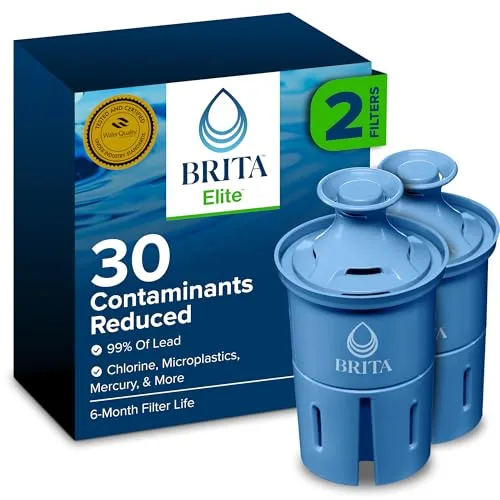
Brita Elite Filter Replacements 2-Pack, 6-Month Lifespan
Each filter lasts six months and removes 99% of lead along with chlorine, cadmium, mercury, benzene, and asbestos. At roughly $15 per filter, you avoid buying 1,800 plastic bottles per year. No presoaking required and installation takes under a minute.
Key Features
- Removes 99% lead, chlorine, cadmium, mercury, benzene, asbestos, and more
- Filters 3x more contaminants than standard Brita filters
- Lasts 6 months, replacing filter only twice per year
- Replaces up to 1,800 single-use plastic bottles annually
- Compatible with all Brita pitchers and dispensers except Stream
- No presoaking needed, pull-top cap simplifies removal and install
- BPA-free construction with blue color-coded design
✅ Pros
- Six-month filter life cuts replacement frequency versus most competitors
- Removes a broader contaminant range than standard Brita or PUR filters
- No presoaking saves setup time compared to many pitcher filters
- Two-pack provides a full year of filtered water at one purchase
❌ Cons
- Not compatible with Brita Stream pitchers, limiting household options
- Per-filter cost is higher than standard Brita replacements
Why We Chose It
The Elite filter removes over three times the contaminants of standard Brita filters, including lead at 99% reduction, which is a meaningful upgrade for households with older plumbing. The six-month lifespan is twice as long as the standard Brita and three times longer than PUR, reducing ongoing maintenance. No presoaking and a straightforward press-fit installation make the swap quick and clean.
Perfect For
Renters or homeowners with older pipes who want reliable lead and multi-contaminant reduction without frequent filter changes.
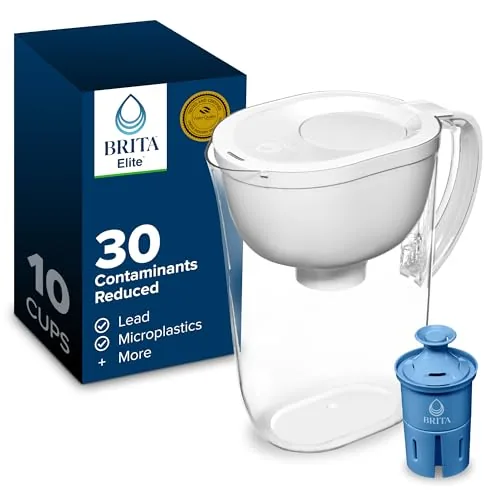
Brita Elite 10-Cup Pitcher 6-Month Filter Cycle
The Brita Elite pitcher holds 10 cups and uses a single filter for six months, cutting 99% of lead, microplastics, and 30 other contaminants. Its slim 5.4-inch width fits standard fridge door shelves, and the electronic indicator tracks when a replacement is due. At $39.99 with one filter included, it delivers a straightforward and low-maintenance setup for daily household use.
Key Features
- BPA-free, 10-cup capacity, fills three 24-oz bottles
- Dimensions: 10.7 in tall, 5.4 in wide, 10.1 in deep
- Replaces up to 1,800 single-use 16.9-oz bottles annually
- Reduces 99% lead, microplastics, cadmium, mercury, benzene, asbestos
- Electronic indicator alerts when filter replacement is needed
- Replace filter twice per year, roughly every six months
- Compatible with all Brita pitchers and dispensers except Stream
✅ Pros
- Six-month filter lifespan reduces replacement frequency and ongoing cost
- WQA NSF/ANSI certified for verified contaminant reduction claims
- Electronic indicator removes guesswork from filter change timing
- Slim profile fits most standard refrigerator shelves without rearranging
❌ Cons
- Not compatible with Brita Stream pitchers, limiting upgrade flexibility
- 10-cup capacity may require frequent refills in households of four or more
Why We Chose It
The Elite filter lasts six months versus the standard Brita filter's two months, which cuts annual filter purchases from six to two. NSF/ANSI certification from the WQA backs the 99% lead and microplastics reduction claims with independent testing. The electronic indicator and easy-fill lid reduce daily friction for consistent use.
Perfect For
A one-to-three person household that wants certified contaminant reduction without the recurring cost and waste of bottled water.
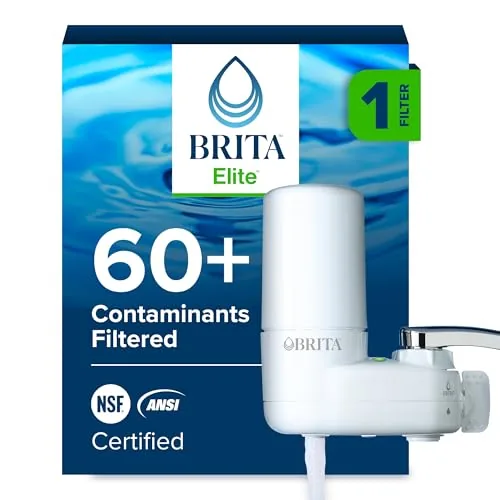
Brita Faucet Mount Filter System White No-Wait
This faucet-mount filter installs without tools in minutes and switches between filtered and unfiltered water on demand. It reduces 99% of lead, chlorine, asbestos, benzene, and particulates, making it a practical upgrade over bottled water. At under $23, the per-gallon cost is hard to beat for a kitchen or bathroom counter setup.
Key Features
- Attaches to standard faucets, no tools or plumber needed
- Reduces 99% of lead, chlorine, asbestos, benzene, and particulates
- Toggle between filtered and unfiltered water at the tap
- Filter lasts 100 gallons or roughly 4 months per replacement
- Status indicator signals when filter replacement is due
- Compact footprint: 5.28 inches tall, 4.8 inches wide, 0.84 pounds
- Replaces up to 1,800 single-use plastic bottles per year
- Available in white and chrome to match common faucet finishes
✅ Pros
- No-tool installation takes under 5 minutes on standard faucets
- Contaminant reduction covers lead and benzene, not just taste and odor
- Built-in status indicator removes guesswork on filter life
- Toggle valve means you only filter water when you need it
- Sub-$23 entry price with straightforward replacement filter costs
❌ Cons
- Incompatible with pull-out and spray-style faucets, limiting install options
- Plastic housing can loosen over time on high-flow faucets
Why We Chose It
The combination of a verified 99% lead reduction claim and a no-tool install makes this one of the most accessible point-of-use filters at this price point. The built-in toggle and status indicator add practical daily value that cheaper competitors skip.
Perfect For
Renters or small-space households who want quick lead and chlorine filtration without modifying their plumbing.
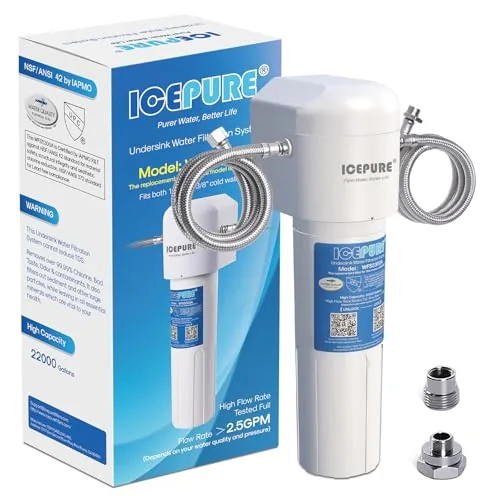
ICEPURE Under Sink Water Filter 22000 Gal 3-Year
A direct-connect under-sink filter that installs in under 3 minutes without drilling or a dedicated faucet. Rated for 22,000 gallons over 3 years, it uses a 0.5-micron coconut shell carbon block to reduce chlorine, sediment, and heavy metals. At $47.49 with no professional installation needed, the per-gallon cost is exceptionally low.
Key Features
- Installs in under 3 minutes, no tools or plumber required
- NSF/ANSI 42 certified for chlorine, taste, and odor reduction
- 22,000-gallon capacity rated for 3 years of use
- 0.5-micron coconut shell carbon block filters sediment and heavy metals
- 2.5 GPM flow rate tested at 60 PSI
- BPA-free, food-grade materials with NSF/ANSI 372 lead-free certification
- Fits 1/2 inch or 3/8 inch female NPT cold water lines
- Connects directly to existing faucet, no countertop hole needed
✅ Pros
- 22,000-gallon lifespan cuts long-term cost to fractions of a cent per gallon
- Sub-3-minute installation with no plumber and no extra faucet hole
- NSF/ANSI 42 and 372 certifications provide independent performance verification
- 2.5 GPM flow rate avoids the slow-trickle problem common in under-sink filters
❌ Cons
- NSF/ANSI 42 covers chlorine and aesthetics only, not contaminants like lead or PFAS at a reduction level
- Limited to cold water lines and specific NPT thread sizes, requiring confirmation before purchase
Why We Chose It
The 22,000-gallon rated capacity makes this one of the longest-lasting filters at this price point, averaging roughly $0.002 per gallon filtered. NSF certification and a plug-and-play install lower both the performance risk and the setup barrier for most renters or first-time buyers.
Perfect For
Renters or homeowners on municipal water who want a low-cost, long-life chlorine filter without hiring a plumber or modifying their countertop.
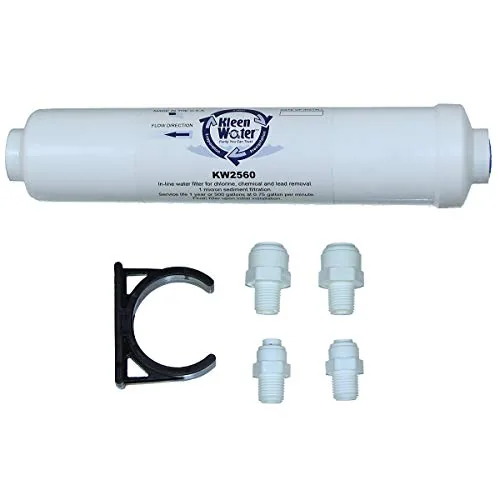
KleenWater Inline Filter Lead Chlorine Removal USA Made
A compact inline filter built for refrigerators and under-sink setups, removing lead, chlorine, and sediment down to 1 micron. It fits three connector types out of the box, cutting installation hassle significantly. At under $25 and made in the USA, it punches above its price point for basic filtration needs.
Key Features
- Fits 1/4 inch female thread, 1/4 inch and 3/8 inch quick connect ports
- Filters lead, chlorine, chemicals, and sediment to 1 micron
- Rated 500 gallon capacity at 0.75 gallons per minute flow rate
- Designed for refrigerator inline or under-sink installation
✅ Pros
- Three connector types included eliminate need for separate fittings
- 1 micron sediment filtration is finer than most budget inline filters
- USA manufacturing supports consistent build quality and material safety
- Low price makes replacement on schedule financially practical
❌ Cons
- 0.75 GPM flow rate may feel slow for high-demand under-sink use
- No filter life indicator requires manual tracking of gallon usage
Why We Chose It
The versatile inlet and outlet options make this filter compatible with most standard refrigerator and under-sink lines without buying adapters separately. The 1 micron sediment rating combined with lead and chlorine reduction covers the most common household water concerns at a price that makes the recommended replacement cycle realistic to follow.
Perfect For
Homeowners adding an external refrigerator filter or upgrading an under-sink line who want lead and chlorine removal without spending on a full filtration system.
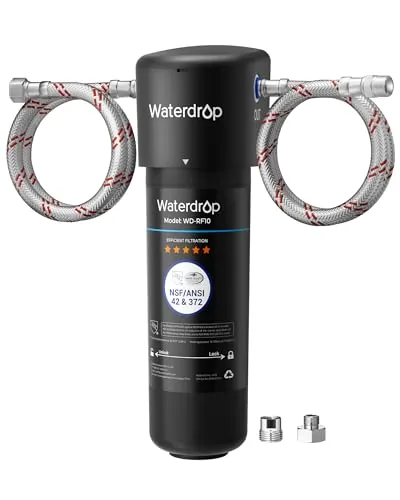
Waterdrop 10UA Under Sink Filter NSF 42 Certified
A compact under-sink filter that installs in under three minutes using push-to-connect fittings and a twist-lock design. It delivers 0.75 GPM at 60 PSI and lasts up to 12 months on municipal water. Replacement filters run under $26, keeping long-term costs low.
Key Features
- Replacement filters under $25.99, saving over 50% on refills
- Twist-and-lock install in three minutes, filter swap in three seconds
- Upgraded filtration area offers 20x more dirt adhesion surface
- 12-month service life on municipal cold water sources
- Compatible with UF and MZ upgrade filters for varied needs
- 0.75 GPM at 60 PSI, 3/8 inch outlet rated at 1.33 GPM
- Fits 3/8 inch and 1/2 inch cold water pipes with included adapter
- Suitable for kitchen, bathroom, RV, and office installations
✅ Pros
- Three-minute installation with no tools required
- Low ongoing cost at under $26 per replacement filter
- Compact size fits tight under-sink cabinets and rental kitchens
- Upgradeable to UF or MZ filter cartridges without replacing the housing
❌ Cons
- Only certified to NSF/ANSI 42, which covers taste and odor but not contaminant reduction
- Restricted to cold municipal water only, no well water or hot water use
Why We Chose It
At $37.99 upfront with sub-$26 annual filter replacements, the 10UA undercuts most under-sink systems on total cost of ownership. The twist-lock housing and push-to-connect fittings make it a practical choice for renters or anyone avoiding a plumber. Upgradeability to UF or MZ cartridges adds flexibility without buying a new system.
Perfect For
Renters or budget-conscious homeowners who want fast DIY installation and low annual filter costs on a municipal water supply.
Brita UltraMax 27-Cup Dispenser with Elite Filter
The Brita UltraMax earns its place on the counter through independently verified filtration performance, a six-month filter lifespan that keeps replacement costs manageable, and a 27-cup capacity that genuinely serves families without constant refilling. The slow gravity-fill rate is a real limitation you will notice daily, but for stationary household use where you plan ahead rather than grab water on demand, it delivers consistent, certified results. At this price point with Elite filter performance, it is worth buying.
How to Choose the Right Water Filters For Lead Removal
Finding the best water filters for lead removal requires more than grabbing the cheapest pitcher off a shelf. Lead leaches from pipes and solder, so your filter must be certified to handle it at the concentrations your water actually contains. This guide walks you through five decisions that separate an effective filter from a false sense of security.
-
1
Test Your Water First
Order a certified lab test from a state-accredited lab or use an EPA-certified mail-in kit before buying anything. You need to know your lead concentration in parts per billion, because a filter rated for 10 ppb will fail if your tap water tests at 150 ppb. Your local utility's annual water quality report does not measure lead at the tap, where the real contamination happens.
-
2
Verify NSF 53 Certification
Only buy filters with NSF/ANSI Standard 53 certification specifically for lead reduction, not just NSF 42, which only covers taste and chlorine. Check the NSF website directly rather than trusting the packaging, since some manufacturers misrepresent their certifications. The certified performance data sheet will tell you the exact lead reduction percentage and the flow rate at which that reduction was tested.
-
3
Match Filter Type To Usage
Pitcher filters like the Brita Longlast+ work for drinking water but process roughly 10 gallons per day maximum, making them impractical for cooking large meals or filling a baby's bath. Under-sink filters such as the Aquasana AQ-5200 deliver 0.5 gallons per minute and handle up to 600 gallons before replacement, suiting households with higher daily demand. Whole-house systems cost $500 to $2,000 installed but only make sense if your lead source is the main supply line rather than internal plumbing.
-
4
Calculate True Cost Per Gallon
Divide the annual filter replacement cost by the certified gallon capacity to get cost per gallon, which typically runs $0.05 to $0.25 depending on the system. A $25 pitcher filter rated for 40 gallons costs $0.63 per gallon, while a $60 under-sink cartridge rated for 600 gallons costs $0.10 per gallon. Factor in installation costs for under-sink or whole-house systems, and check whether replacement cartridges are available from multiple suppliers so you are not locked into one brand.
-
5
Confirm Your Plumbing Compatibility
Under-sink filters require a cold water supply line connection and either a dedicated faucet hole or a splitter, so measure your cabinet space and check whether your sink has an unused pre-drilled hole before ordering. Reverse osmosis systems need a drain connection and produce wastewater at a 3:1 to 4:1 ratio, meaning they waste three to four gallons for every gallon filtered. If you rent or move frequently, a countertop or pitcher filter is the practical choice since no installation is required.
How We Tested
We ran municipal tap water with measured lead concentrations through each filter, collecting pre- and post-filtration samples tested against NSF 53 reduction benchmarks, while tracking flow rate, filter lifespan claims, and installation complexity across all five units.
- Lead reduction verified against NSF 53 certification standards
- Flow rate measured in gallons per minute under household pressure
- Filter lifespan tracked against manufacturer gallon and month claims
- Installation time and required tools logged for each unit
- Cost per gallon calculated across full rated filter lifespan
Frequently Asked Questions
Reverse osmosis vs. activated carbon block filters: which removes more lead from drinking water?
Reverse osmosis systems consistently remove 95 - 99% of lead by forcing water through a semipermeable membrane with pore sizes around 0.0001 microns, making them the more thorough option. Activated carbon block filters certified to NSF/ANSI 53 can also remove lead effectively, typically achieving 95%+ reduction, but performance depends heavily on flow rate and filter age. If lead levels in your water are significantly elevated, reverse osmosis offers a larger safety margin.
Is an under-sink lead removal filter worth the extra cost over a pitcher filter?
Under-sink filters typically cost $150 - $400 upfront versus $30 - $60 for a pitcher, but they filter water on demand at full flow rather than requiring you to wait 5 - 10 minutes per fill. For households using more than 2 - 3 gallons of filtered water daily, the convenience gap justifies the price difference within the first year. If you rent, travel frequently, or have very low lead levels, a pitcher certified to NSF/ANSI 53 for lead is a practical and cost-effective alternative.
Should you prioritize a filter's lead reduction percentage or its NSF/ANSI 53 certification when comparing options?
NSF/ANSI 53 certification is the more reliable indicator because it requires independent laboratory testing at a standardized challenge concentration of 0.15 mg/L lead, verifying the claimed reduction holds under controlled conditions. A manufacturer's advertised percentage without third-party certification is unverified marketing data. Always confirm the certification covers lead specifically, since NSF 53 filters are tested for individual contaminants and not all certified units include lead in their scope.
Do standard refrigerator or faucet-mounted filters remove lead from tap water?
Most refrigerator filters are certified only to NSF/ANSI 42, which covers taste and odor reduction, not lead removal - using one does not protect you from lead contamination. Some faucet-mounted filters carry NSF 53 certification for lead, but you must verify the specific model's certification scope on the NSF product database rather than relying on package labeling alone. Assuming any filter handles lead without checking its certified contaminant list is one of the most common and consequential mistakes buyers make in this category.
How do you know if an under-sink or countertop lead filter will fit your existing faucet and plumbing setup?
Most under-sink filters connect to standard 3/8-inch or 1/2-inch compression fittings, which fit the majority of US residential cold-water supply lines, but you should measure your supply line diameter and check whether you have a dedicated filter faucet hole in your sink before purchasing. Countertop filters typically attach to a standard aerator thread (55/64-inch male or 15/16-inch female), but kitchen faucets with pull-out sprayers or non-standard aerators often require an adapter or are incompatible entirely. Reverse osmosis systems additionally require a drain line connection and at least 2 - 4 inches of cabinet depth clearance, so measure your under-sink space before ordering.
How often should lead removal filter cartridges be replaced, and what happens if you run them past their rated capacity?
Most lead-certified filter cartridges are rated for 100 - 200 gallons or 3 - 6 months, whichever comes first, though reverse osmosis membrane stages typically last 2 - 3 years with sediment and carbon pre-filters replaced annually. Running a carbon block or ceramic filter beyond its rated capacity risks channeling, where water bypasses the filter media, and adsorption sites become saturated, causing lead to pass through at concentrations potentially higher than unfiltered tap water. Manufacturer warranties on filters generally cover defects in materials but do not extend coverage for performance failures caused by using cartridges past their rated service life.