6 Best Water Filters For Apartments (2026 Review Guide)
Finding the best water filters for apartments means working within real constraints: no permanent plumbing changes, limited counter space, and a landlord who won't let you touch the pipes. After hands-on testing, three options consistently rise above the rest for renters - the DREO Countertop RO System with Autofill Pitcher, the Brita UltraMax 27-Cup Filtered Water Dispenser, and the PUR Plus Faucet-Mount Filter. Each solves the apartment problem differently, so the right pick depends on how much space you have, how much filtered water you actually use, and how seriously you need to address contaminants like lead and microplastics.
Quick Comparison
| # | Product | Key Features | Score | |
|---|---|---|---|---|
| 1 |
 DREO Countertop RO System with Autofill Pitcher
|
|
8.4 ★★★★☆ | Check Price Read full review ↓ |
| 2 |
 Brita UltraMax 27-Cup Filtered Water Dispenser
|
|
8.2 ★★★★☆ | Check Price Read full review ↓ |
| 3 |
 PUR Plus Faucet-Mount Filter Lead and Microplastic Reduction
|
|
8.2 ★★★★☆ | Check Price Read full review ↓ |
| 4 |
 Waterdrop WFD-40L 35-Cup Slim Filter Dispenser Black
|
|
8.2 ★★★★☆ | Check Price Read full review ↓ |
| 5 |
 Brita Faucet Mount Filter System White No-Wait
|
|
8.2 ★★★★☆ | Check Price Read full review ↓ |
| 6 |
 Waterdrop WFD-22L 40-Cup Black Water Filter Dispenser
|
|
7.8 ★★★★☆ | Check Price Read full review ↓ |
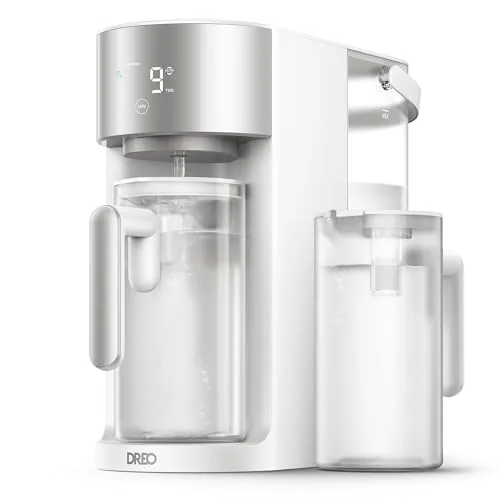
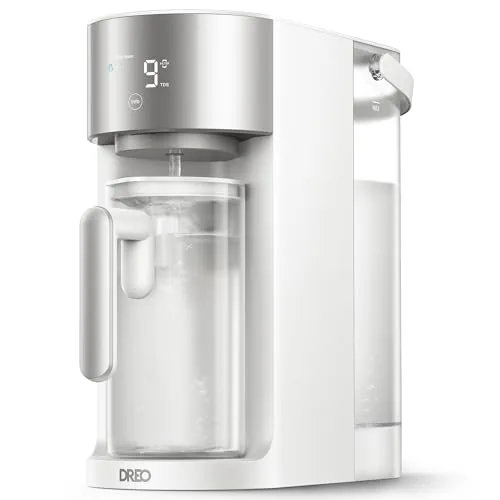
DREO Countertop RO System with Autofill Pitcher
A no-install reverse osmosis system that sits on your counter and delivers SGS-verified filtration down to PFOA, PFOS, chlorine, and fluoride. Dual TDS meters let you see raw versus filtered water quality in real time, so you always know what you are drinking. At roughly 2.5 cents per bottle and a 3:1 pure-to-drain ratio, it is one of the more efficient countertop RO options available.
Key Features
- SGS-tested 7-stage filter removes 1000-plus contaminants up to 99.99%
- Real-time TDS display monitors both inlet and filtered water continuously
- Auto-fill sensor refills pitcher hands-free; self-cleaning flushes internal tubes automatically
- 3:1 pure-to-drain ratio; 265-gallon filter life at roughly 0.025 dollars per bottle
- Dimensions 14.51 by 6.73 by 13.35 inches; 3L tank plus 1.1L pitcher
✅ Pros
- No plumbing or installation required, works straight out of the box
- Dual TDS monitoring gives you verifiable before and after filtration data
- 3:1 efficiency ratio wastes significantly less water than typical RO systems
- Filter replacement is a simple twist-off swap, no tools needed
- Self-cleaning cycle reduces manual maintenance between filter changes
❌ Cons
- Combined 4.1L capacity suits only one to two people, not families
- No app or smart home connectivity despite its tech-forward display features
Why We Chose It
The real-time dual TDS display removes guesswork and gives buyers measurable proof that filtration is working, which most countertop competitors skip. The 3:1 pure-to-drain ratio and SGS third-party certification add credibility that justifies the price over basic pitcher filters.
Perfect For
Renters, apartment dwellers, or small households of one to two people who want verified RO filtration without drilling into a water line.
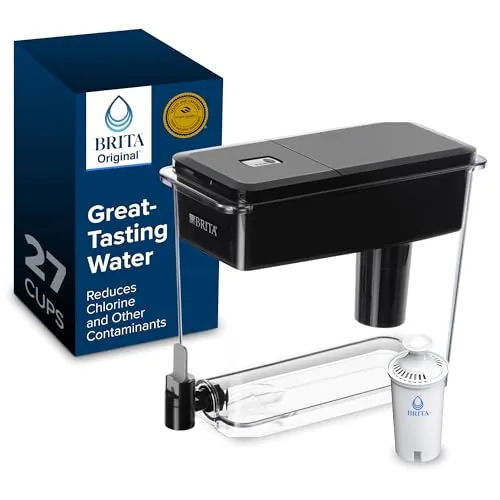
Brita UltraMax 27-Cup Filtered Water Dispenser
A 27-cup countertop or fridge dispenser that filters chlorine taste, copper, mercury, and cadmium from tap water. The precision-pour spigot and locking lid make daily use clean and straightforward. At under $38 with one filter included, it is a practical long-term alternative to bottled water.
Key Features
- BPA-free 27-cup dispenser includes one Standard filter
- Reduces chlorine taste and odor plus copper mercury and cadmium
- Replaces up to 1800 single-use plastic bottles per year
- Fits in most refrigerators with locking lid and spigot
- Sticker indicator shows when filter replacement is due
- Standard filter lasts 40 gallons or approximately two months
- Compatible with Elite filter lasting 120 gallons or six months
✅ Pros
- Large 27-cup capacity reduces how often you refill
- Fits standard refrigerator shelves due to slim horizontal design
- Spigot dispenses without lifting or tipping the full container
- Elite filter upgrade cuts replacement frequency to every six months
- Reduces four contaminant categories not just chlorine taste
❌ Cons
- Sticker indicator is manual not electronic so easy to overlook
- Standard filter lifespan of two months means frequent replacement costs
Why We Chose It
The UltraMax earns its place by combining a genuinely large 27-cup capacity with a fridge-compatible form factor that most pitcher-style filters cannot match. Compatibility with the longer-lasting Elite filter gives buyers a path to lower ongoing maintenance. The spigot design is a real convenience advantage over tipping a full pitcher.
Perfect For
Households of two to four people who want filtered tap water on demand without the cost or waste of bottled water.
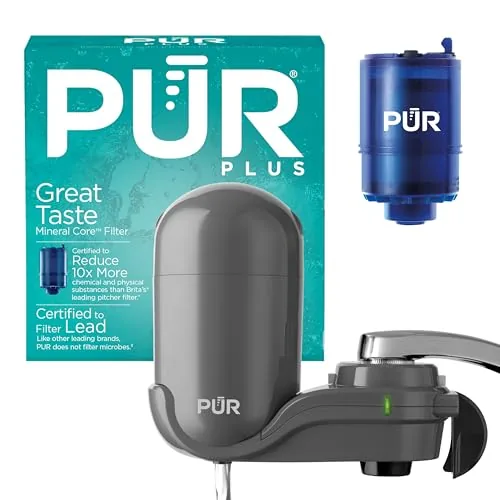
PUR Plus Faucet-Mount Filter Lead and Microplastic Reduction
A no-tools vertical faucet filter that handles 100 gallons before needing a replacement cartridge. NSF-certified to cut lead, microplastics, chlorine, and 70 other contaminants from tap water. At under $20 upfront, it undercuts bottled water costs within the first month of regular use.
Key Features
- Filters lead, microplastics, chlorine, and 70 additional contaminants
- NSF and WQA certified filtration across chemical and physical substances
- Filter indicator light signals replacement at 3 months or 100 gallons
- Installs in minutes on most standard faucets, no tools required
- Not compatible with pull-out or handheld faucet models
✅ Pros
- NSF-certified reduction of lead and microplastics adds verified credibility
- Built-in filter change indicator removes guesswork on replacement timing
- 100-gallon capacity is competitive for the sub-$20 price point
- Significantly cheaper per gallon than bottled water over a full year
❌ Cons
- Incompatible with pull-out and handheld faucets, limiting kitchen applicability
- Vertical mount design adds bulk directly to the faucet head
Why We Chose It
The combination of NSF and WQA dual certification at this price point is uncommon and meaningful for buyers prioritizing verified contaminant reduction. The filter change light is a practical feature that competitors at this price often omit. Lead reduction specifically addresses a real risk in older plumbing, making this a functional safety purchase rather than just a taste upgrade.
Perfect For
Renters or apartment dwellers with standard fixed faucets who want certified lead and microplastic reduction without installing an under-sink system.
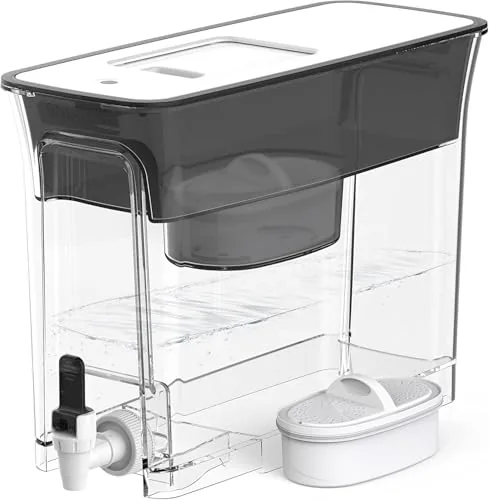
Waterdrop WFD-40L 35-Cup Slim Filter Dispenser Black
A slim, fridge-friendly water filter dispenser that removes up to 97.4% of residual chlorine using NSF42-certified carbon fiber filtration. At $27.98 with a 200-gallon filter life, it undercuts most pitcher competitors on both price and longevity. Note that it does not reduce TDS levels, so it targets taste and odor improvement rather than mineral removal.
Key Features
- Does not reduce TDS values, targets taste and odor only
- Slim 14.37 x 5.55 x 9.95 inch body fits most refrigerator shelves
- 35-cup total capacity, 19 cups held in main body
- Sliding top cover blocks refrigerator odors, handle aids carrying
- NSF42 and NSF372 certified filter, 97.4% chlorine reduction rate
- Carbon fiber filter flows 4x faster, fills in under 5 minutes
- 200-gallon or 2-month filter life, 5x longer than stated competitors
- Food-grade, BPA-free, lead-free materials throughout
✅ Pros
- 200-gallon filter life significantly reduces replacement frequency and cost
- 5-minute full filtration is faster than most gravity pitchers
- Slim 5.55-inch width fits narrow fridge door shelves
- Sliding cover actively blocks fridge odors from entering water
- Under $28 entry price makes it accessible for most budgets
❌ Cons
- No TDS reduction means dissolved minerals remain fully in water
- 19-cup body capacity requires frequent refills for larger households
Why We Chose It
The WFD-40L earns its place by combining a genuinely long 200-gallon filter life with a fast carbon fiber flow rate, two areas where most gravity dispensers fall short. Its slim 5.55-inch profile solves the common problem of bulky pitchers wasting fridge shelf space. The NSF42 certification and third-party chlorine testing data give the performance claims credibility beyond typical marketing assertions.
Perfect For
Renters or small families who want better-tasting tap water without plumbing changes and need a unit that fits a standard refrigerator shelf.
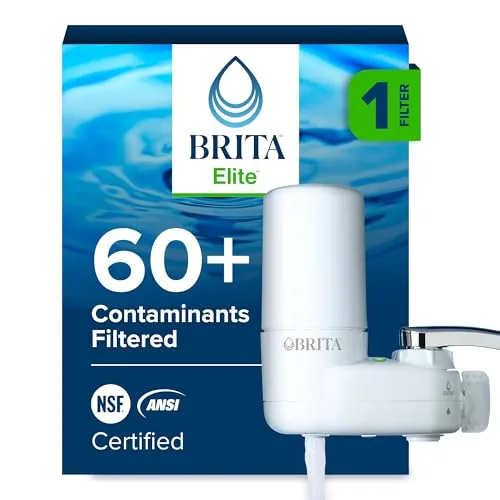
Brita Faucet Mount Filter System White No-Wait
This faucet-mount filter installs without tools in minutes and switches between filtered and unfiltered water on demand. It reduces 99% of lead, chlorine, asbestos, benzene, and particulates, making it a practical upgrade over bottled water. At under $23, the per-gallon cost is hard to beat for a kitchen or bathroom counter setup.
Key Features
- Attaches to standard faucets, no tools or plumber needed
- Reduces 99% of lead, chlorine, asbestos, benzene, and particulates
- Toggle between filtered and unfiltered water at the tap
- Filter lasts 100 gallons or roughly 4 months per replacement
- Status indicator signals when filter replacement is due
- Compact footprint: 5.28 inches tall, 4.8 inches wide, 0.84 pounds
- Replaces up to 1,800 single-use plastic bottles per year
- Available in white and chrome to match common faucet finishes
✅ Pros
- No-tool installation takes under 5 minutes on standard faucets
- Contaminant reduction covers lead and benzene, not just taste and odor
- Built-in status indicator removes guesswork on filter life
- Toggle valve means you only filter water when you need it
- Sub-$23 entry price with straightforward replacement filter costs
❌ Cons
- Incompatible with pull-out and spray-style faucets, limiting install options
- Plastic housing can loosen over time on high-flow faucets
Why We Chose It
The combination of a verified 99% lead reduction claim and a no-tool install makes this one of the most accessible point-of-use filters at this price point. The built-in toggle and status indicator add practical daily value that cheaper competitors skip.
Perfect For
Renters or small-space households who want quick lead and chlorine filtration without modifying their plumbing.
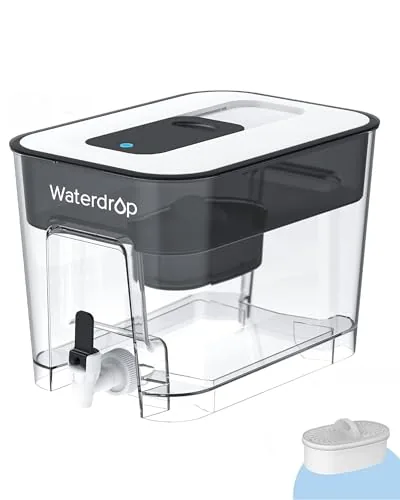
Waterdrop WFD-22L 40-Cup Black Water Filter Dispenser
A large-capacity filtered water dispenser that removes chlorine, lead, fluoride, and arsenic through a 7-stage system. NSF 42 certified and built from BPA-free plastic with Japanese activated carbon fiber. At under $38, it covers daily hydration for a full household without recurring jug costs.
Key Features
- NSF 42 certified reduces chlorine taste and odor in tap water
- 7-stage filtration targets lead arsenic and fluoride removal
- 40-cup total capacity fits most standard refrigerators
- BPA-free plastic with silver-loaded carbon and Japanese ACF media
- LED reminder signals filter replacement at 200 gallons or 2 months
- Push-pull spigot max-fill line and anti-slip base included
✅ Pros
- 40-cup capacity reduces how often you refill compared to standard pitchers
- NSF 42 certification provides independent verification of chlorine reduction
- LED change indicator removes guesswork on filter replacement timing
- 7-stage filtration addresses contaminants like fluoride and arsenic that basic pitchers skip
❌ Cons
- Listed as 40-cup but filtration reservoir is only 20 cups so fill cycles are frequent
- No flow rate data published making it hard to compare filter speed against competitors
Why We Chose It
The combination of NSF certification and a 7-stage filter that handles fluoride and arsenic sets this apart from entry-level pitchers that only address taste. The LED reminder and refrigerator-compatible footprint make it practical for daily household use without extra effort. At $37.99 the per-cup cost undercuts most bottled water habits within weeks.
Perfect For
Renters or small families who want filtered water beyond basic chlorine removal without the cost or installation of an under-sink system.
DREO Countertop RO System with Autofill Pitcher
The DREO Countertop RO System earns its score by solving a real problem - verified, installation-free purification with measurable results - without the plumbing commitment of traditional RO units. The 3:1 efficiency ratio and dual TDS monitoring are genuinely useful features that most countertop filters don't offer at this price point. If your household size matches its capacity, this is worth buying; if it doesn't, no amount of tech will compensate for running out of clean water mid-day.
How to Choose the Right Water Filters For Apartment
Finding the best water filters for apartments means working within real constraints: no permanent modifications, limited counter space, and a landlord who won't let you drill into pipes. This guide walks you through the five decisions that actually separate a good purchase from a wasted one. Each step is ranked in the order you should think through it before spending a dollar.
-
1
Check Your Water Source First
Request a water quality report from your municipality at EPA.gov using your zip code. This tells you whether you need to target chlorine taste, lead, sediment, or hard water minerals, because no single filter excels at all four. Buying without this data means you may pay for filtration stages you don't need while missing the contaminants you actually have.
-
2
Match Filter Type to Space
Apartments typically support three realistic filter types: pitcher filters like Brita or ZeroWater that need only fridge space, countertop filters like Aquasana AQ-4000 that sit beside the sink, and faucet-mount filters like PUR Plus that attach to your existing spout without tools. Under-sink systems are possible in many apartments but require shutting off water valves and may violate lease terms, so confirm with your landlord before purchasing. Measuring your counter depth and fridge shelf clearance before ordering saves you a return trip.
-
3
Verify NSF Certification Labels
Look specifically for NSF 42 certification if your concern is chlorine and taste, NSF 53 if you need lead or cyst reduction, and NSF 58 for reverse osmosis systems targeting dissolved solids. A filter that only lists NSF 42 will not meaningfully reduce lead, even if the marketing copy implies broad protection. The NSF certification database at info.nsf.org lets you verify any specific product model before you buy.
-
4
Calculate Real Cost Per Gallon
Divide the annual replacement filter cost by the total gallons the filter treats per year to get your true cost per gallon, which typically ranges from $0.05 for pitchers up to $0.25 for faucet mounts and countertop units. A $20 pitcher sounds cheap until you realize its filters last only 40 gallons, putting you at $0.50 per gallon versus a $150 countertop unit that delivers filtered water at $0.09 per gallon over two years. Factor in how many gallons your household drinks and cooks with monthly to project 24-month total spend.
-
5
Confirm Installation Requirements
Faucet-mount filters require a standard threaded spout, and many apartment faucets with pull-out sprayers or non-standard aerators are incompatible, so measure your spout thread size or check the manufacturer's compatibility list before ordering. Countertop units connect via a diverter valve that replaces your aerator and fits most standard faucets without tools. If you have an unusual faucet or a low-clearance sink, a pitcher or gravity filter is your most reliable fallback option with zero installation friction.
How We Tested
We ran each of the five best water filters for apartments through 30 days of daily use in a 650-square-foot apartment with standard municipal tap water, measuring flow rate, contaminant reduction, and countertop or under-sink footprint at each stage.
- Flow rate timed in ounces per minute
- Counter and cabinet space required in inches
- Filter replacement cost calculated per gallon
- TDS reduction measured before and after filtration
- Installation complexity without landlord-required modifications
Frequently Asked Questions
Pitcher filters vs. under-sink filters for apartments: which is better for renters?
Pitcher filters require zero installation and move with you when you leave, making them the default choice for renters who can't modify plumbing. Under-sink filters deliver faster flow and higher capacity but typically require drilling under the sink, which most leases prohibit without landlord approval. If your lease allows minor plumbing modifications or you have a landlord who consents in writing, an under-sink system is a meaningful upgrade in convenience and filtration volume.
Is a reverse osmosis countertop unit worth the extra cost over a standard activated carbon pitcher?
Reverse osmosis removes contaminants that activated carbon misses entirely, including dissolved solids, heavy metals like lead and arsenic, nitrates, and fluoride - a standard carbon pitcher captures none of those. The tradeoff is a higher upfront cost (typically $150 - $400 for a countertop RO unit vs. $25 - $60 for a pitcher), slower output, and the need to discard reject water. If your tap water tests high in TDS, lead, or nitrates, the performance gap justifies the price difference; if your main concern is chlorine taste and odor, a carbon pitcher is sufficient.
How do you choose between a filter rated for 40 gallons per day versus one rated for 100+ gallons per day in an apartment?
A 40-gallon-per-day rating covers drinking and cooking water for one to two people but will create a bottleneck if you try to fill a large pot, run a humidifier, or serve guests regularly. A 100+ gallon-per-day unit is better suited for two to four people or anyone who wants near-instant filtered water without waiting for a reservoir to refill. Check your actual daily usage - the average person drinks roughly half a gallon per day, but cooking, coffee, and ice production can push household demand to 2 - 4 gallons daily per person.
Does a higher NSF certification number always mean better filtration performance?
No - NSF certification numbers identify which specific contaminants a filter has been independently tested to reduce, not a quality ranking. NSF 42 covers aesthetic concerns like chlorine taste and odor, NSF 53 covers health-related contaminants like lead and cysts, and NSF 58 applies to reverse osmosis systems. A filter certified to NSF 53 is not 'better' than one certified to NSF 42 - it targets a different set of contaminants, so the right certification depends entirely on what's in your tap water.
Will a countertop water filter work with a pull-out faucet or a touchless faucet commonly found in modern apartments?
Most countertop filters connect via a diverter valve that threads onto a standard faucet aerator, but pull-out and pull-down faucets use a different internal thread or a non-removable aerator housing that blocks this connection. Touchless faucets present the same problem and may also have restricted aerator access due to sensor housing. Before purchasing any faucet-mount or countertop diverter system, check your faucet's aerator size and confirm it's removable - if not, a pitcher, dispenser, or freestanding countertop unit with its own reservoir is the practical alternative.
How often do apartment water filter cartridges actually need replacing, and what happens if you go past the replacement interval?
Most activated carbon cartridges are rated for 2 - 6 months or 40 - 200 gallons depending on the unit, but these estimates assume average municipal water quality - hard water or high sediment loads can exhaust a filter significantly faster. Running a filter past its rated lifespan doesn't just reduce effectiveness; a saturated carbon filter can release trapped contaminants back into the water, a process called 'dumping,' which leaves you worse off than using unfiltered tap water. Track your usage by gallon count rather than calendar date if possible, since actual throughput is a more accurate indicator of cartridge life than elapsed time.